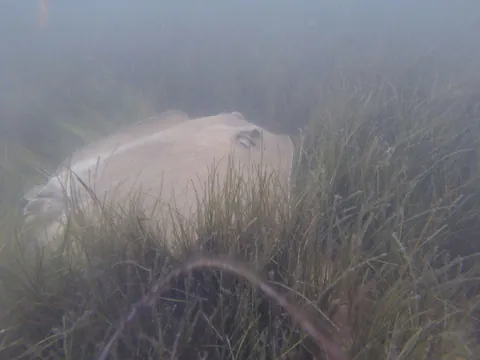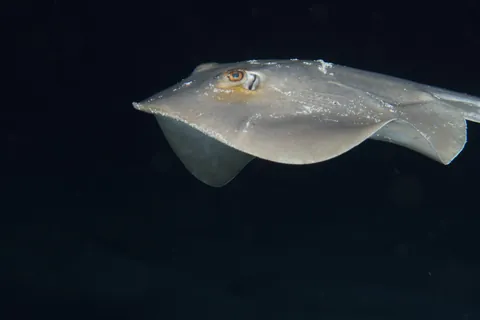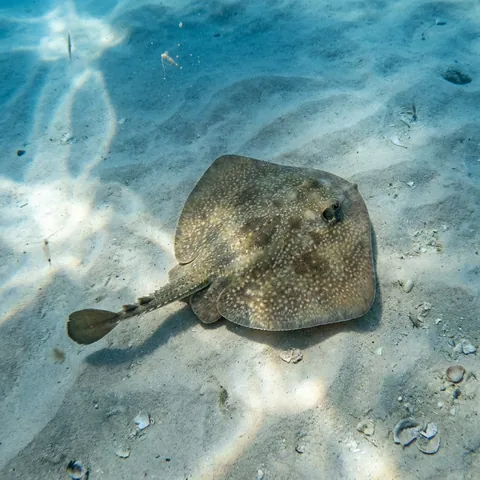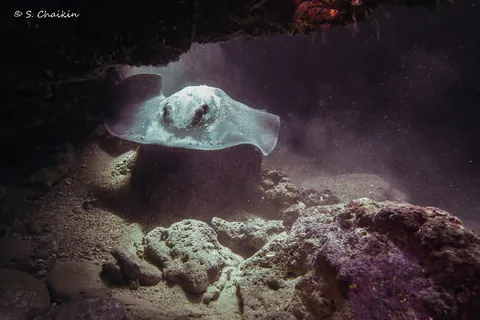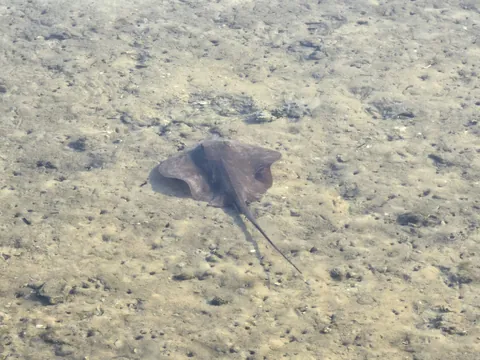
Atlantic Stingray
Hypanus sabinus
Pastinachus ater
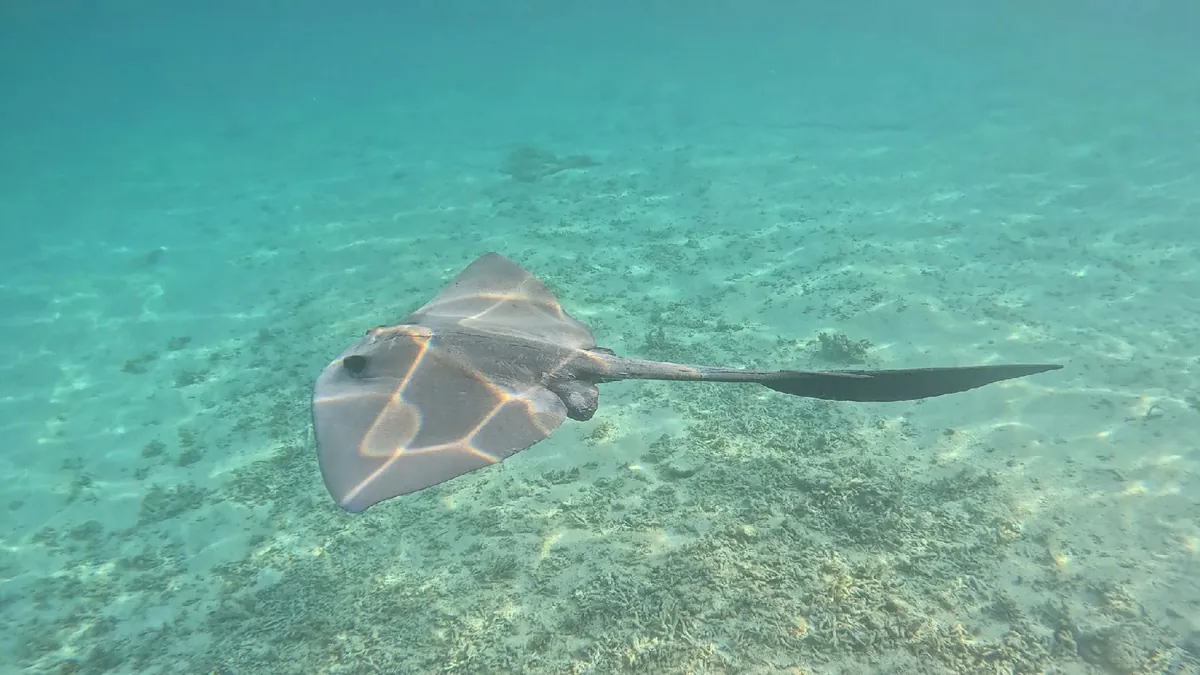
The bulky, dark cowtail ray of Indo-Pacific sand flats and lagoons - the Australian and Indonesian counterpart of the Red Sea feathertail. Named for the broad skirt of skin under its tail, and it grows to two metres across.
Also known as: broad cowtail ray, cowtail stingray, cowtail ray, feathertail stingray, feathertail ray, fantail ray, banana-tail ray, Pastinachus ater
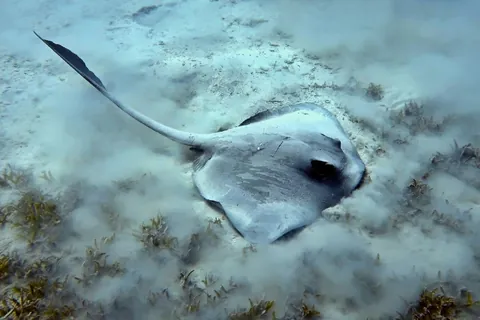
A thick, heavy ray with a rounded, slightly angular disc, plain dark grey-brown to nearly black above and pale underneath, with no markings. Behind the sting the tail carries a deep, flag-like fin fold that hangs down and tapers away - the "cowtail" - quite unlike the bare whip of most stingrays. The back is rough with denticles and there is a band of enlarged thorns along the midline. A big adult is genuinely wide, up to about two metres across the disc.
Sand and rubble flats, seagrass, mangrove channels and lagoon floors, and the sandy edges of coral reef. Shallow water down to about 60 m, but most sightings are well inside 30 m. Tolerates brackish water and enters estuaries.
Spends most of the day settled on the bottom, often with a film of sand over the disc so only the eyes and the tail fold show. Moves off in a slow, heavy flap and planes just above the sand rather than sprinting. Tolerant of a careful diver approaching low from the side; it leaves if you come over the top of it.
Bottom-living prey dug from the sediment - worms, crustaceans, molluscs and small fish.
Do not touch or corner it. It carries a large venomous sting at the tail base and will use it if trodden on or pinned. Left alone it is no danger.
Until recently this ray did not officially exist. It spent generations lumped in with the Red Sea feathertail stingray under one name, and was only separated out as its own species in the last decade - which is why older Indo-Pacific dive guides and field books call the fish on this page Pastinachus sephen. The split matters: the two are now assessed separately, and this one came out worse, listed as Vulnerable while its Red Sea relative sits at Near Threatened.
Describe what you saw and we name it, then keep every species you find in your Oceandex.