Atlantic Stingray
Hypanus sabinus
Hypanus say
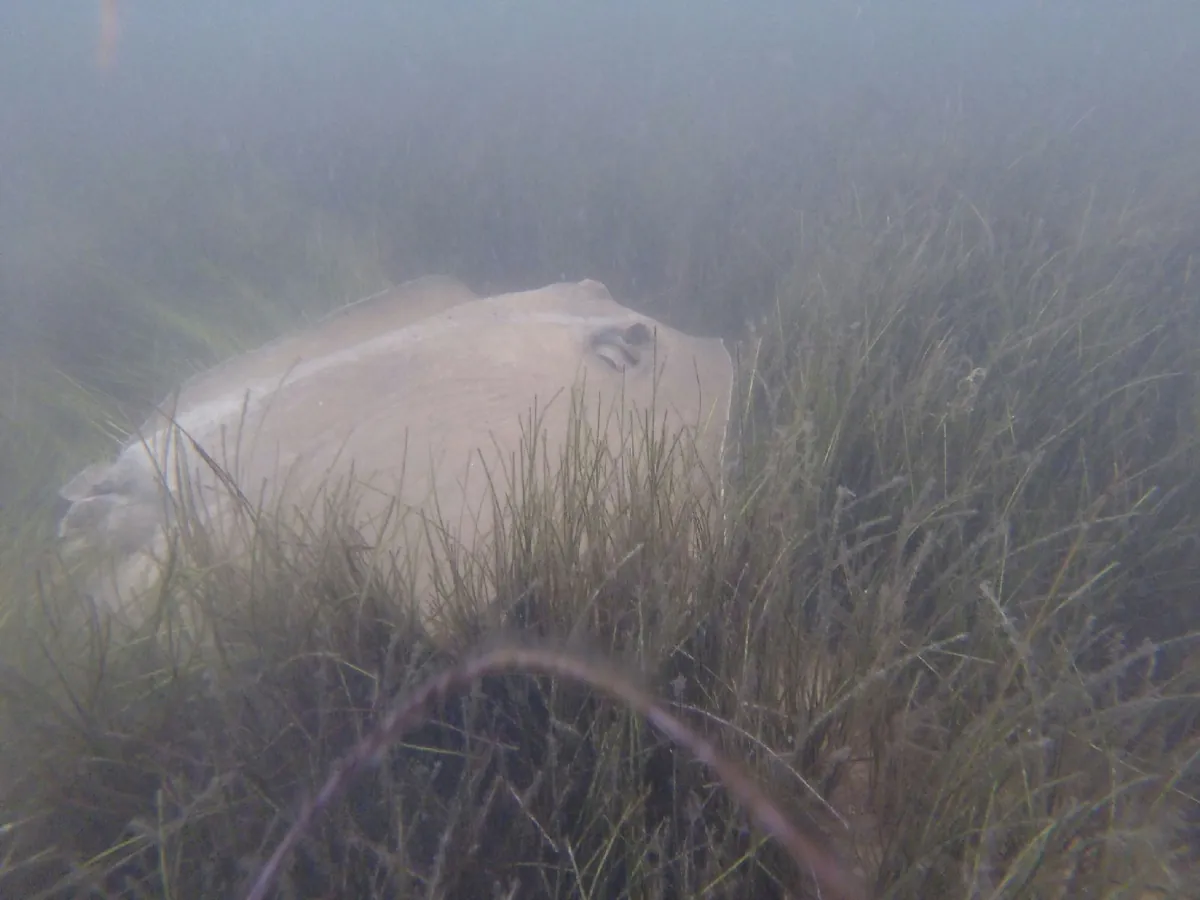
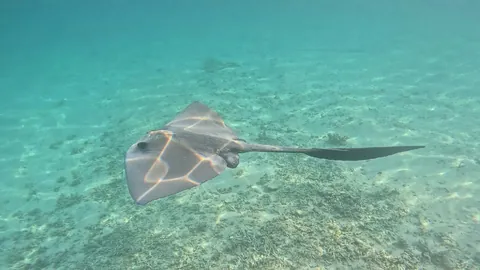
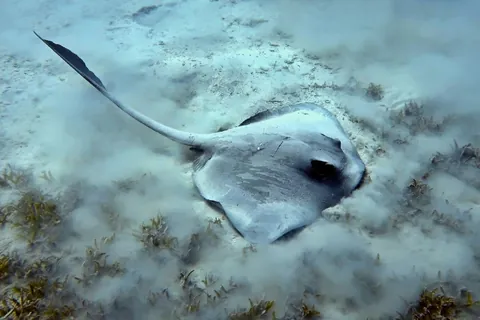
The bluntnose stingray spends its days buried in sand along shallow coastal flats, all but invisible until it glides off with a flick of its long tail.
It looks much like the Atlantic stingray, but the two differ in snout shape. This species has a blunt, broadly rounded snout, while the Atlantic stingray's snout is longer and comes to a sharper point.
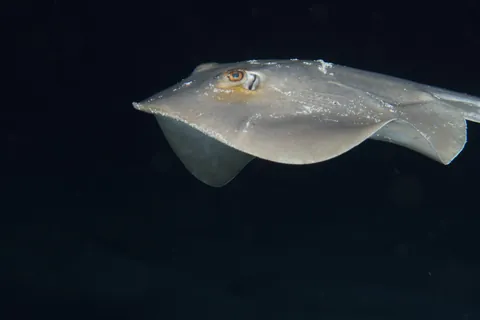
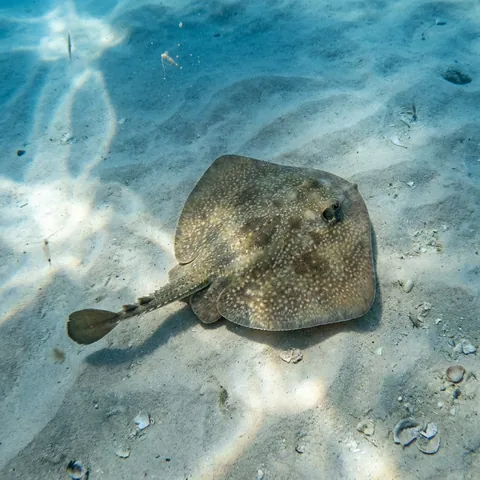
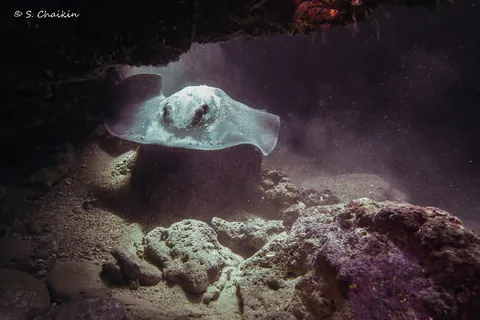
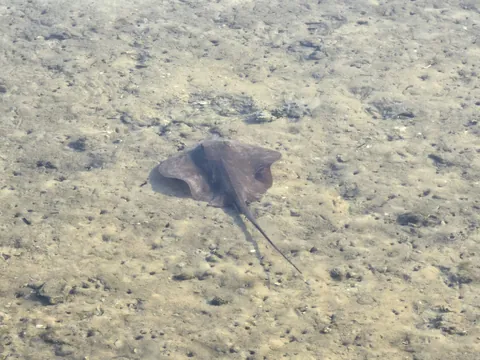
This ray has a diamond-shaped disc, a little wider than it is long, with broadly rounded corners and nearly straight front edges that meet at a blunt point at the snout. Its color ranges from grayish to reddish or greenish brown on top, sometimes with faint bluish spots and a thin pale edge to the disc, fading to whitish underneath. The whip-like tail is much longer than the disc and carries one or two long, serrated stinging spines set back from the base, followed by low fin folds. A row of small thorns runs along the midline from behind the eyes to the base of the tail spine, and adults also grow prickles around the eyes and on the outer disc.
This stingray lives along the western Atlantic coast, from the northeastern United States down through Florida and the Gulf of Mexico to the Caribbean islands. It stays close to shore over sandy or muddy flats in bays, lagoons, and estuaries, usually in water between 1 and 10 metres deep.
The bluntnose stingray is mostly active at night and spends much of the day buried in the sediment. It often follows the rising tide into water barely deep enough to cover its body to hunt, feeding on burrowing worms, shellfish, crustaceans, and small fish. Larger predators such as bull sharks feed on it in turn.
The bluntnose stingray sometimes follows the rising tide right up onto shallow flats, hunting in water barely deep enough to cover its own body.
Describe what you saw and we name it, then keep every species you find in your Oceandex.