Big Skate
Beringraja binoculata
Raja brachyura
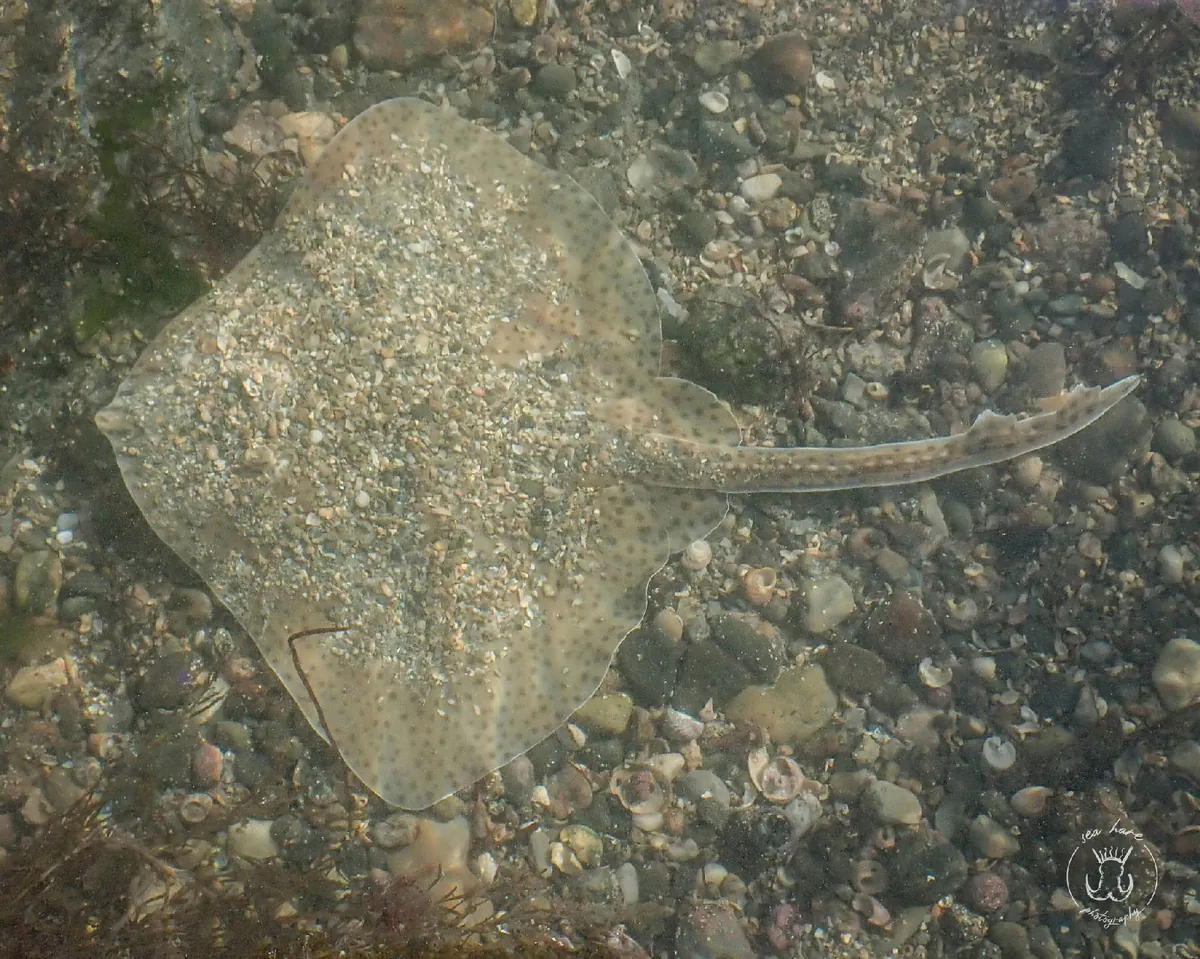
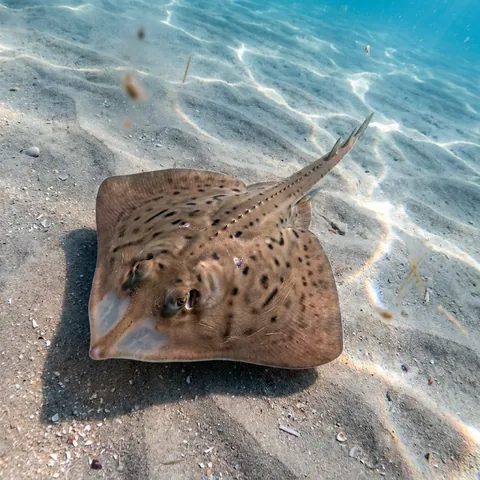
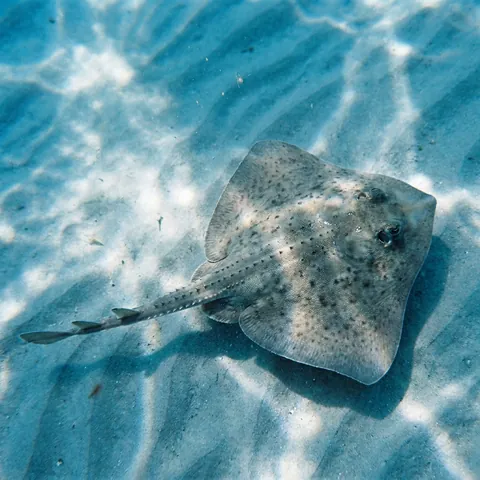
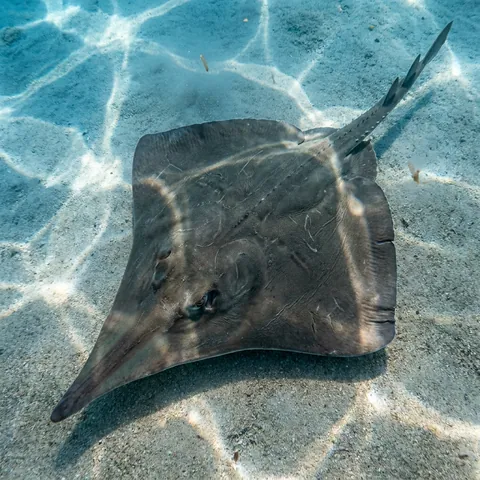
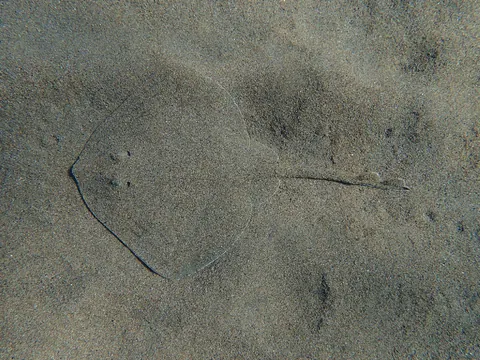
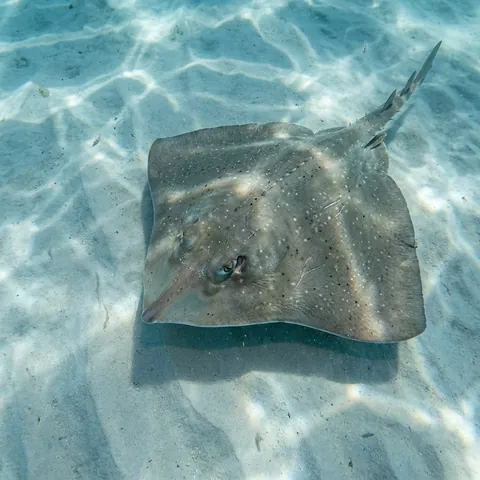
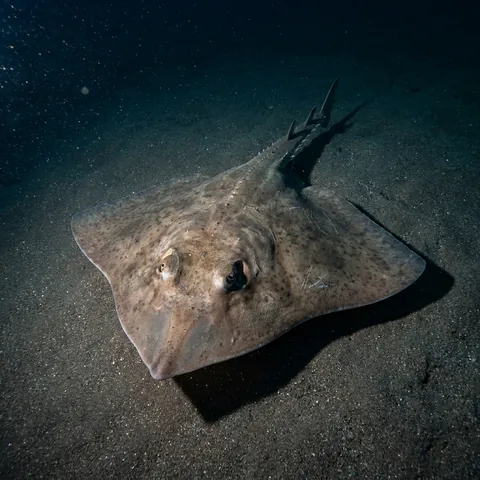
The blonde skate is a broad, kite-shaped ray that lies flat on sandy seabeds, often spotted only when it moves. Its speckled back gives it a sandy camouflage that makes it easy to swim past without noticing.
Also known as: blonde ray
Several plain-backed skates share this kite shape and sandy colouring. The blonde skate's dense covering of small dark spots reaching to the very edges of the fins and tail is the clearest way to separate it from skates with plainer or more blotchy backs.
Like other rays, the blonde skate has a flat, kite-shaped body made from its wide pectoral fins, with a notably short tail. It is brown on top with a few pale, creamy blotches and many small dark spots that reach all the way to the edges of the fins and tail. The upper surface feels rough and prickly in adults, while the underside is mostly smooth and pale. It grows up to 120 cm long.
It lives on sandy and muddy seabeds in the eastern Atlantic, from Scotland down to Morocco, and occasionally in the Mediterranean. It is found from shallow water down to 380 m, and juveniles often use shallow coastal areas as nursery grounds.
The blonde skate hunts along the bottom for small fish, crustaceans such as shrimp, and cephalopods like squid and cuttlefish. It lays eggs in tough, rectangular capsules with pointed horns at each corner, depositing them on sand or mud. A female lays around 40 to 90 eggs a year, and stays near the eggs for a time after laying them.
The largest blonde ray ever landed by an angler weighed 17 kg (37 lb), caught off Cobh in Ireland in 2008. Some individuals also carry rare genetic conditions called leucism or albinism, which turn their normal brown, spotted skin almost white.
Describe what you saw and we name it, then keep every species you find in your Oceandex.