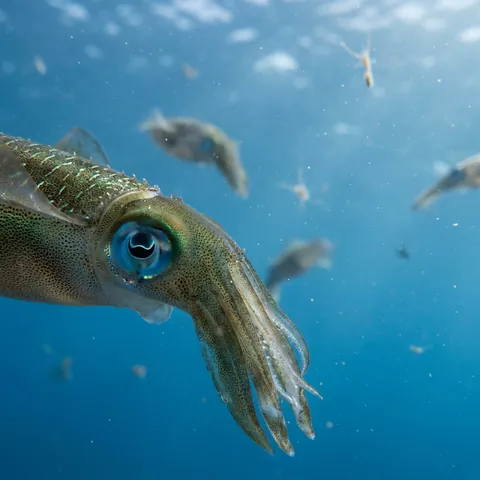
Atlantic brief squid
Lolliguncula brevis
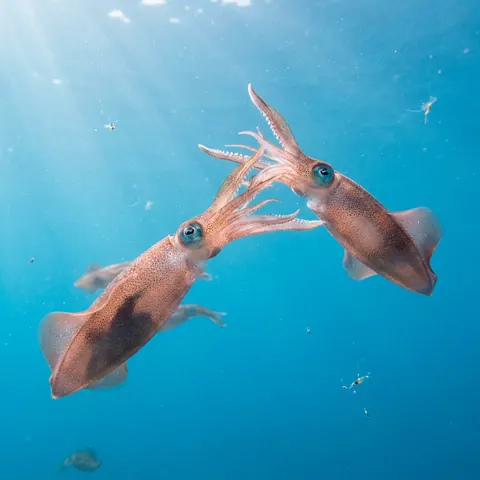
Sepioteuthis lessoniana
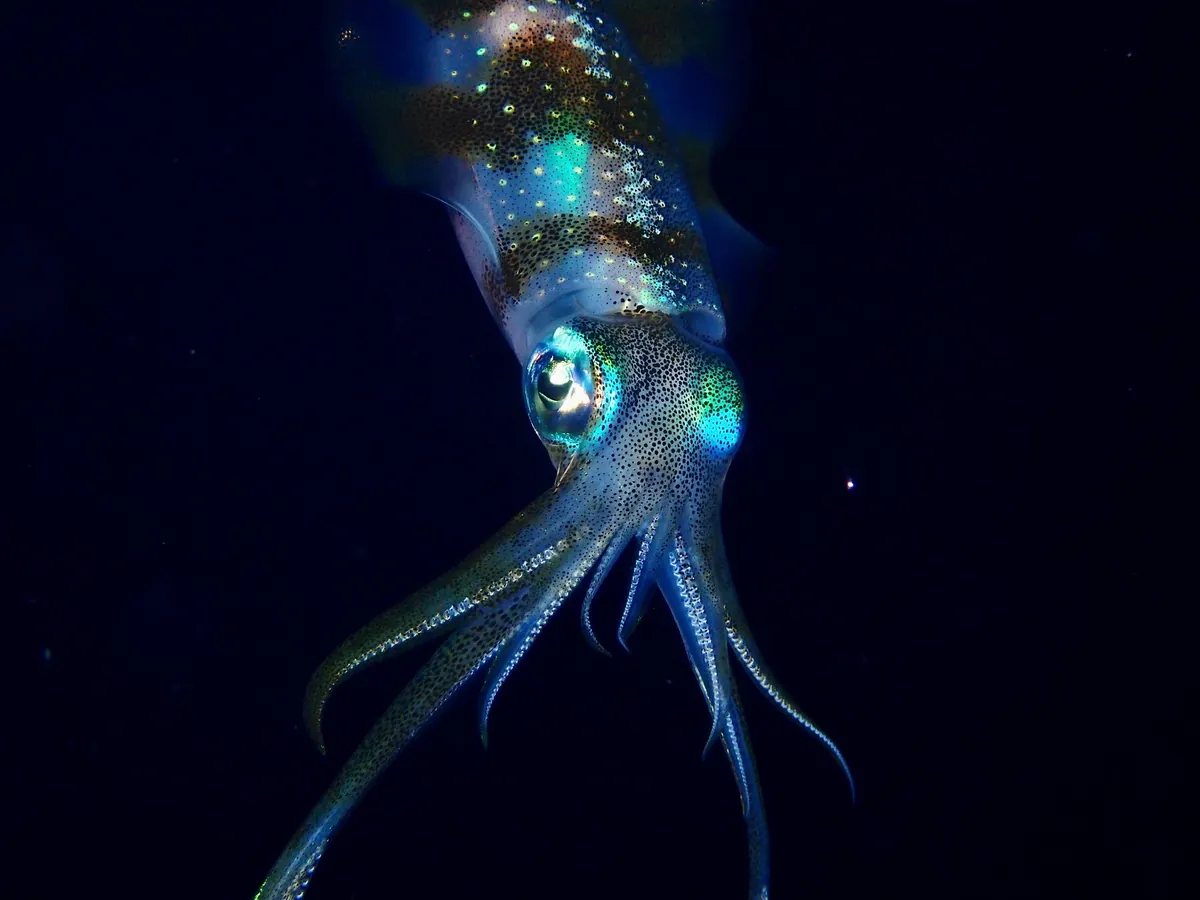
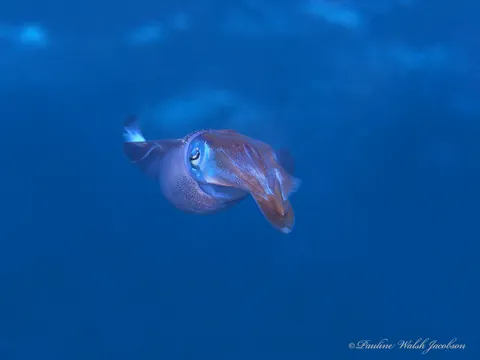
The bigfin reef squid glides along the reef edge with a pair of fins that run almost the full length of its body, flashing shifting colours as it hunts or signals to others nearby.
Also known as: sepioteuthis lessoniana, sepioteuthis lessoniana d'orbigny, 1826
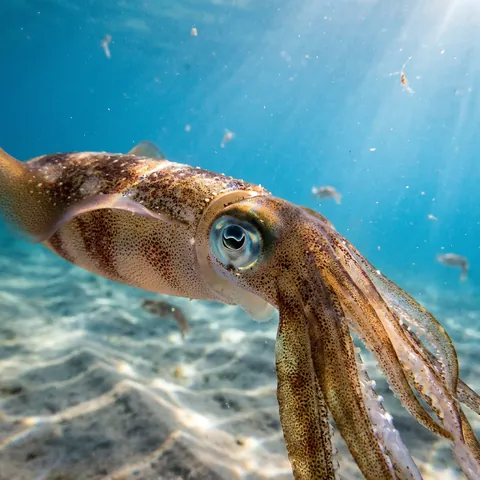
Its long, wraparound fins can make it look like a cuttlefish at a glance. Check for the narrow blue or white line running along the edge where the fins attach to the body; that fine line marks it out as a bigfin reef squid.
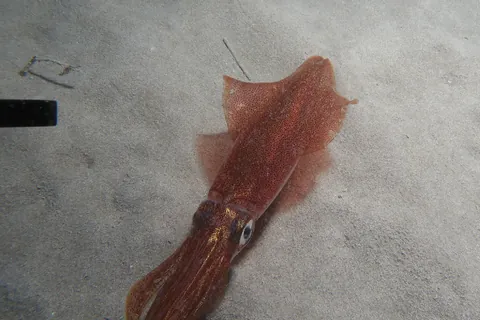
This squid has a cylindrical body that tapers to a blunt point at the rear, growing up to 40.1 cm. Its most distinctive feature is a pair of thick, oval fins that wrap around almost the whole length of the body, which can make it look a little like a cuttlefish. A narrow blue or white line runs along the point where the fins meet the body, and a fleshy ridge sits where the fins join at the back. Its large eyes are covered by a clear membrane and appear greenish at the base.
It lives in warm coastal waters close to shore, around rocky reefs, seaweed beds, and estuaries, from the surface down to about 100 m. It tends to stay in shallower water at night and moves deeper or takes cover near reefs, rocks, seagrass, or floating driftwood during the day. Groups of juveniles often shelter beneath floating driftwood.
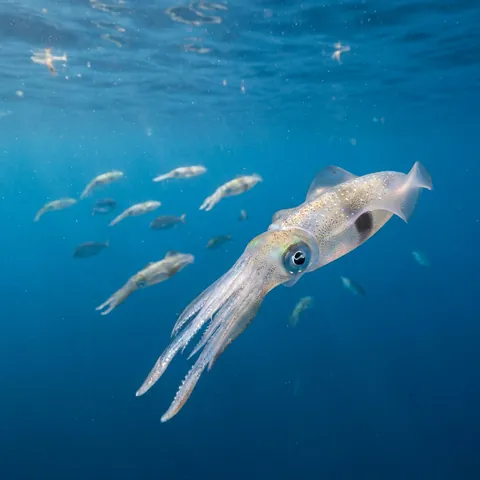
It moves in loose shoals or tighter, aligned schools, and even shoals made up of very different sizes rarely turn violent, since this species is unusual among squid in rarely attacking its own kind. It is strongly drawn to light and will move in close to a light source, sometimes freezing in place the moment a light switches on.
It is a strictly carnivorous, active hunter, feeding mainly on prawns and other crustaceans as well as fish, which it seizes with its long feeding tentacles.
Unlike most squid species, the bigfin reef squid rarely turns on its own kind. Shoals can mix squid of very different sizes without the larger ones attacking or eating the smaller ones.
Describe what you saw and we name it, then keep every species you find in your Oceandex.