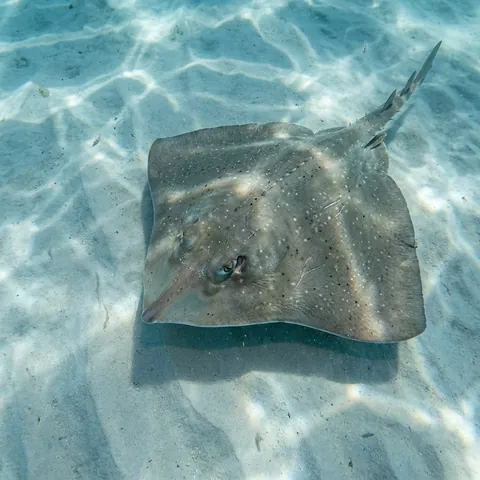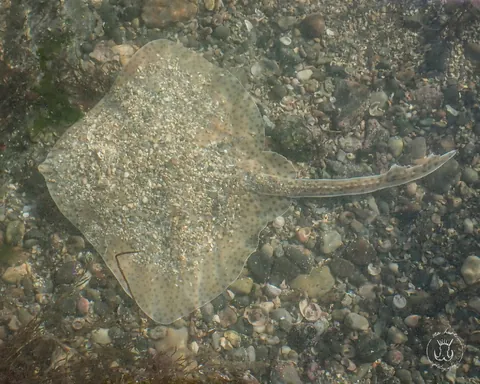
Blonde Skate
Raja brachyura
Beringraja binoculata
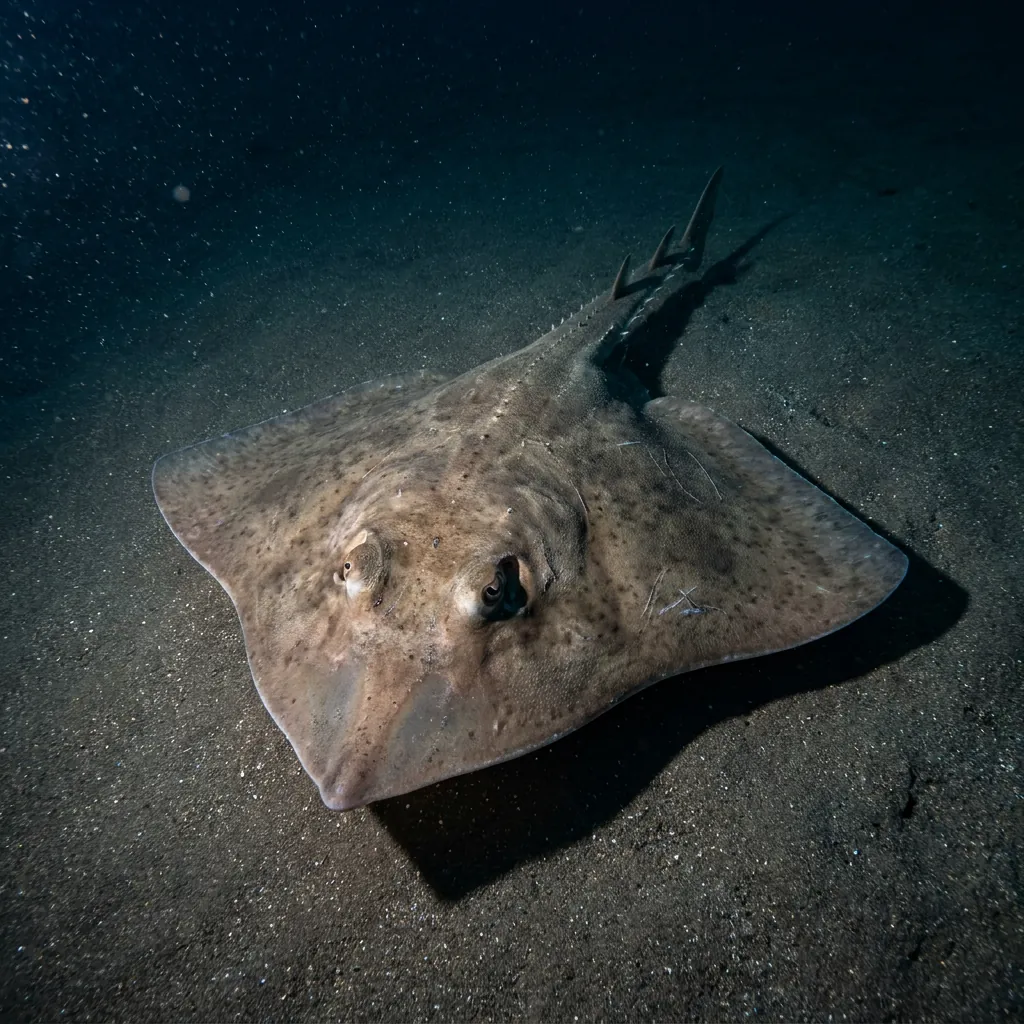
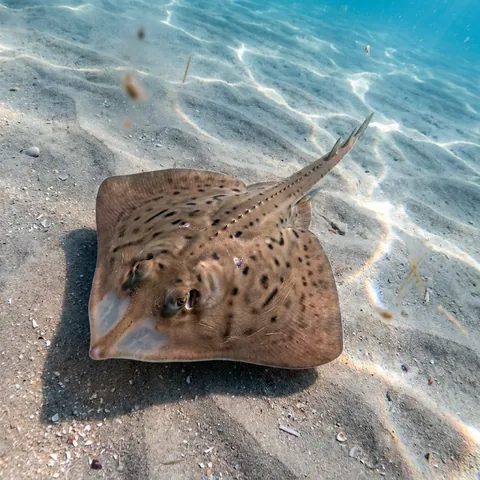
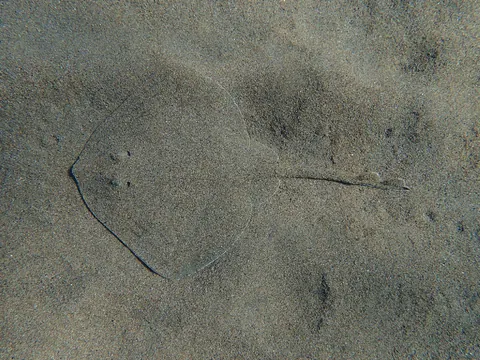
The big skate is the largest skate in North America, a flattened relative of sharks that can grow past two metres across. Divers in cold Pacific water sometimes find one resting almost invisible on the sea floor, buried in sand with just its eyes showing.
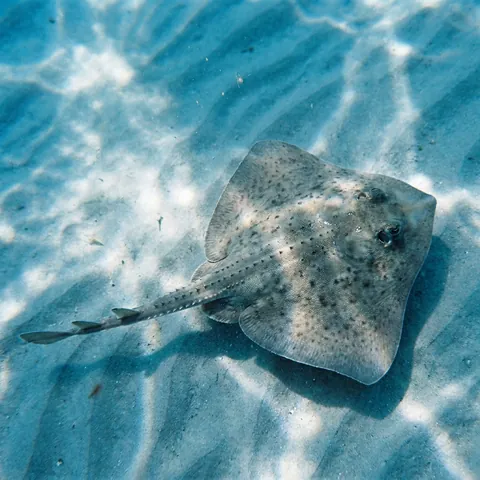
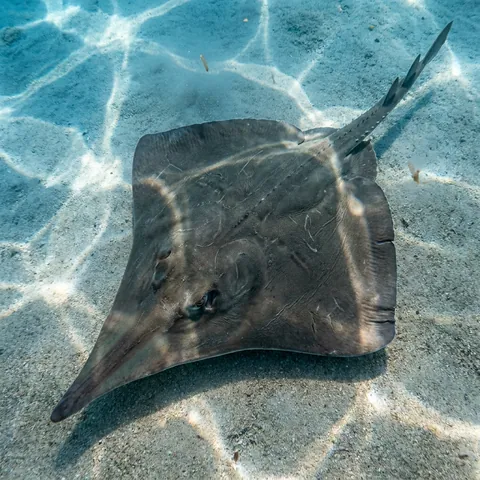
Many skates share this diamond-shaped, flattened body. The big skate's large size combined with the single bold, pale-ringed dark spot on each wing is the clearest way to tell it apart from smaller, unspotted skates.
This skate has a flat, diamond-shaped body formed by its wide pectoral fins, with a long, pointed snout. Its eyes are small and sit just in front of two large breathing openings called spiracles. The back is mottled brown, reddish-brown, olive, or gray, with small white spots and dark blotches, and each wing carries one large dark spot ringed in a pale border. The underside is white, sometimes with dark marks. Adults have small prickly bumps on the back and a row of thorns along the midline of the tail; young skates have smooth skin. It can reach 244 cm long, though most are closer to 180 cm.
It lives on sandy or muddy bottoms in coastal bays, estuaries, and over the continental shelf, sometimes near patches of kelp. It ranges through the north-eastern Pacific, from the Bering Sea and Aleutian Islands south along the coast, and is common off British Columbia. It has been recorded as deep as 800 m but is usually found between 3 and 110 m.
Big skates spend much of their time buried in sediment, eyes just showing, waiting to ambush prey. They eat worms, molluscs, crustaceans, and small bottom-dwelling fish. Females lay large egg capsules, sometimes called mermaid's purses, on sandy or muddy flats, and each capsule can hold several eggs. The dark eyespots on the wings are thought to confuse predators such as sevengill sharks by mimicking a bigger animal's eyes.
The big skate lays the largest egg capsule of any skate species, and unlike most skates, each capsule commonly holds more than one embryo inside.
Describe what you saw and we name it, then keep every species you find in your Oceandex.