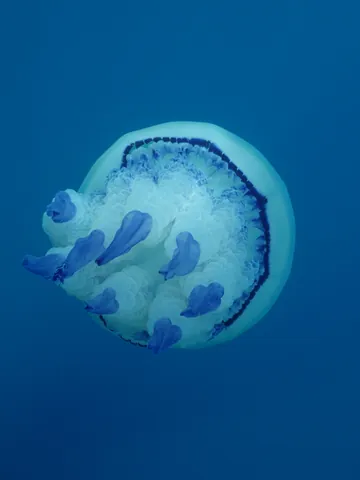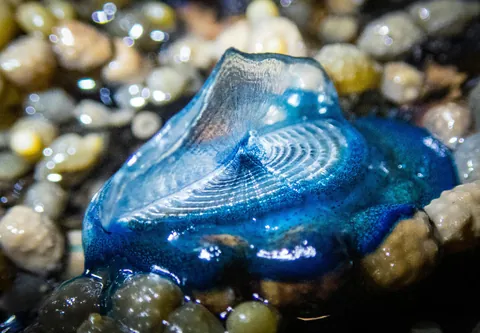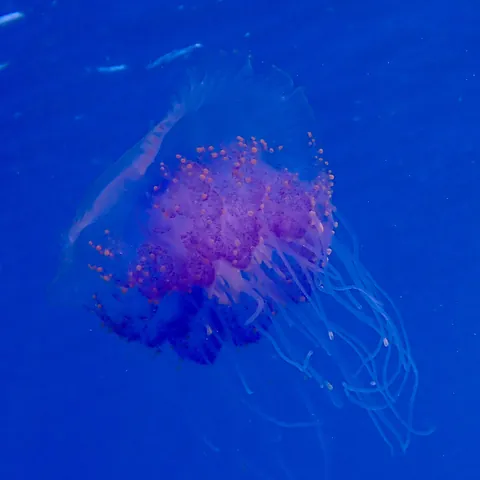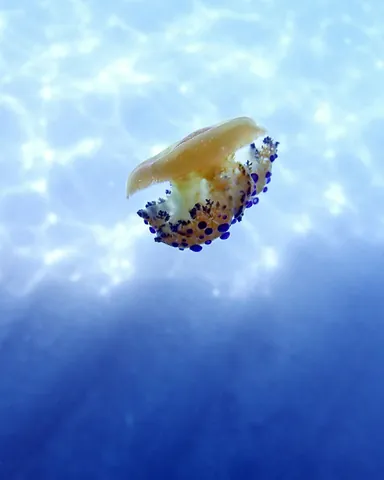
Asian moon jelly
Aurelia coerulea
Chrysaora chesapeakei
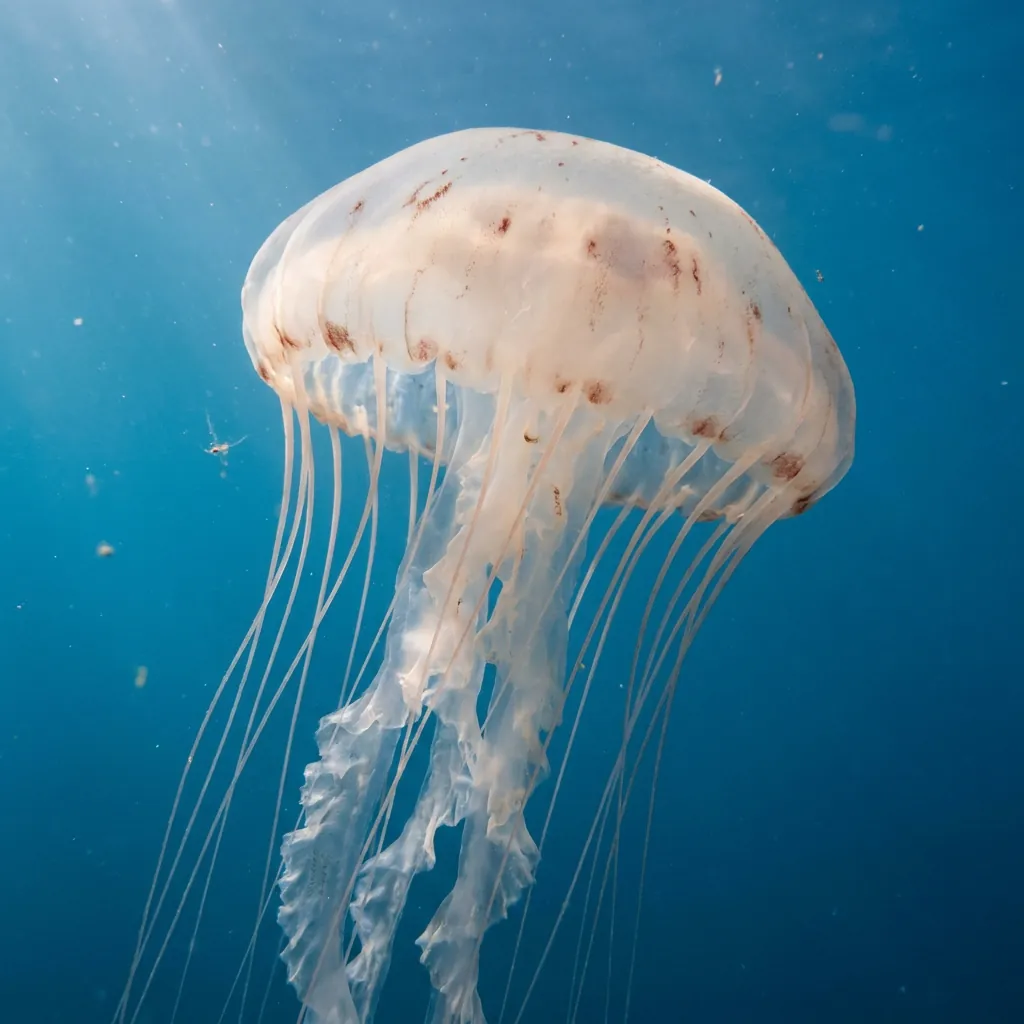
The bay nettle is a stinging jellyfish of sheltered coastal waters, best known from the Chesapeake Bay it is named after. It was only recognised as its own species, separate from the Atlantic sea nettle, in 2017.
It looks much like the Atlantic sea nettle, but the bay nettle has a noticeably smaller bell, fewer tentacles, and longer oral arms.
It has a saucer-shaped bell with a mouth at the centre, ringed by four long, lacy oral arms that trail below it. Many thin tentacles hang from the bell's edge, and these carry a sting that can cause pain to humans, though it is not dangerous unless it triggers an allergic reaction.
It lives in a range of coastal waters, from open ocean to brackish bays and estuaries, and is especially common in the Chesapeake Bay. It is also found in bays and estuaries along the U.S. east coast and in the Gulf of Mexico.
It is a carnivore, feeding mainly on plankton and small invertebrates such as crustaceans and comb jellies.
By eating large numbers of comb jellies, the bay nettle helps hold down a species that otherwise damages Chesapeake Bay fisheries, so its summer numbers directly affect how well local fish populations do.
Describe what you saw and we name it, then keep every species you find in your Oceandex.