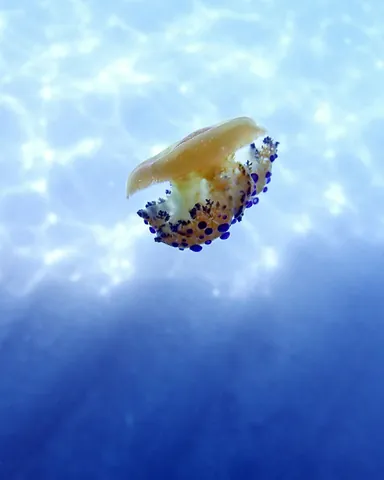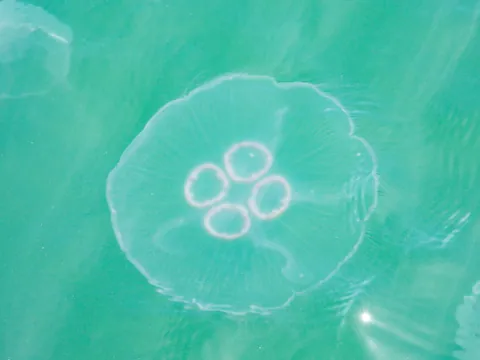
Asian moon jelly
Aurelia coerulea
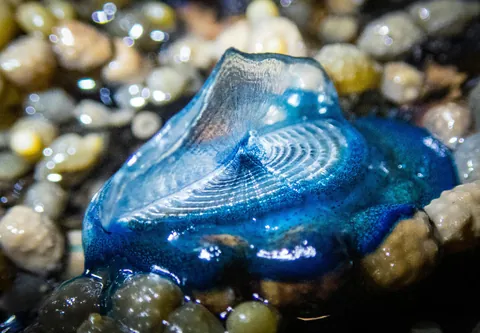
Physalia utriculus
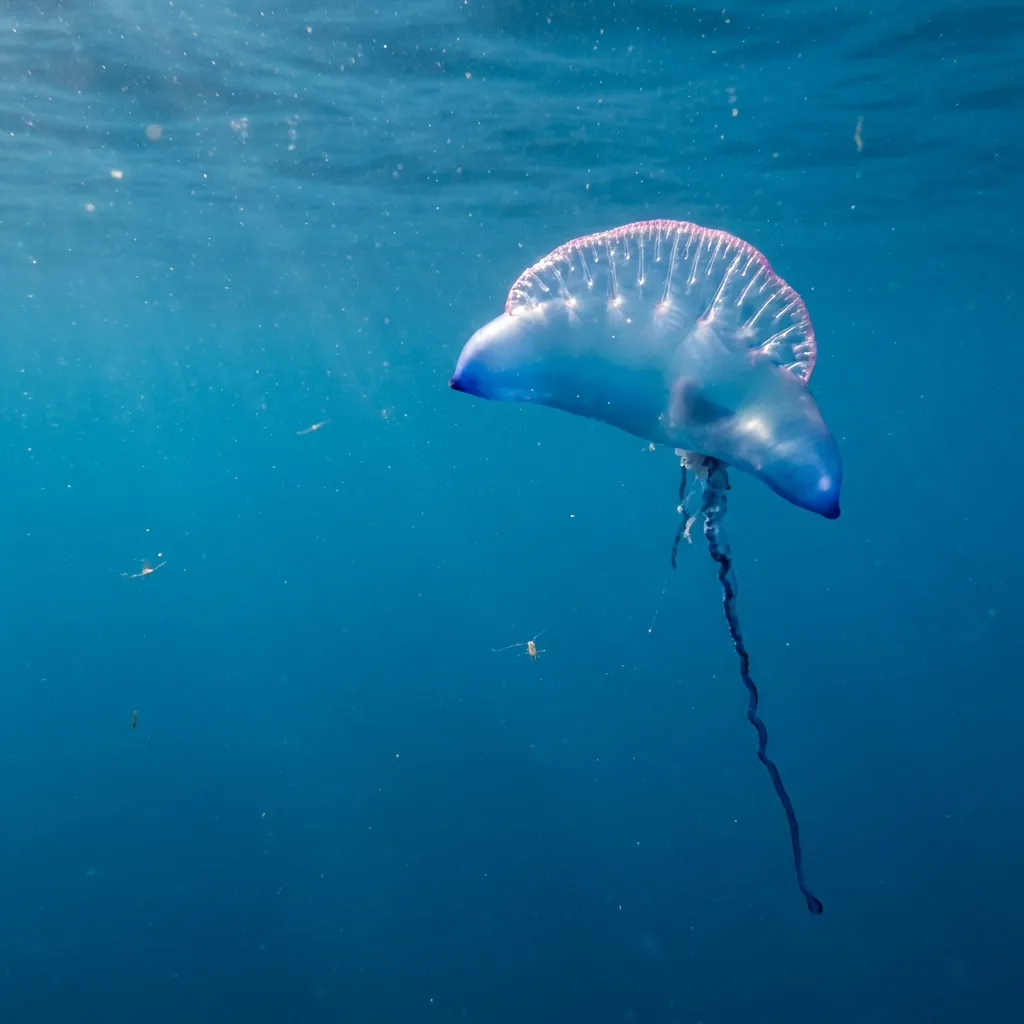
The Indo-Pacific man-o-war is not a jellyfish. It is a siphonophore, a colony of specialised organisms living together as one. A gas-filled float keeps it at the surface, where wind and currents carry it along. It often drifts in groups.
Also known as: indo-pacific bluebottle
Look for a small float riding on the surface with a raised sail, trailing just one long tentacle underneath. A single trailing tentacle, rather than a cluster of several, separates it from the larger Atlantic man-o-war.
A small, gas-filled float sits on top of the water, topped with a sail that catches the wind. Below the float hangs a single long tentacle, covered in stinging cells used to catch prey. The float is smaller than that of its larger relative, the Atlantic man-o-war, which also has many tentacles instead of just one.
It causes most of the reported stings on Australian beaches, with 10,000 to 30,000 stings a year on the east coast alone, yet no deaths from its sting have ever been recorded.
Describe what you saw and we name it, then keep every species you find in your Oceandex.