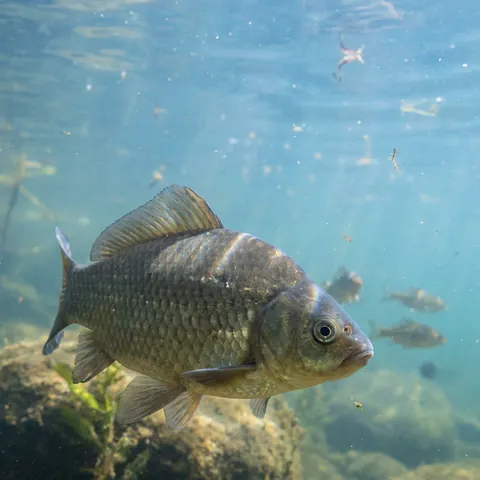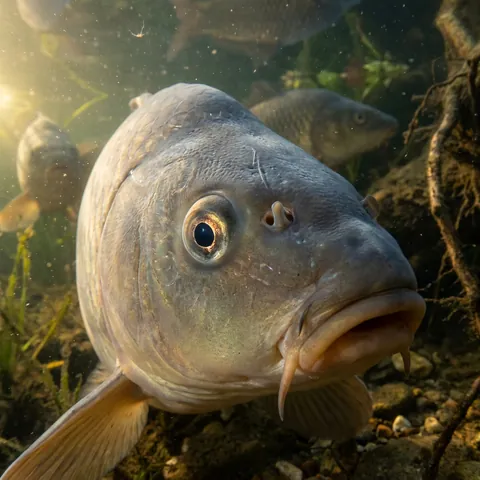
Carp
Cyprinus carpio
Cyprinus rubrofuscus
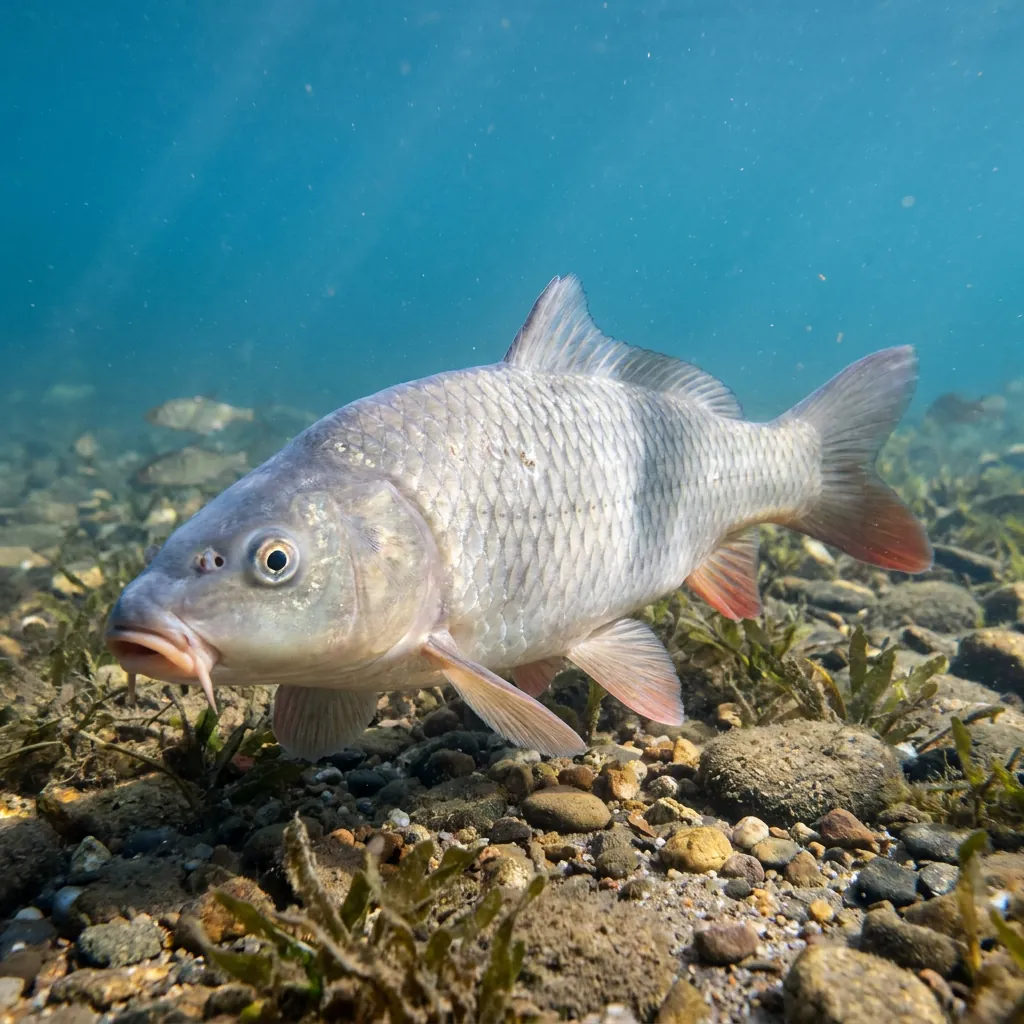
The Amur carp is a hardy freshwater fish from eastern Asia, built to cope with cold, murky, low-oxygen water that would trouble many other fish. It is also the wild ancestor behind one of the world's most familiar ornamental fish.
Also known as: koi carp, koi, domestic koi, asian common carp, amur river carp
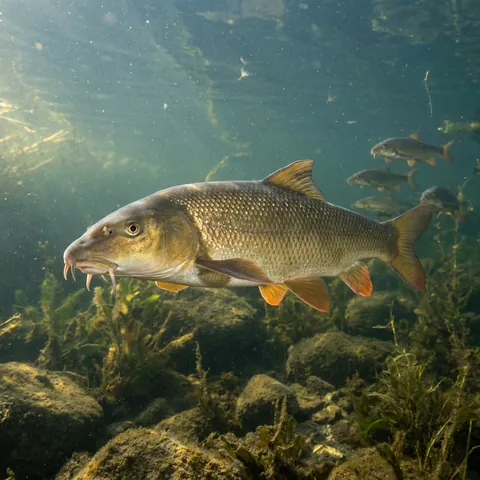
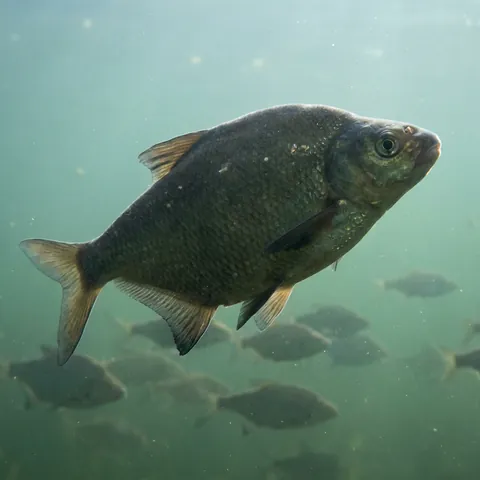
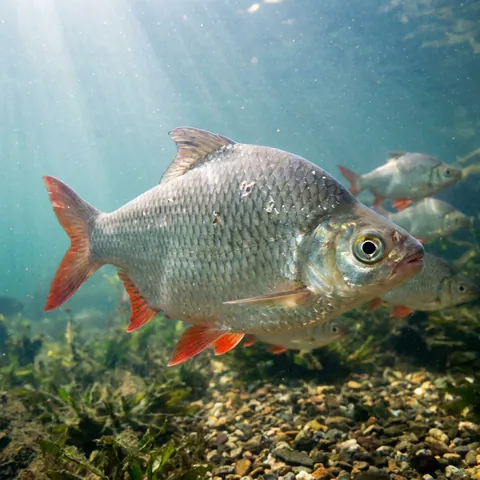
It closely resembles the common carp. Look at the fin colour: wild Amur carp have red pelvic, anal, and tail fins on a silver body, while common carp are grey or bronze all over.
It has a torpedo-shaped body covered in large, bright scales. A long, low dorsal fin runs along the back half of its body, and its pectoral fins are large. The mouth points downward and can extend forward slightly to pick food off the bottom, and four short barbels around the mouth help it feel for food. In the wild, its body is silver, with red pelvic, anal, and tail fins.
It lives in rivers, lakes, and ponds across eastern Asia, favouring slower-flowing water of moderate depth. It tolerates a wide range of conditions, including turbid water, slightly brackish water, cold temperatures, and low oxygen levels. It has also been widely introduced into ponds elsewhere in Asia for fish farming.
Adults tend to live in schools and feed along the bottom, eating small invertebrates, larvae, and plant matter, with the mix shifting between wetter and drier seasons. When ready to spawn, adults move into sheltered, shallow, slow-moving water.
The Amur carp is listed as Least Concern, with no widespread known threats and a large overall range. Its population trend has not been reassessed recently, but the species is increasingly farmed across Asia for food.
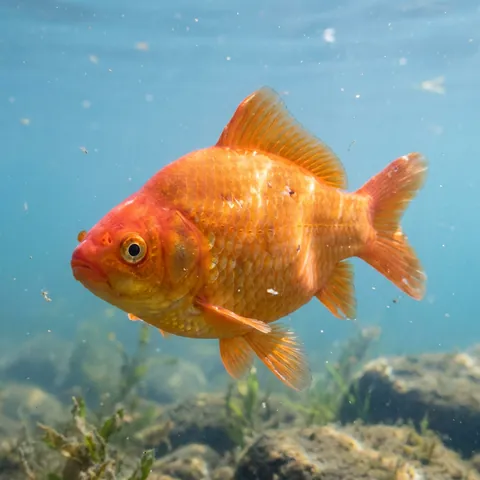
Ornamental koi carp are believed to have been bred from a mix of this species and the native Japanese carp, making the Amur carp one of the ancestors of a fish now kept in ponds worldwide.
Describe what you saw and we name it, then keep every species you find in your Oceandex.