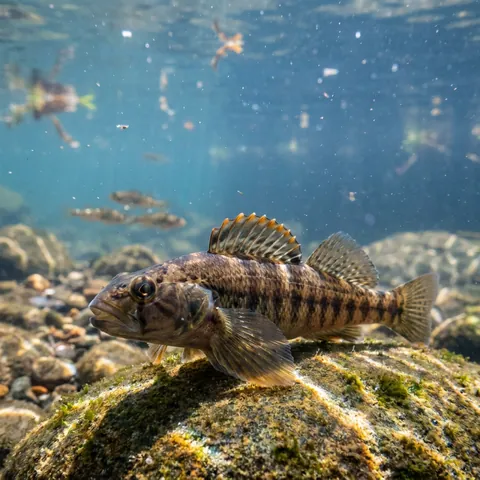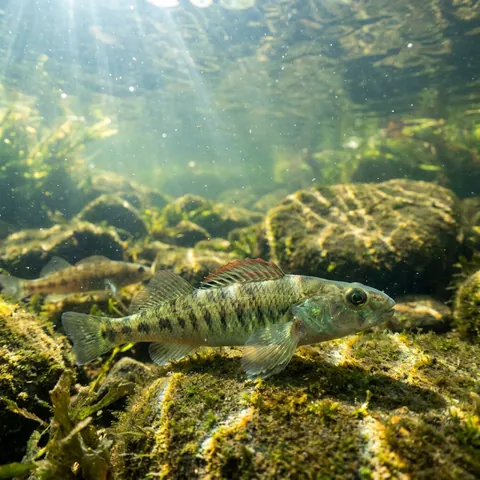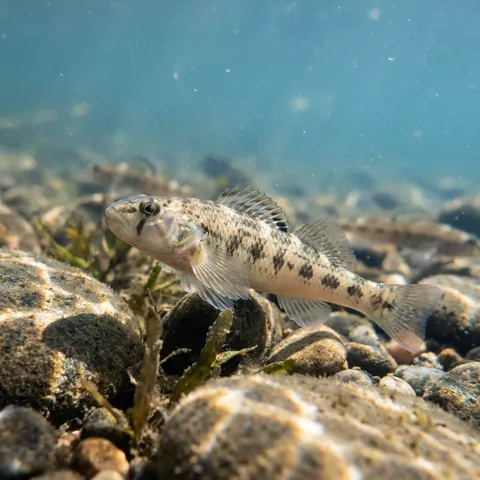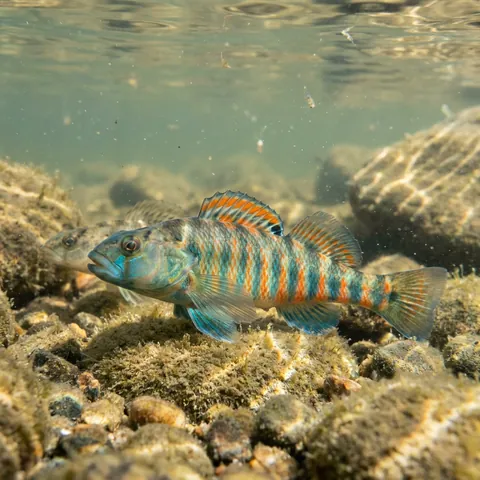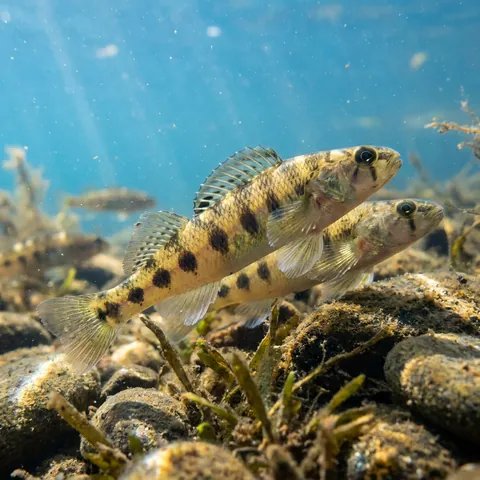
Blackbanded Darter
Percina nigrofasciata
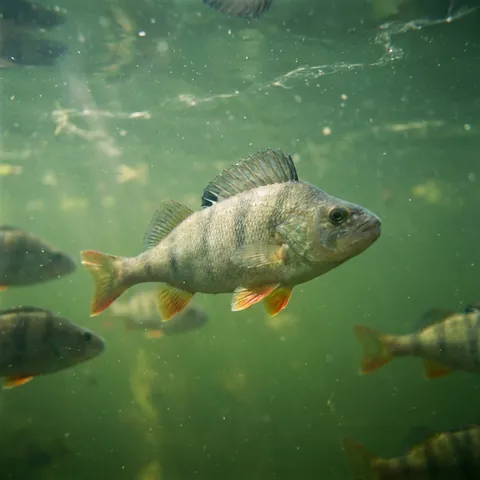
Perca flavescens
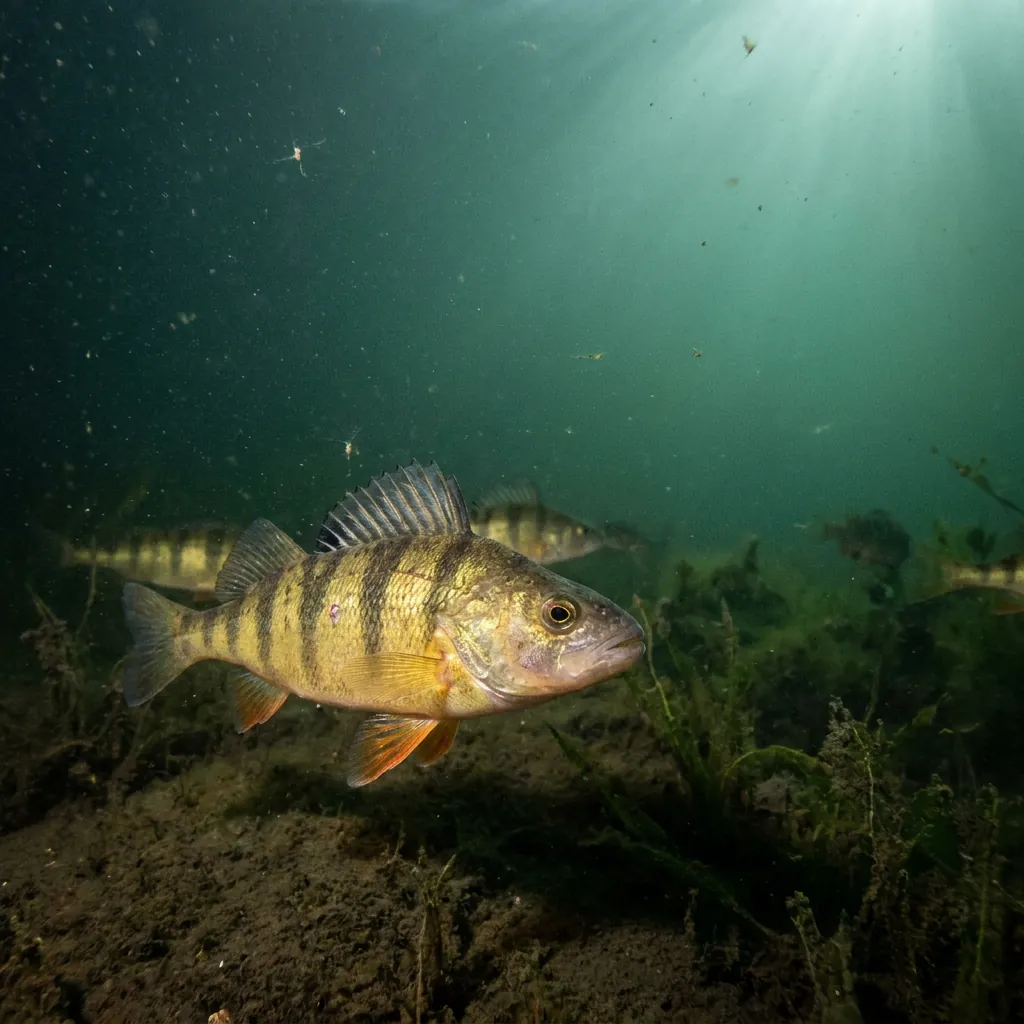
The yellow perch moves through lake shallows in loose schools, its gold and green body barred like a tiger, always alert for the next meal.
Also known as: american perch, american yellow perch, ringed perch, striped perch, jack perch, green hornet
This fish can be confused with other barred freshwater species sharing its lakes and streams. The clearest giveaway is the dark blotch near the back of its front dorsal fin, a mark not shared by most other barred fish.
This fish has a slim, flattened body with a blunt snout and a lower jaw that juts out slightly past the upper one. Its back and upper body run from bright green through olive to golden brown, with 6 to 8 vertical bars crossing a yellow to yellow-green background on the flanks. A dark blotch usually sits on the front dorsal fin, near its rear spines. The other fins range from yellow to green or silvery white, and spawning males show red or yellow on their lower fins.
It lives in the Great Lakes and St. Lawrence River system, the Upper Mississippi basin, and rivers draining into Hudson Bay and the Atlantic, and has been introduced far beyond this native range. It favours the shallow, weedy edges of lakes, but also lives in slow rivers, streams, ponds, and brackish water, occasionally moving into deeper water.
This fish gathers in large schools and spawns once a year in spring, usually at night or early morning. Spawning is a communal event, with no nest or redd built to protect the eggs.
Young perch start out eating zooplankton, then shift to small invertebrates like midge and mosquito larvae as they grow. Adults add crayfish, mysid shrimp, fish eggs, and other small fish to their diet, and larger individuals can become mainly fish-eaters, sometimes even eating smaller perch.
This fish lays its eggs in a long, gelatinous strand draped over weeds or branches, a way of egg-laying not seen in any other North American freshwater fish.
Describe what you saw and we name it, then keep every species you find in your Oceandex.