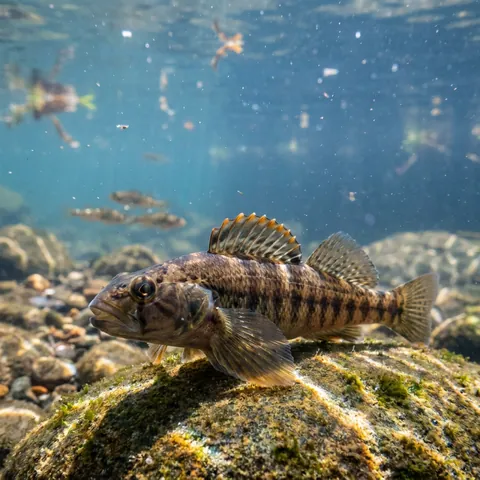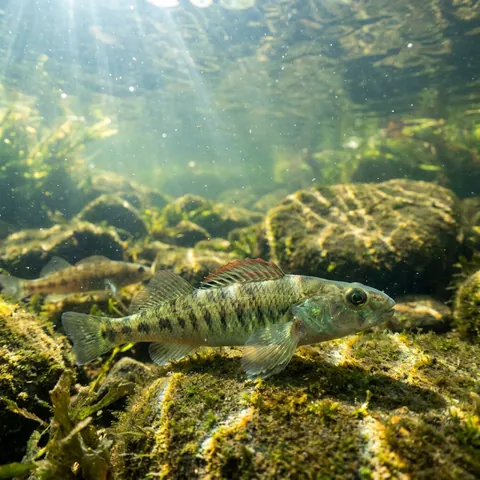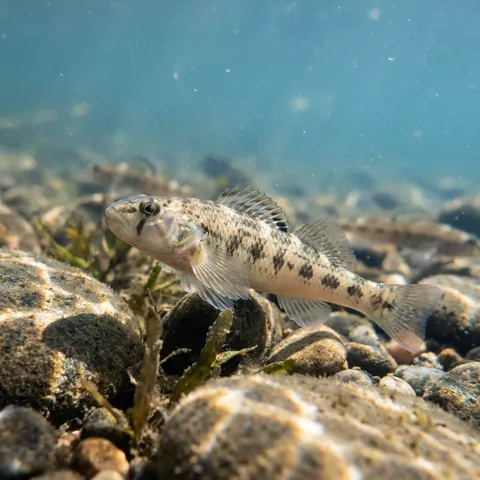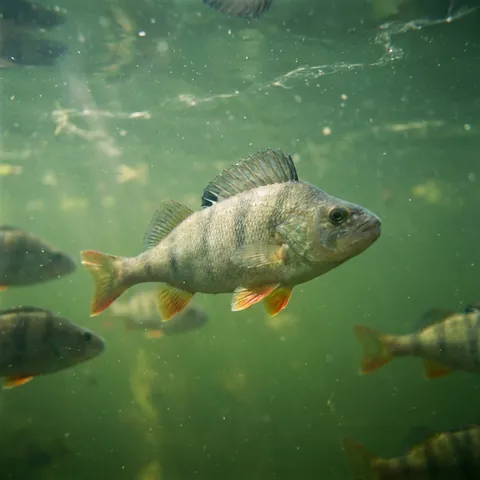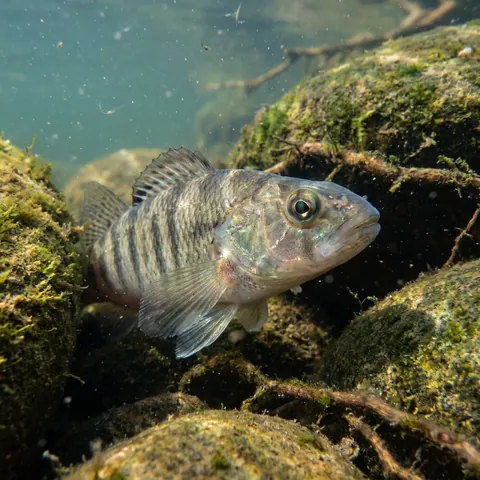
Blackbanded Darter
Percina nigrofasciata
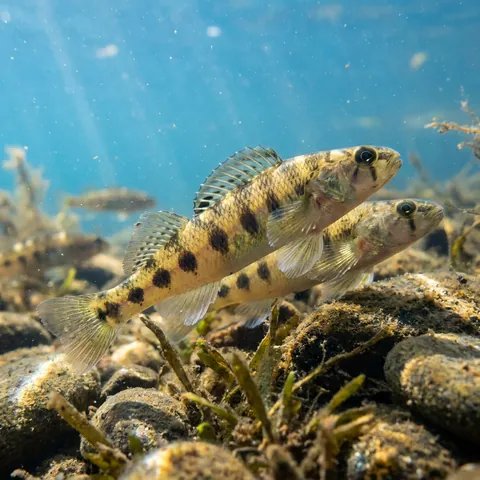
Etheostoma caeruleum
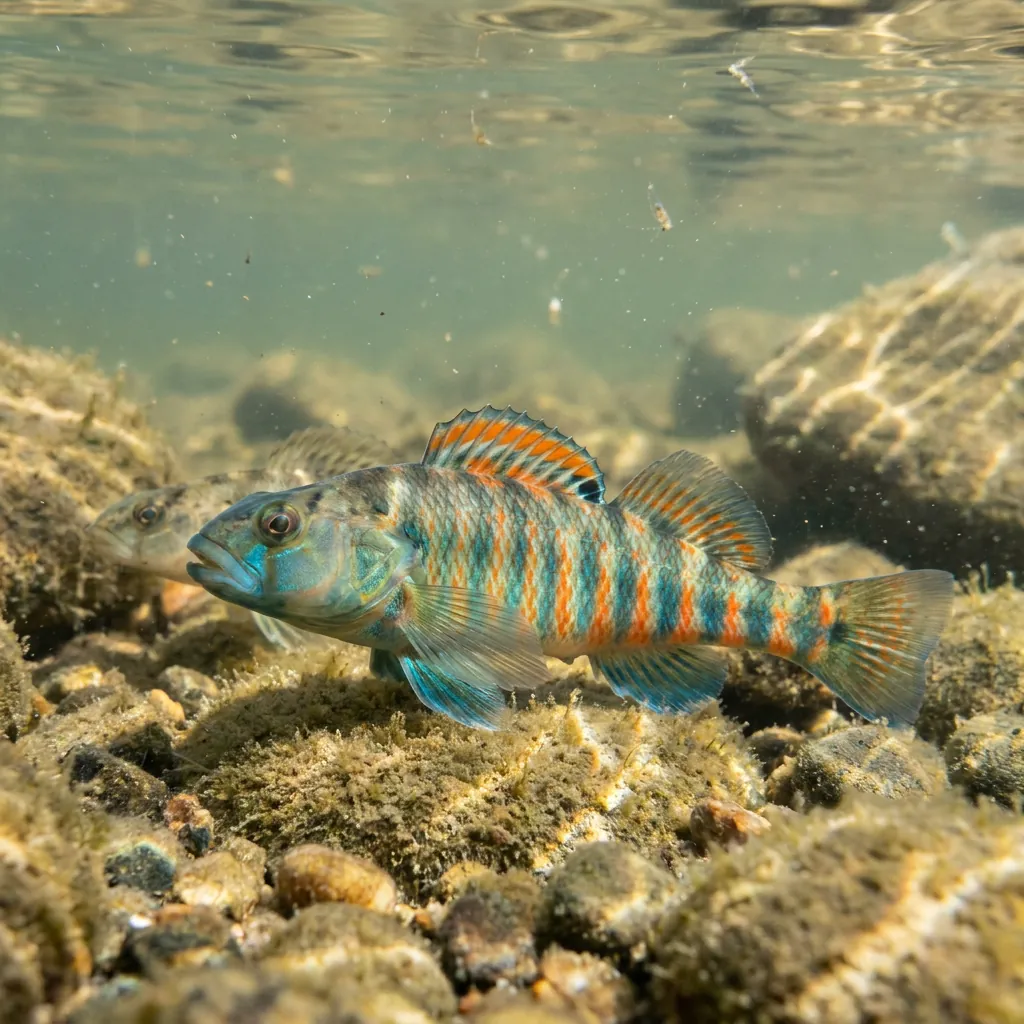
Few freshwater fish show off as much colour as a breeding male rainbow darter. It lights up with orange and shiny blue against the pale gravel of a clean, fast-flowing stream stretch called a riffle.
The mix of three dark spots along the back and blue-and-orange colour in the back and underside-near-tail fins sets this darter apart from other stream darters it shares riffles with.
A small darter with three dark spots along its back. Its dorsal fin (on its back) and anal fin (near its tail underside) carry patches of blue and orange. Breeding males become extra bright, with orange plus shiny, colour-shifting blue spots, stripes, and checks over the body.
Lives in small, fast-moving streams and rivers across the eastern United States, in the Great Lakes and Ohio River Valley, and south into northern Alabama. It needs clean, rocky riffles and is very sensitive to pollution and silt (fine mud in the water).
It feeds mainly on caddisflies and other small insects and small animals without backbones. It feeds most in the morning and again in the late afternoon or evening. In spring, it leaves the fast riffles and gathers over pebbles where the current slows into a pool to mate. Males guard their own patch of ground, and pairs mate again and again over several days. Bigger fish, such as smallmouth bass, burbot, and stonecats, hunt it.
Describe what you saw and we name it, then keep every species you find in your Oceandex.