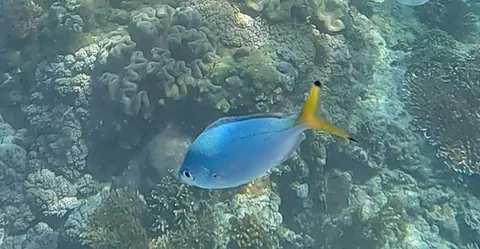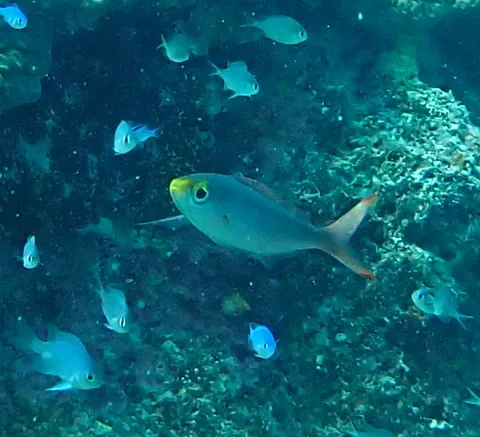
Banana fusilier
Pterocaesio pisang
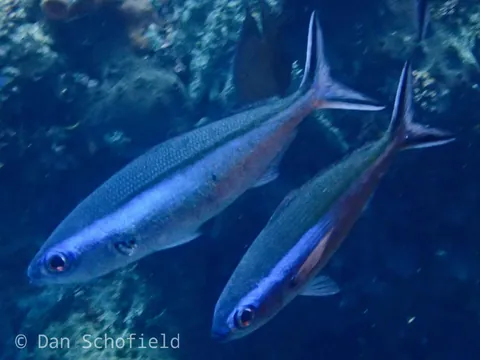
Caesio teres
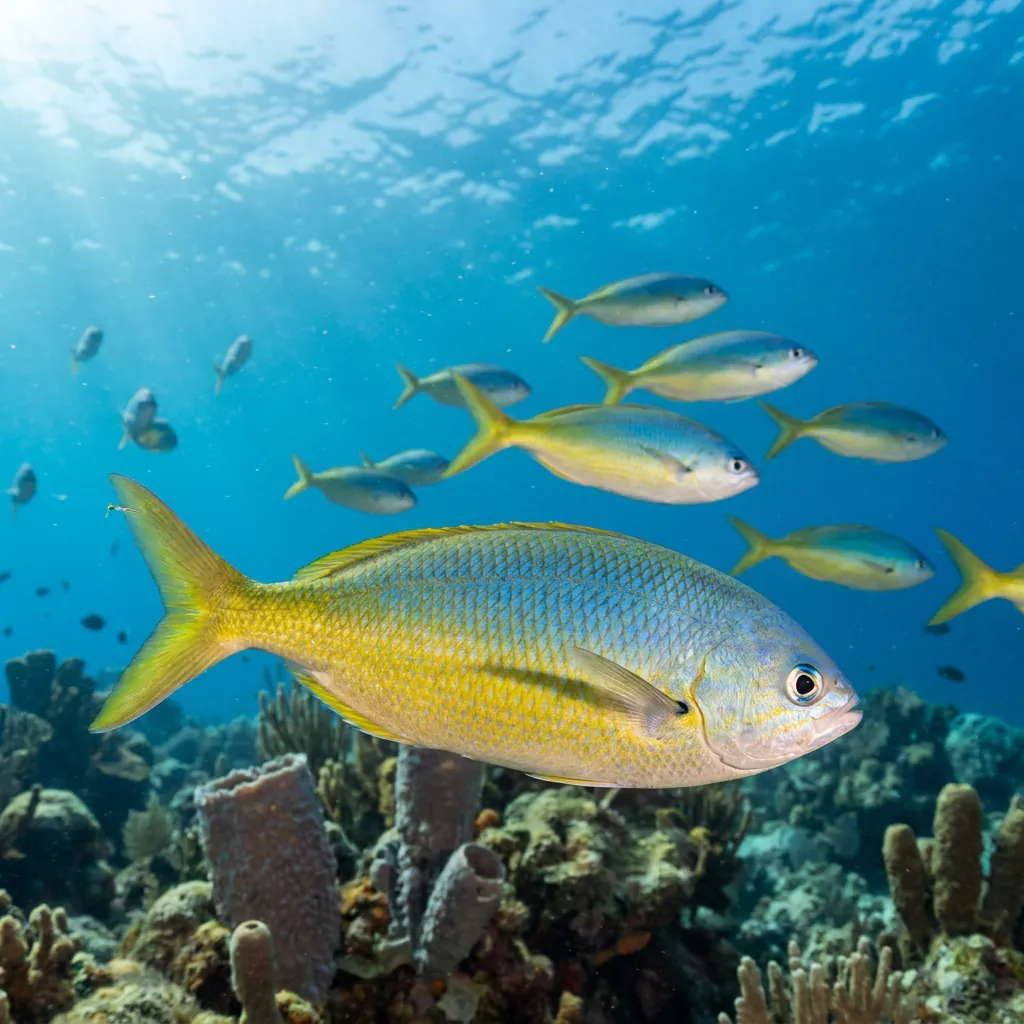
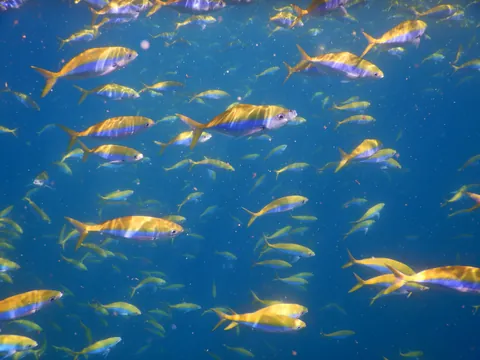
A brightly two-toned fusilier that streams over the reef in large, mixed schools, its yellow back catching the light as it turns. It commonly grows to about 26.6 cm and can reach up to 40 cm.
Also known as: blue and gold fusilier, yellow and blueback fusilier, yellow-tail fusilier, yellow-and-blueback fusilier, blue & gold fusiler, yellow-tail fusilier, yellowback fusilier, beautiful fusilier, yellowtail fusilier, yellow and black fusilier, blue and gold fusilier, blue-and-yellow fusilier, blue & gold fusilier
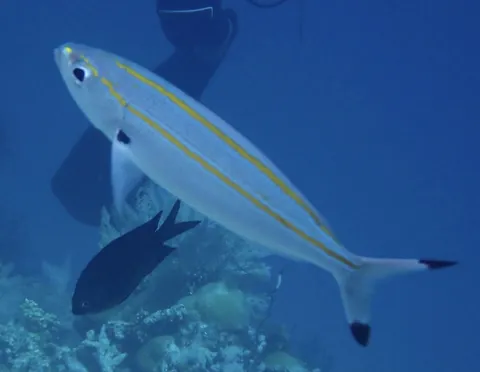
This species is easily confused with the similar-looking Caesio caerulaurea. The mark to check is the pectoral fin: this species has a black patch at the top of its base, on an otherwise white fin.
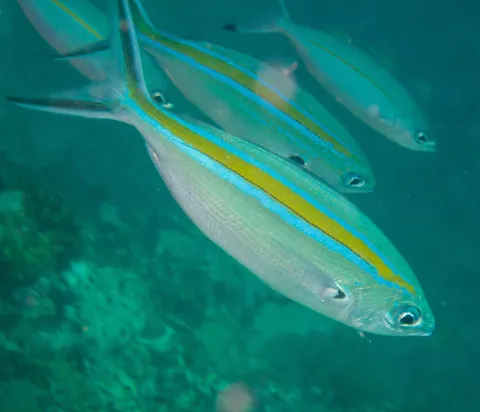
A fusiform, laterally flattened body typical of fusiliers. The upper back and the rear part of the back (dorsal) fin are bright yellow, while the rest of the upper body is bright blue, fading to white on the belly. The pelvic and anal fins are white.
Lives on coral reefs across the tropical Indo-West Pacific, at depths from about 5 to 50 m. It favours coralline lagoons within the reef.
A daytime feeder, it forms large midwater schools and feeds on zooplankton, often mixing in with other fusilier species.
Adults time their spawning to outgoing tides on a lunar cycle, gathering right at the mouths of deep reef channels to release their eggs near the surface.
Describe what you saw and we name it, then keep every species you find in your Oceandex.