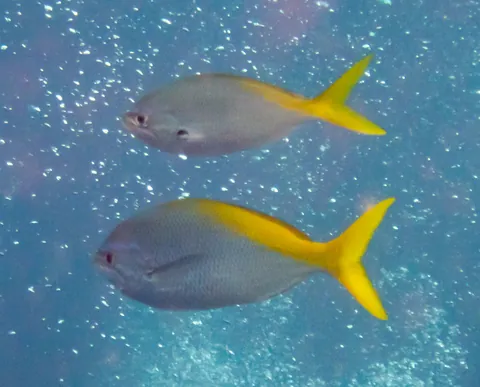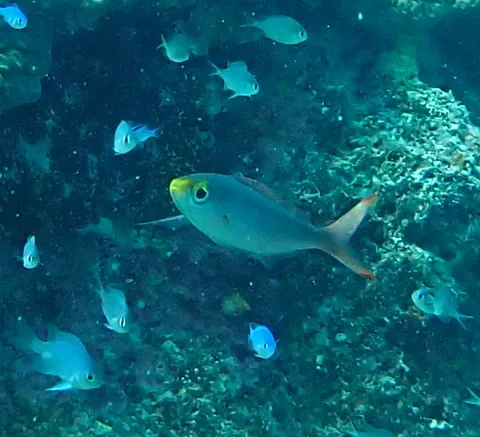
Banana fusilier
Pterocaesio pisang
Pterocaesio tile
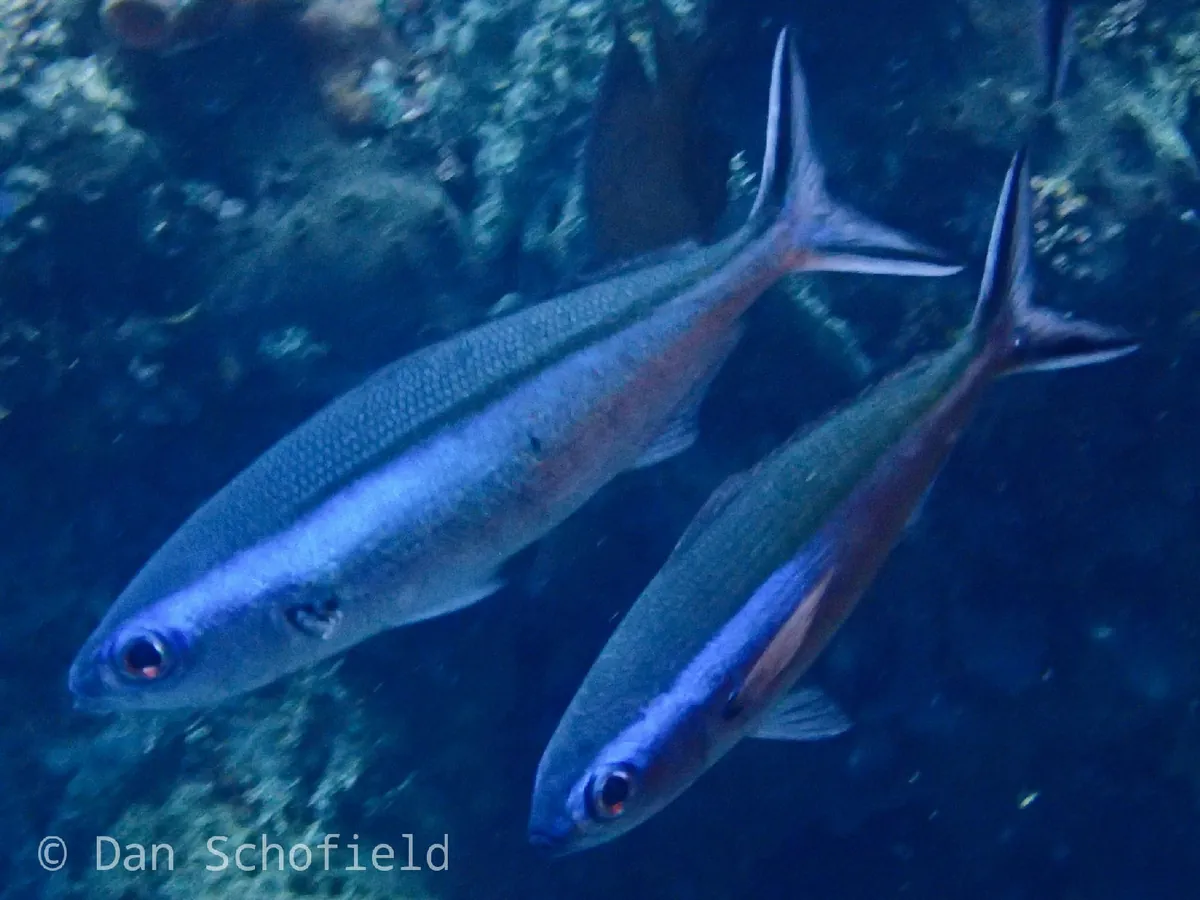
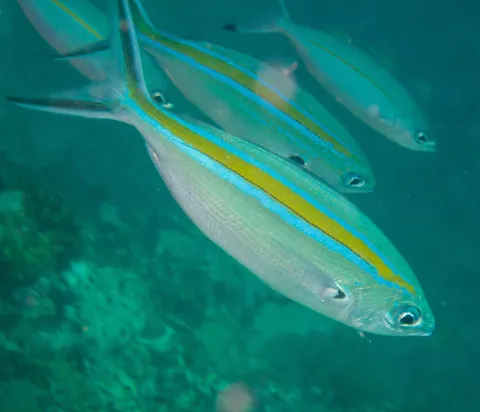
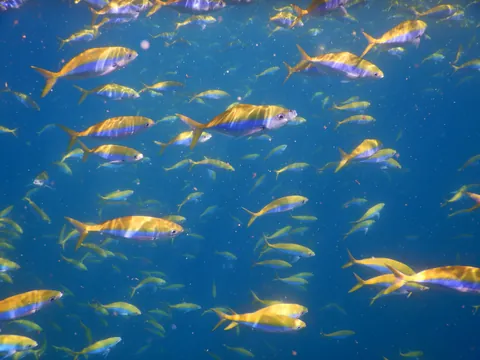
A streak of neon blue moving in a school across the reef, this small fusilier spends its life in the open water above the coral, hunting drifting plankton.
Also known as: bluestreak fusilier, dark-banded fusilier, neon fusilier, tricoloured fusilier, dark-banded fusilier, tricoulored fusilier, neon fusilier, darkbanded fusilier, dark banded fusilier, fusilier, neon fusiler, bluestreak fusilier, darkbanded fusilier, dark-banded fusilier
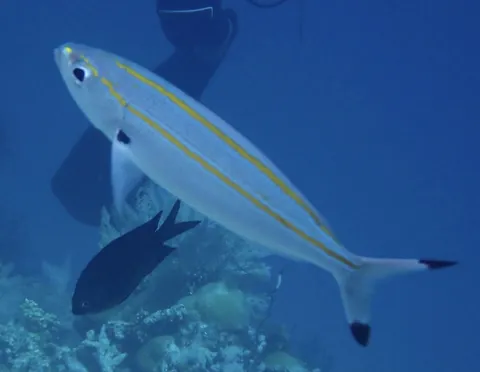
Several fusilier species travel together in mixed schools and look alike from a distance. The mark to check is the tail: the blue body stripe continues onto the upper lobe of the tail fin, edged by a thin black line, while a separate black streak sits on the lower lobe.
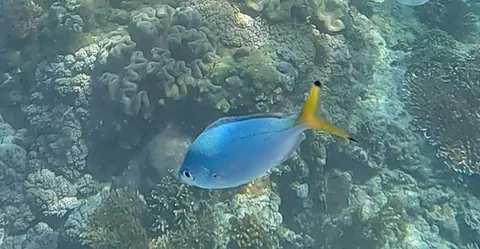
This fish has a slim, streamlined body. Its back is brownish, with a white spot on each scale that lines up into rows, and its lower body is pink to reddish. A wide, iridescent blue stripe runs from the snout back to the base of the tail. It can change colour quickly, darkening its lower body to reddish and shortening the blue stripe. The dorsal fin is pale bluish-green to pink.
Dark-banded fusiliers range widely around coral reefs across the Indo-Pacific, living in lagoons and over reef flats down to about 60 metres. Juveniles sometimes appear in large numbers in shallow lagoons and on reef flats.
This is a schooling fish, often mixing in with other fusilier species in the same school. The schools forage together for zooplankton in midwater. It lays large numbers of small, drifting eggs.
It can quickly change colour, darkening its belly to reddish and shortening its blue side stripe.
Describe what you saw and we name it, then keep every species you find in your Oceandex.