Eastern Mosquitofish
Gambusia holbrooki
Gambusia affinis
The western mosquitofish is a tiny, tough freshwater fish best known for eating mosquito larvae. It has spread further around the world than almost any other freshwater fish, for better and for worse.
Also known as: spotted gambusia, mosquito fish
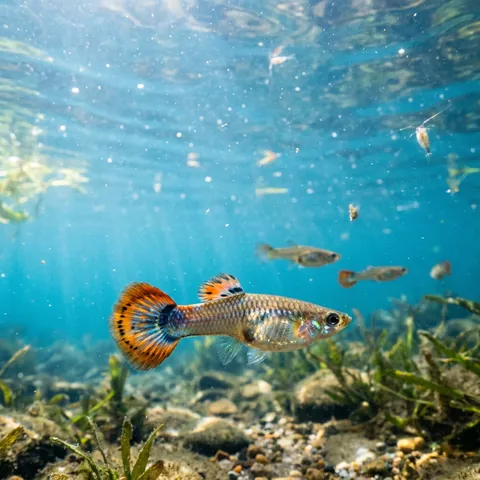
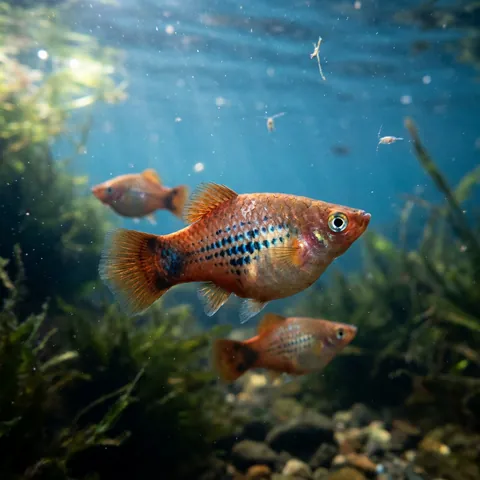
It is often confused with guppies, sailfin mollies, and platies. Look for the dark gravid spot near the tail end of the female's belly — none of those look-alikes carry this marking.
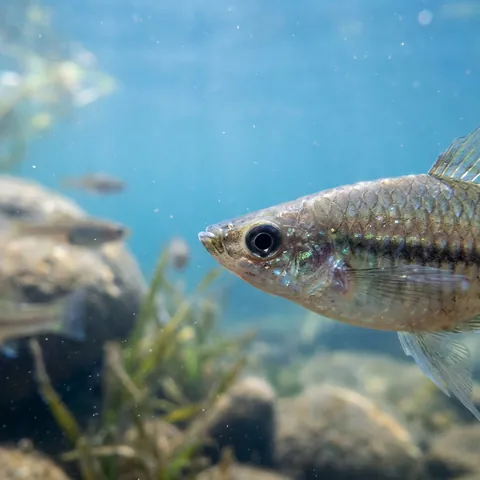
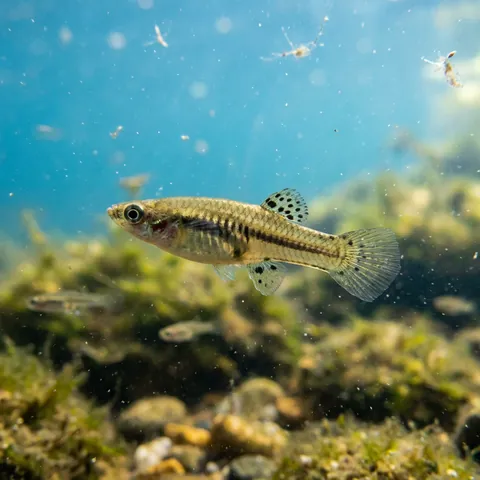
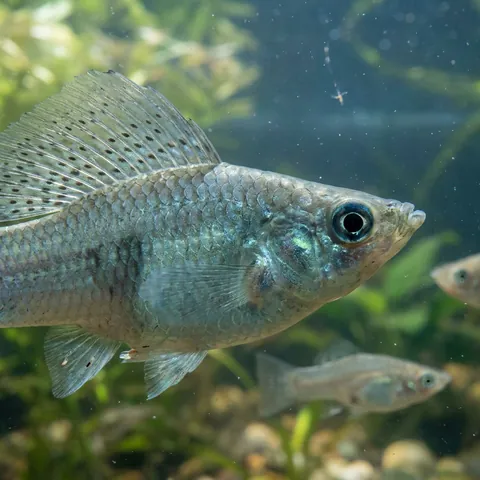
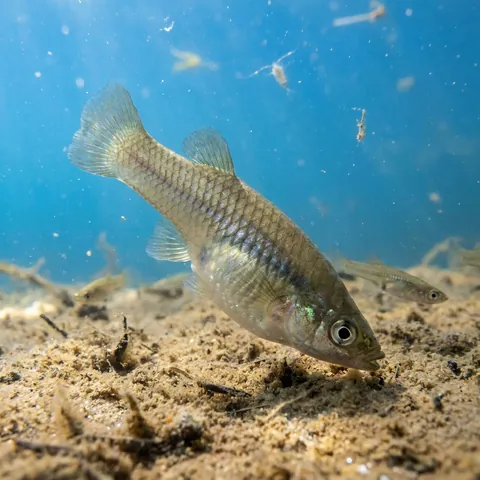
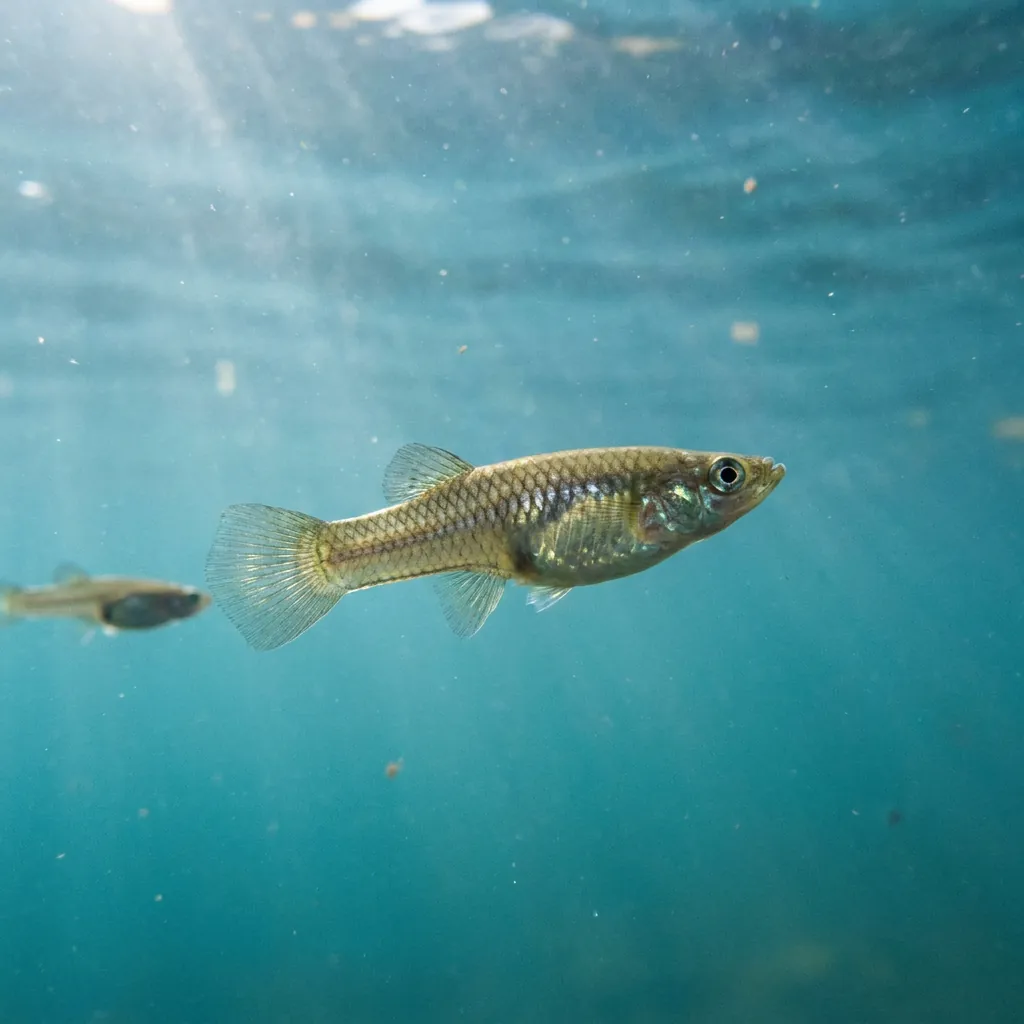
This is a small, dull grey fish with a rounded belly, rounded dorsal and tail fins, and a mouth that turns upward for feeding at the surface. Females are noticeably larger than males and carry a dark gravid spot near the back of the belly. Males have a slim, pointed anal fin, while the female's anal fin looks more like a small dorsal fin.
Mosquitofish live in shallow, sheltered fresh water, favouring spots away from larger fish. They cope with poor conditions that most fish cannot, including low oxygen and salty or very warm water, which has helped them spread far beyond their native range in the Mississippi basin and Gulf Coast.
Mosquitofish are generalist feeders that eat zooplankton, small insects, insect larvae, and detritus. Their name comes from their habit of eating mosquito larvae, and a hungry female can eat large numbers of them in a single day. They will also eat the young of their own species.
Males fertilise females internally using a modified, pointed anal fin. A female can store sperm from several matings and use it to produce more than one brood of live young across a season, without a uterus, the young developing inside the ovary itself.
This species has been credited with helping to wipe out malaria around the Black Sea coast of Russia, and there is a monument in Sochi honouring it for the achievement.
Describe what you saw and we name it, then keep every species you find in your Oceandex.