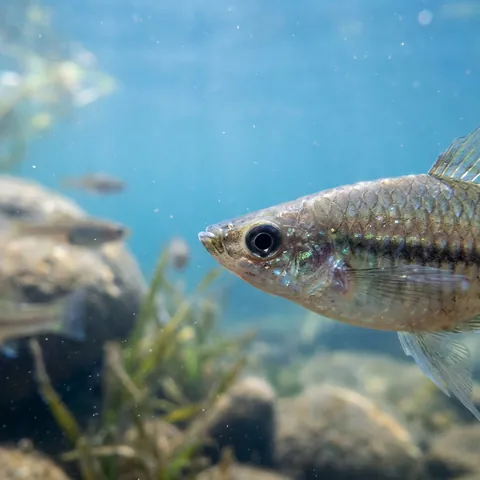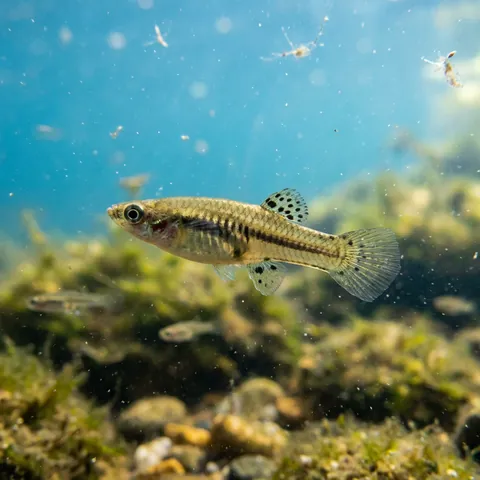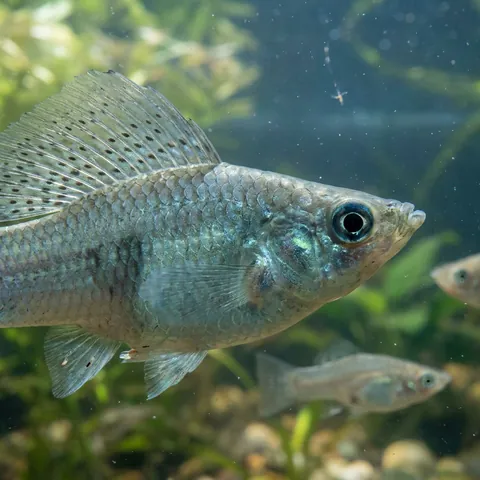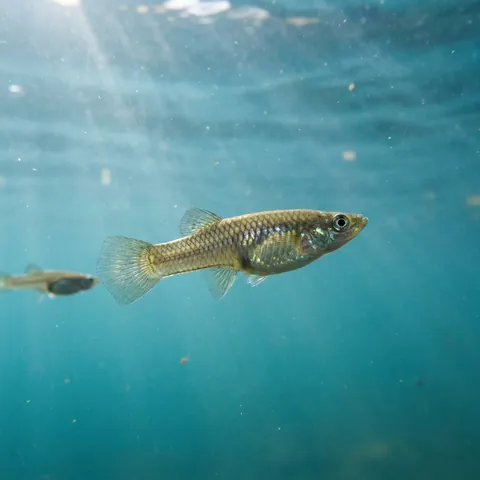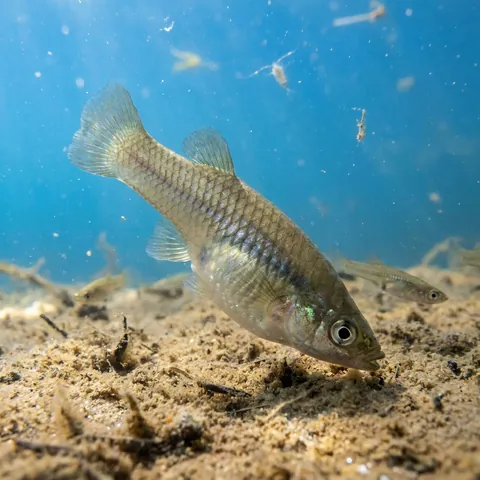
Eastern Mosquitofish
Gambusia holbrooki
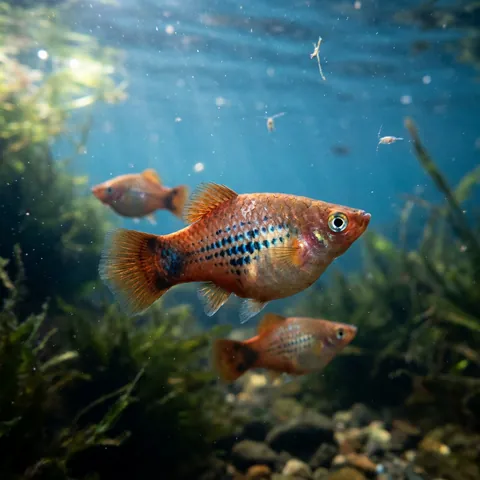
Poecilia reticulata
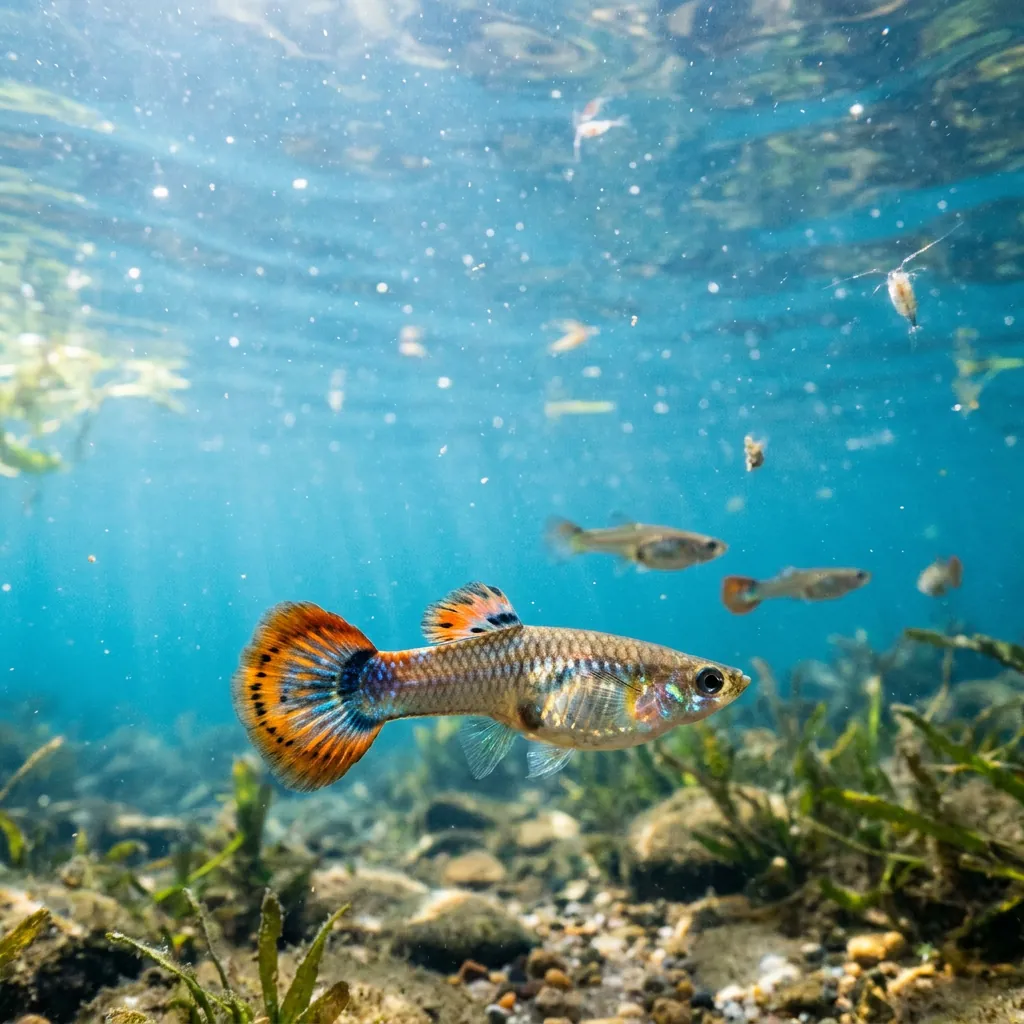
The guppy is a small, easygoing freshwater fish best known for the males' flashy colours. Despite its tiny size, it is one of the most widespread fish in the world, thriving in streams and ponds far from its original home.
Small live-bearing fish in the same fresh waters can look similar. A male guppy's bright, patterned tail and dorsal fin set it apart; plain grey females are harder to place and are best told from other species by the colourful males swimming alongside them.
Guppies show a clear difference between the sexes. Females are plain grey. Males carry splashes, spots, or stripes in almost any colour, along with showy, extended tail and back fins. The largest guppies reach about 5 cm, though most are smaller, closer to 2.75 cm, and females grow larger than males.
Guppies live in shallow, still or slow-moving fresh water: small streams, pools, and ditches close to the coast. They tolerate warm water and even brackish conditions where a river meets the sea, but avoid large, deep, or fast-flowing rivers. Originally from northern South America and nearby Caribbean islands, they have since spread to fresh waters on almost every continent.
Guppies swim in loose schools, a habit that helps the small, brightly coloured males avoid being picked off by predators. When a predator appears, some guppies cautiously approach it to size up the danger before the group reacts. They feed on algae, small invertebrates, and plant and insect debris picked from the bottom and among plants.
Guppies are livebearers: females give birth to free-swimming young rather than laying eggs, and the young need no further parental care. Females often mate with more than one male, which can shorten the time between broods and improve the young's ability to school and dodge predators.
The guppy is listed as Least Concern. Its populations are naturally resilient, adjusting how much they invest in reproduction depending on how much food and space is available.
When a predator turns up, guppies do not just flee. A few will cautiously swim toward it first to check how dangerous it really is, a behaviour known as predator inspection.
Describe what you saw and we name it, then keep every species you find in your Oceandex.