Mantis shrimp
mantis_shrimp_g334
Squilla empusa
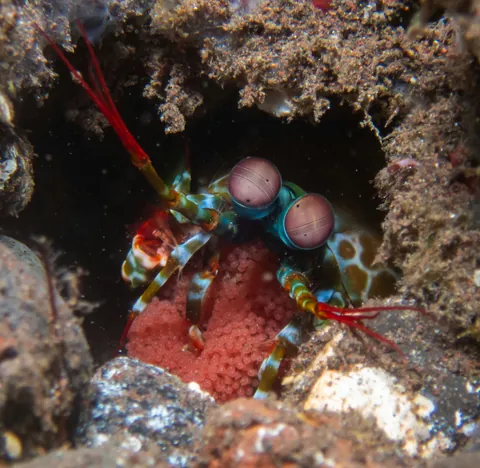
Rarely seen in the open, the West Atlantic mantis shrimp spends most of its life in a burrow, only coming out to hunt after dark.
Also known as: american mantis shrimp
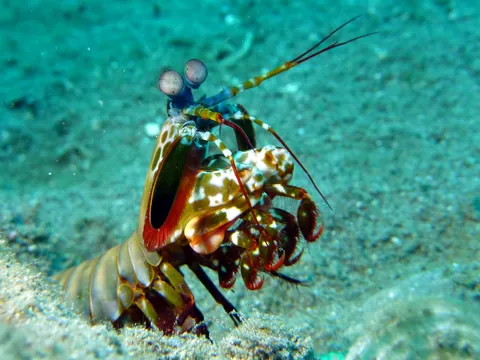
Its stalked eyes and thin walking legs can make it look like an ordinary shrimp at a glance. The folded raptorial claws behind the head, built for spearing rather than pinching, are the clear giveaway.
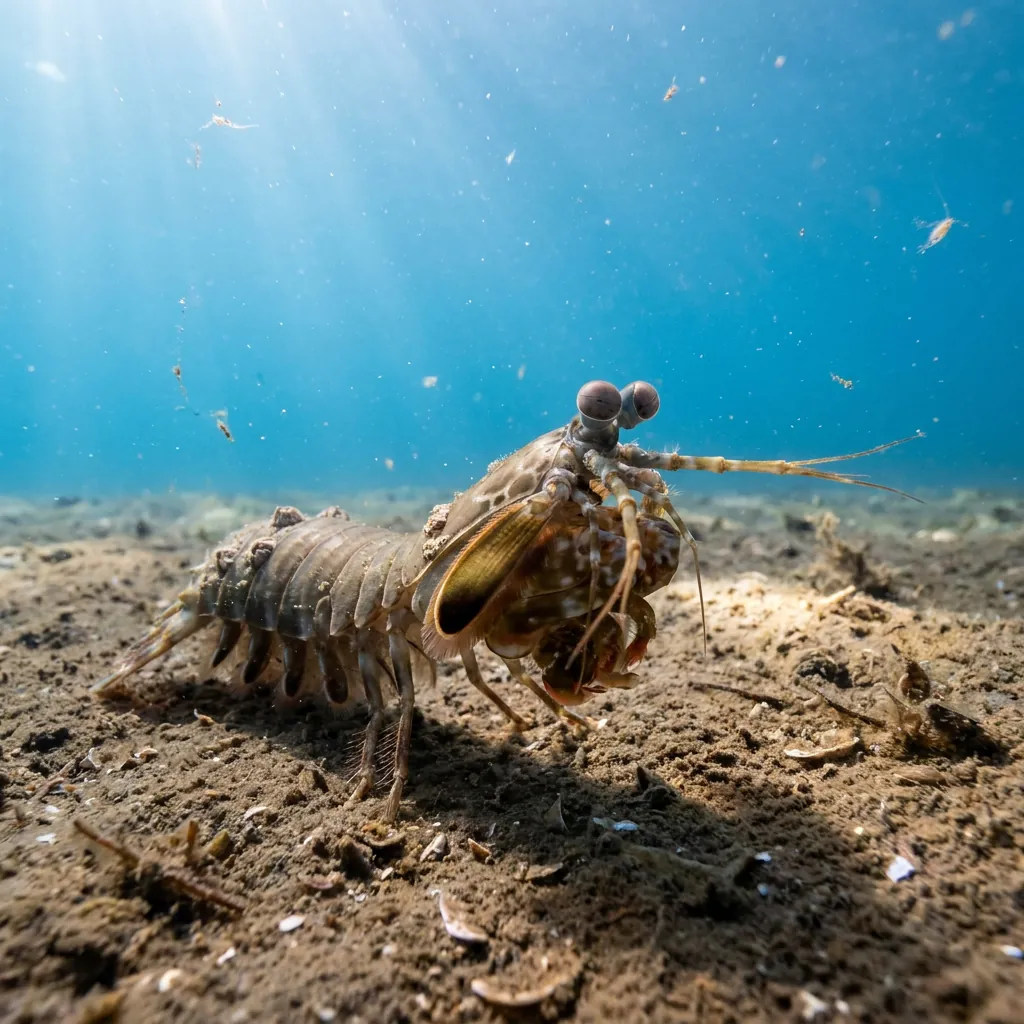
This mantis shrimp has stalked compound eyes that move independently to scan for danger or prey. Its head and thorax are fused into a single armoured section covered by a shield-like carapace. The front pair of legs are slender and used for grooming, while the next pair are large, folded raptorial claws built for spearing and slashing prey. Further back, flattened limbs move food to the mouth, followed by plain walking legs. Its abdomen carries paired swimming legs with feathery gills, ending in a broad tailfan formed by large uropods and a spiked telson.
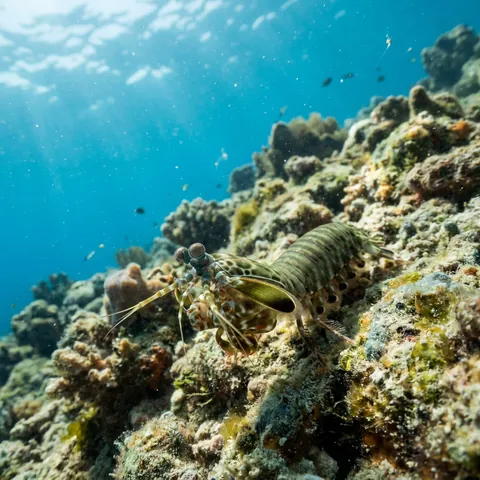
This species lives along the western Atlantic coast, from Cape Cod down to the Gulf of Mexico, with reports also from Brazil and the Mediterranean Sea. It digs a U-shaped burrow into soft, muddy sediment on the seabed, from the shallows down to around 54 metres.
The West Atlantic mantis shrimp is mostly active at night, when it leaves its burrow to hunt fish, shrimp, crabs, krill, worms, molluscs, and even other mantis shrimp. Its raptorial claws snap open with great speed to spear or slash prey, which is then dragged back into the burrow. It defends its burrow against other mantis shrimp and regularly reshapes the tunnel, sometimes within just a few hours.
In the colder, northern part of its range, this mantis shrimp digs a much deeper winter burrow, reaching water that stays warmer and lower in oxygen than the surface layer, which may help it survive winters otherwise too cold for it.
Describe what you saw and we name it, then keep every species you find in your Oceandex.