Peacock mantis shrimp
Odontodactylus scyllarus
mantis_shrimp_g334
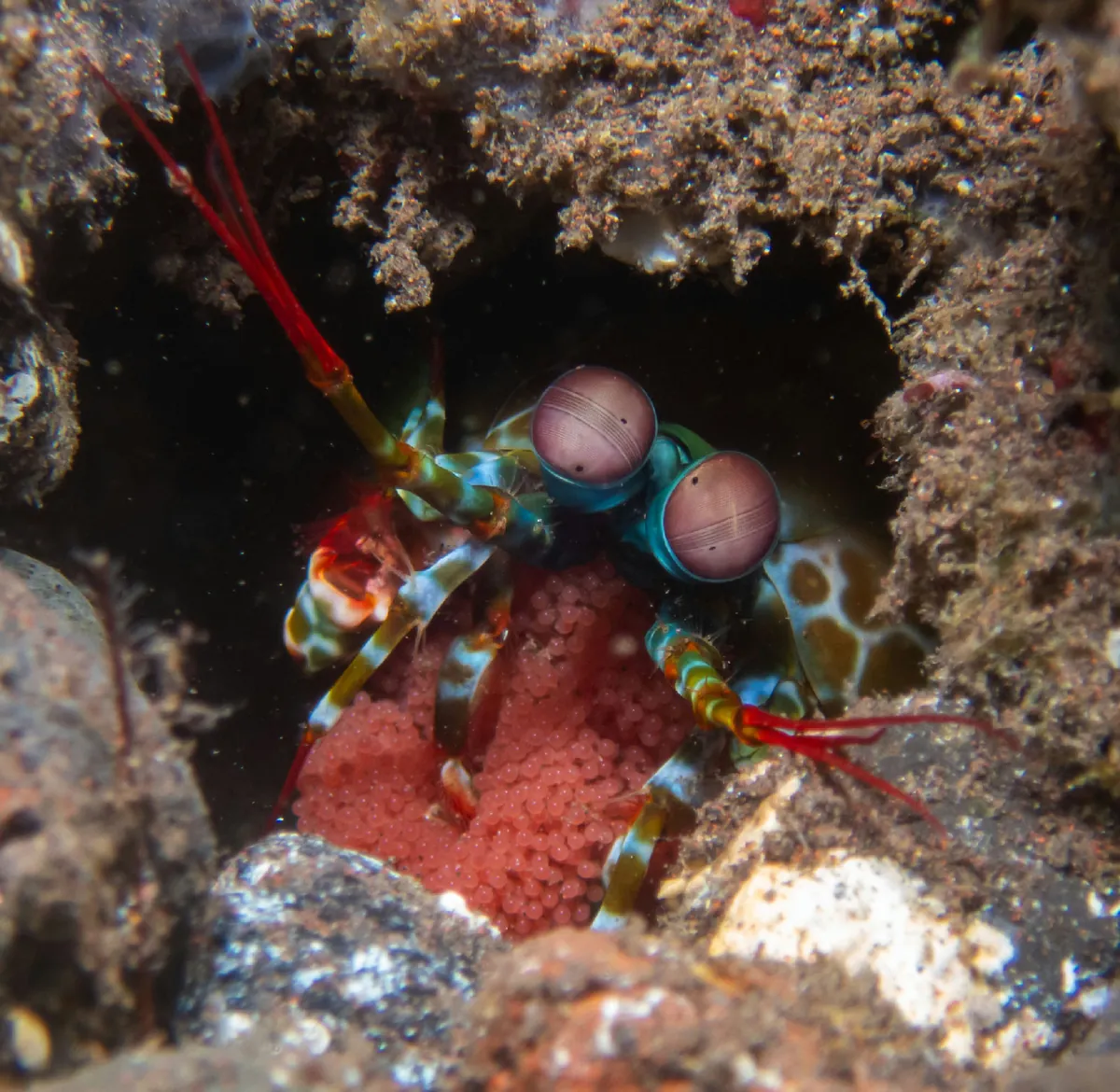
Mantis shrimp are colourful, burrow-dwelling crustaceans known for their powerful front claws. In this app the group includes the peacock mantis shrimp, the striped mantis shrimp, and the zebra mantis shrimp.
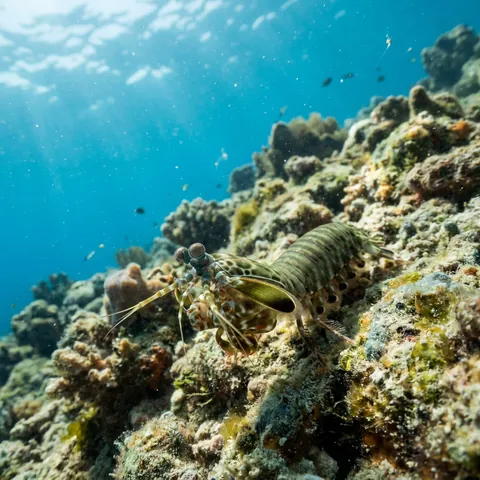
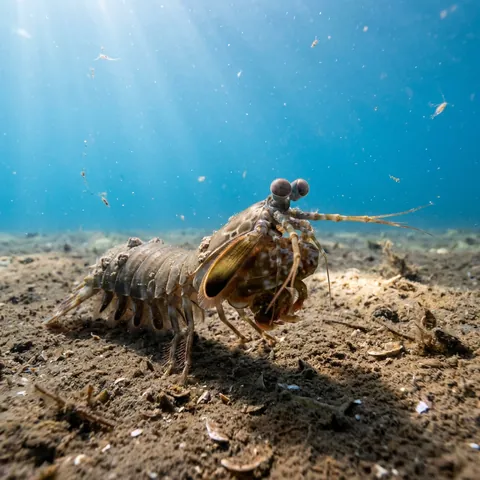
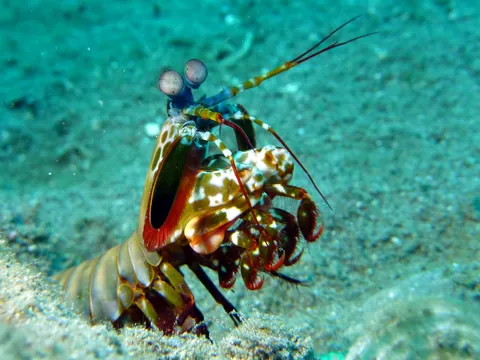
Look for the folded, mantis-like front claws and a body that mostly hides in a burrow to know you have found a mantis shrimp rather than a true shrimp, which has thin, simple front legs. To tell members apart, look at colour pattern, eye colour, and size.
Mantis shrimp have a long body with a short shell that covers only the head and upper back. Most are around 10 centimetres long, though some, like the zebra mantis shrimp, can reach 38 centimetres. Colour varies a lot across the group, from plain brown to bright, mixed colours. Their most striking feature is a pair of large front claws, folded like a mantis insect's arms, used to spear or smash prey.
Most mantis shrimp live in tropical and subtropical reefs and seabeds of the Indian and Pacific Oceans, though some live in cooler seas. They live in burrows, either dug into soft sand and mud or found in cavities in hard coral and rock.
Mantis shrimp are mostly solitary and spend most of their time inside a burrow, only coming out to feed or move to a new home. They defend their burrow strongly against rivals and can recognise neighbouring individuals. Depending on the species, they may be active by day, by night, or at dusk.
Mantis shrimp hunt actively rather than just scavenging, unlike most crustaceans. Some spear soft prey with sharp, barbed claws, while others smash open hard-shelled prey like crabs and snails with a heavy, club-like claw.
Mantis shrimp mate and keep their eggs safe inside their burrow. Depending on the species, the female either keeps the eggs in the burrow or carries them under her tail until they hatch.
Some mantis shrimp can see a kind of light called circularly polarised light, a sense no other animal is known to have.
Describe what you saw and we name it, then keep every species you find in your Oceandex.