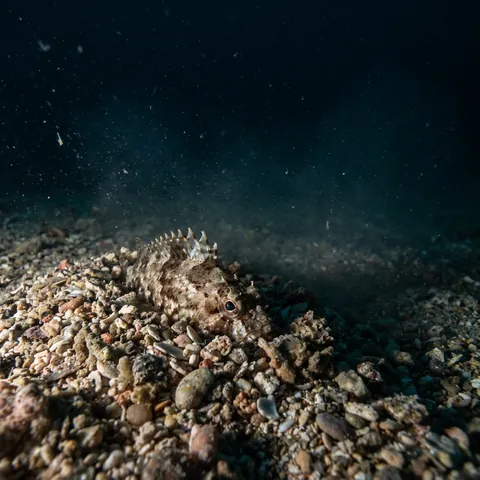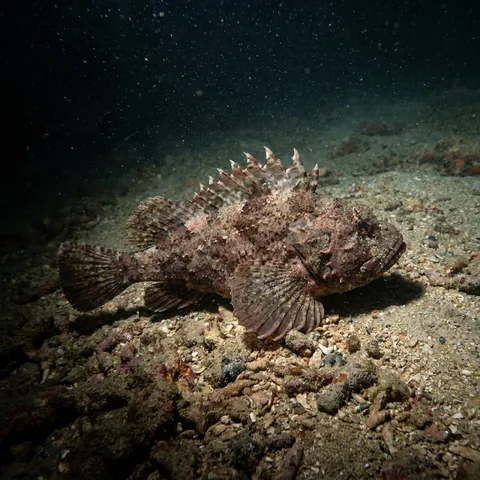
Bullrout
Notesthes robusta
Aetapcus maculatus
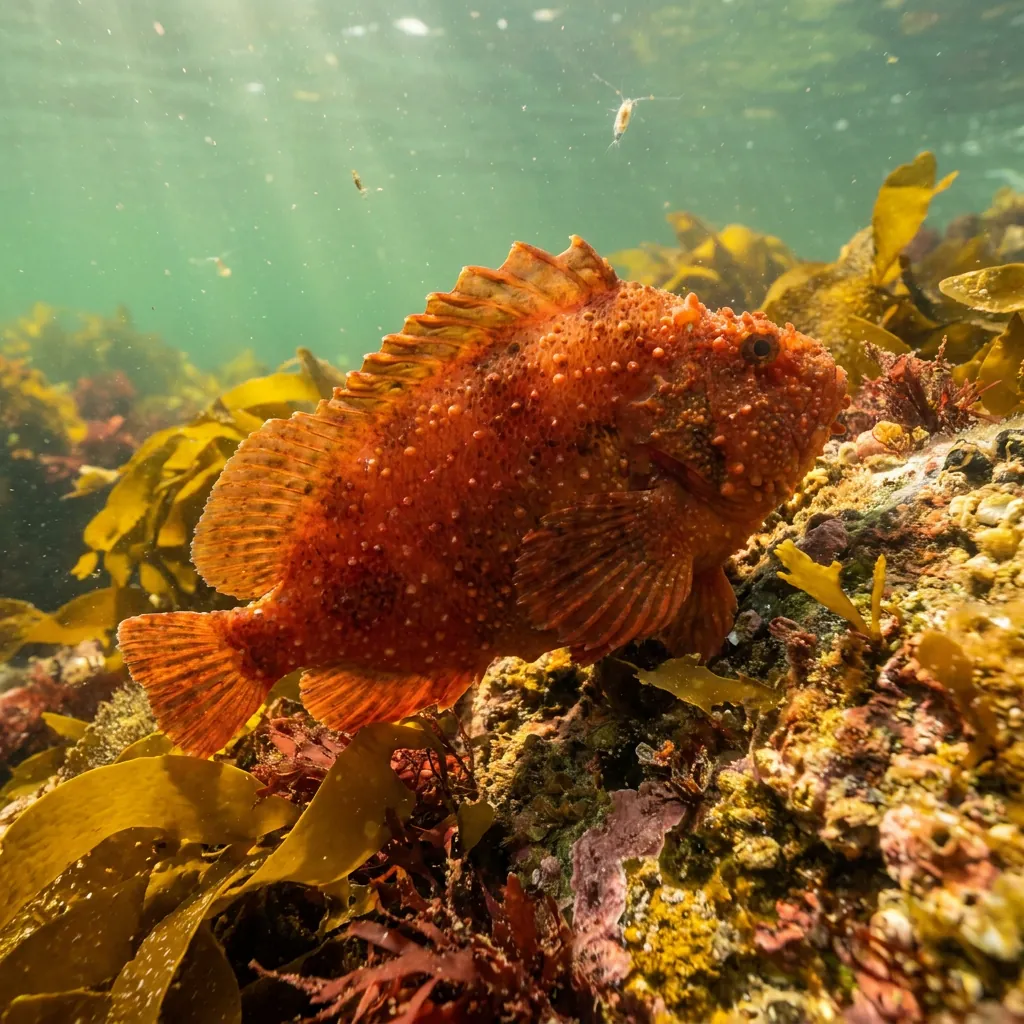
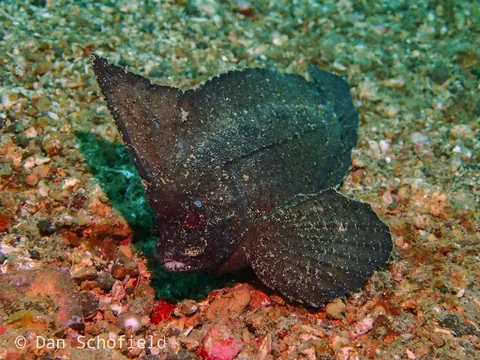
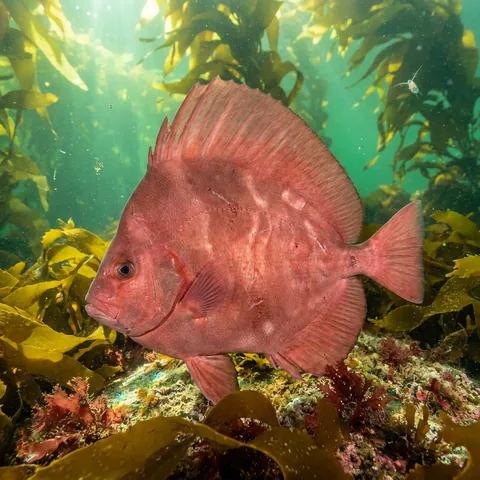
Easy to swim straight past, the warty prowfish sits motionless on southern Australia's reefs, blending in until something edible wanders too close. It grows up to 21 cm long.
Also known as: smooth prowfish, tasmanian prowfish
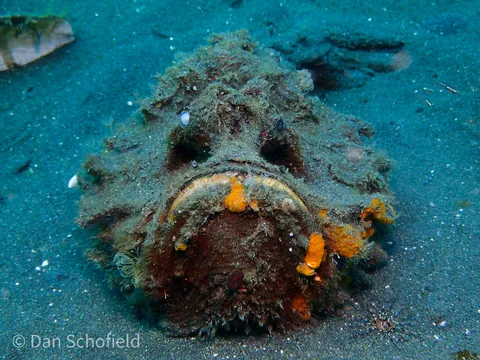
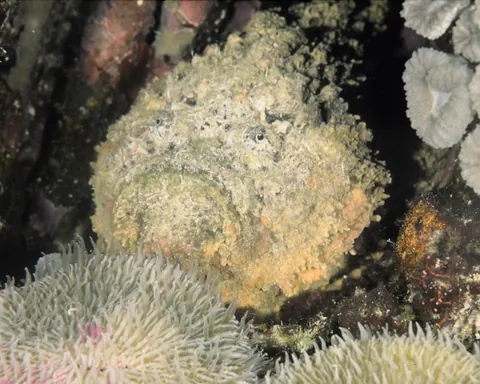
Its bumpy, mottled skin makes it easy to mistake for a lump of sponge or reef debris rather than another fish. Check for the dorsal fin joined to the tail fin by a membrane and the complete lack of pelvic fins, a shape no sponge or debris shares.
This fish has a flattened, wedge-shaped body and a large head with a snout that drops away almost straight down. Adults have bumpy, wart-covered skin, while young fish are smooth. Its long dorsal fin starts in front of the eyes and runs back to join the tail fin by a membrane, and it has no pelvic fins. Colour is highly variable, from dusky yellow to greyish olive-brown to orange or red, marked with darker blotches and spots; the spots are small on the head and body but larger on the dorsal and tail fins, especially near where those fins meet the body.
The warty prowfish lives only along southern Australia, from Shark Bay in Western Australia to Wilsons Promontory in Victoria and south to Tasmania. It shelters on rocky reefs in bays and harbours, often near sponges, though it will also hide in seagrass and seaweed beds.
This fish is an ambush hunter that sits camouflaged and still, waiting to grab passing crustaceans. If disturbed, it can release a cloud of distasteful liquid to put off a predator.
The warty prowfish regularly sheds its entire skin, most likely to strip off a film of organisms that builds up on this slow-moving, sedentary fish.
Describe what you saw and we name it, then keep every species you find in your Oceandex.