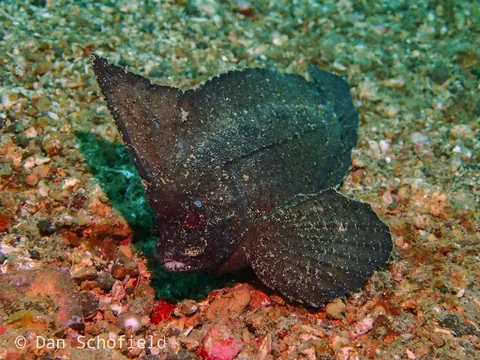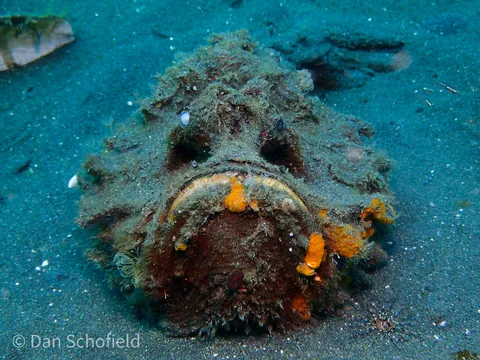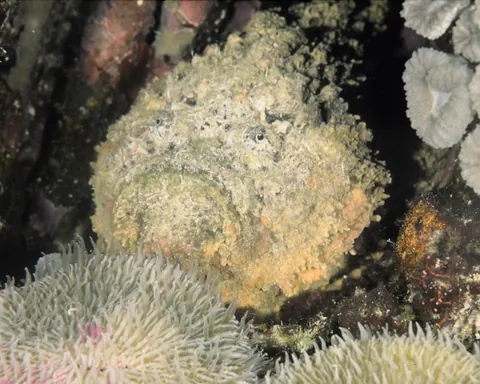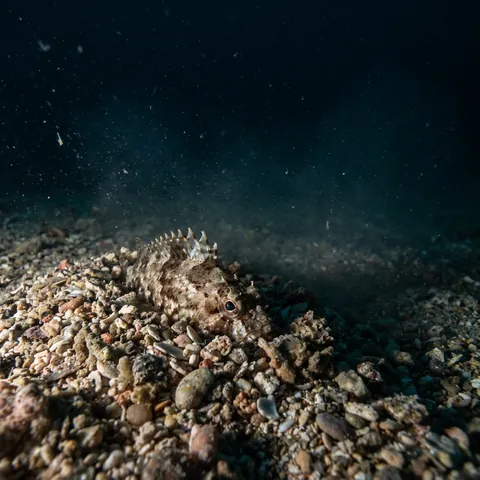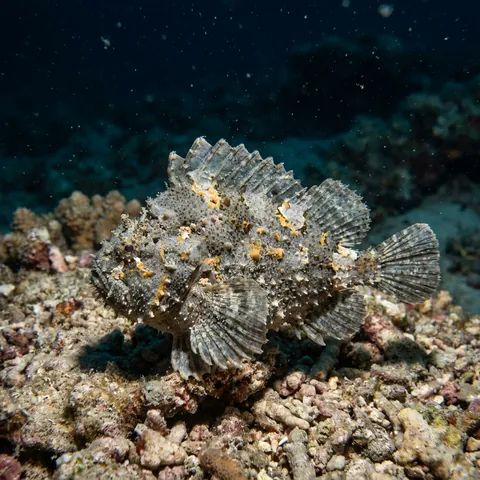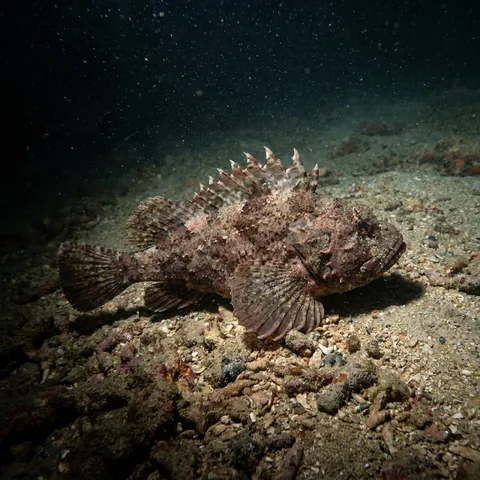
Bullrout
Notesthes robusta
Pataecus fronto
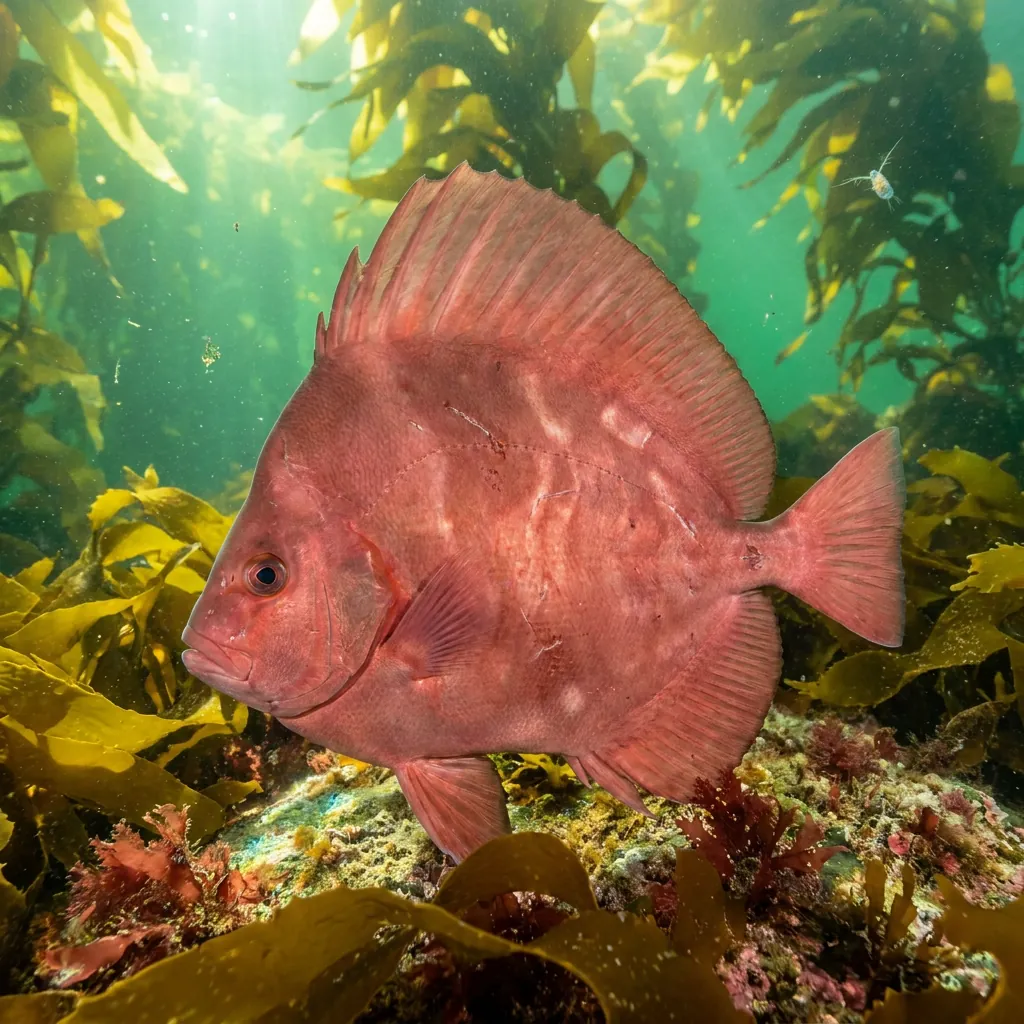
The red indianfish is an odd, upright-looking fish found only in Australian waters, so still and sponge-like that most divers swim right past it without noticing.
Also known as: red foreheadfish, red indian fish
Its upright, wedge-shaped body and sponge-matching colour make it easy to mistake for a sponge itself. Look for the long fin running down its back and the pair of large fins set low on its sides, features no sponge has.
This fish has a long, flattened body that is deepest near the head and tapers to a thin base at the tail. Its eyes sit high on a small head, and its skin is smooth with no scales. A long fin runs almost the full length of its back, joined to a rounded tail fin, while its large fins sit low on the sides of the body and there are no fins underneath. Colour is usually scarlet, brick red, or orange, occasionally pale or marked with black or white spots.
It lives on coastal reefs and in sponge gardens off southern and western Australia, from Queensland around to Western Australia. It is found at depths of 40 to 80 m, though it is sometimes seen much shallower by divers in New South Wales, usually inside bays or harbours.
It is more active at night and spends most of its time sitting still, relying on its colour and shape to blend in among sponges while it waits to ambush prey. Because it stays in one place for so long, it regularly sheds its skin to stop other organisms from growing on it.
In New South Wales this fish is almost always found on the northern side of rocks or sponges within a bay, and is rarely seen on the southern side, a preference no one has fully explained.
Describe what you saw and we name it, then keep every species you find in your Oceandex.