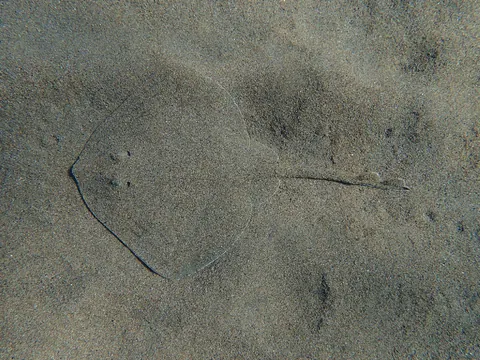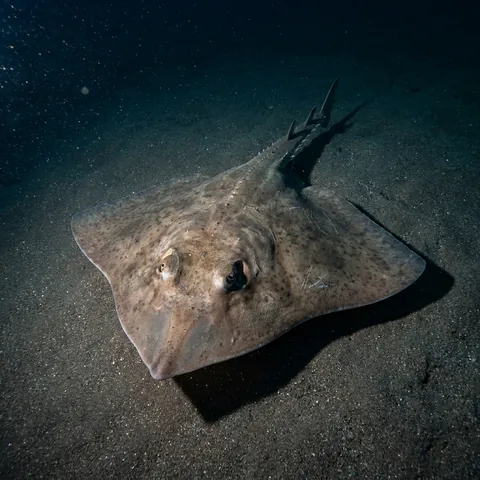
Big Skate
Beringraja binoculata
Raja undulata
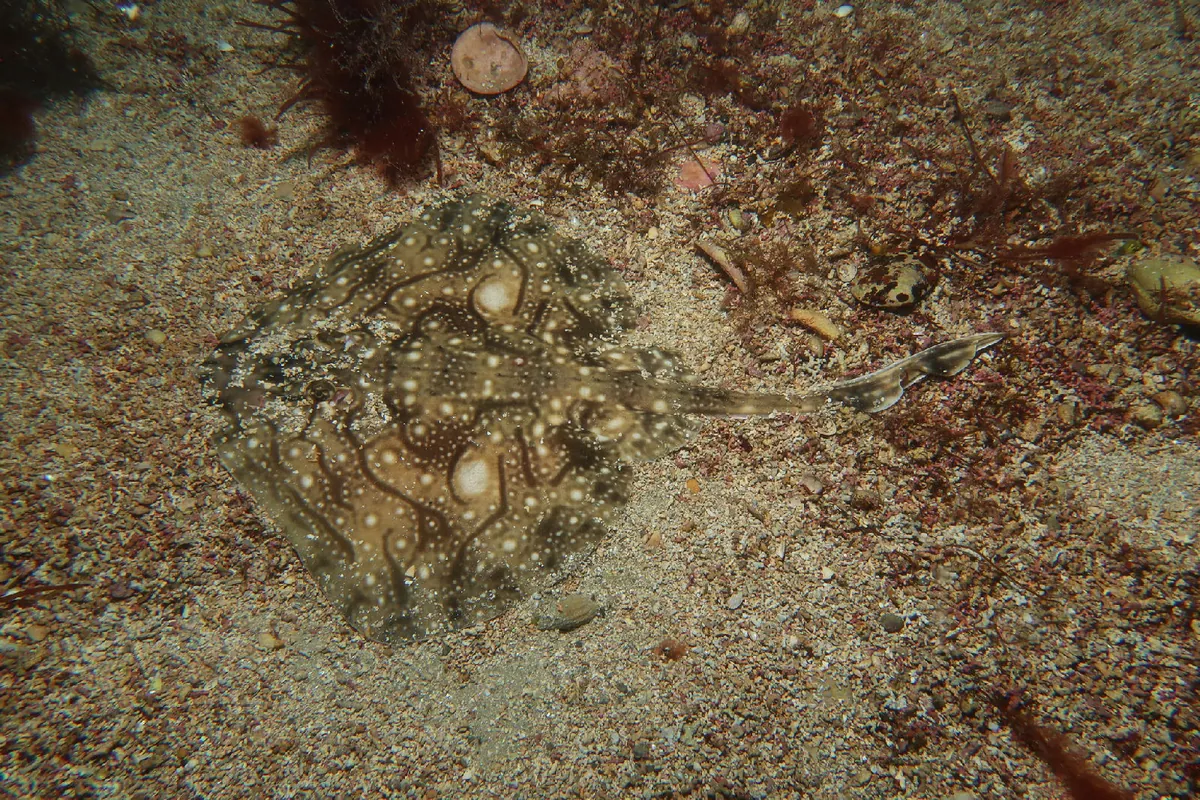
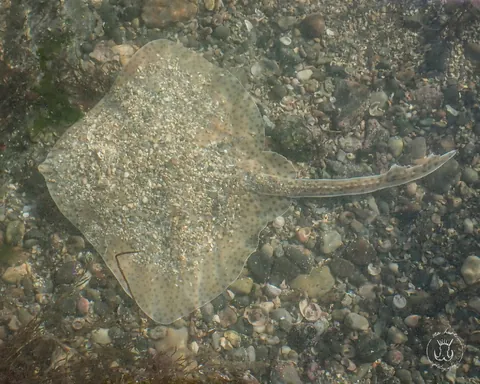
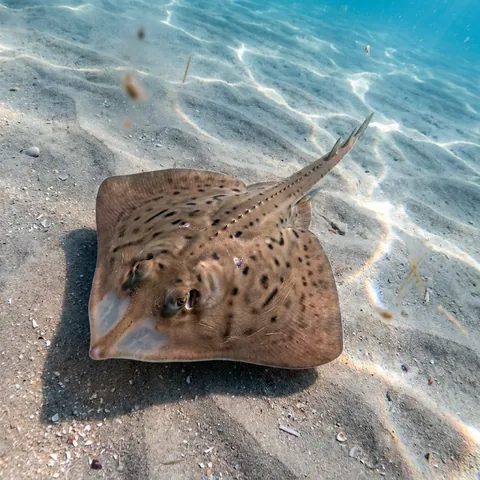
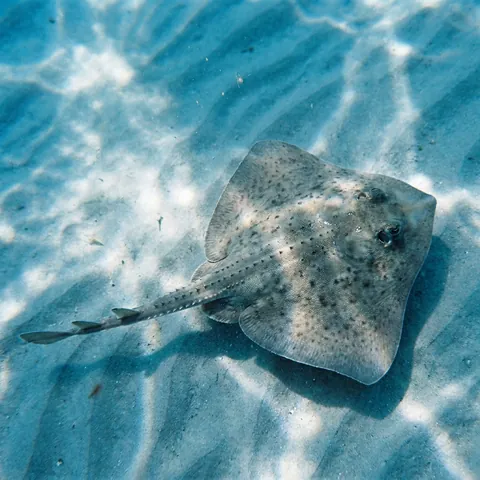
The undulate skate takes its name from the dark, wavy bands that ripple across its back. It can grow up to 100 cm long, resting flat on sand and mud where its pattern blends into the seabed.
Also known as: undulate ray
It is easily confused with the thornback ray and other spotted skates sharing its range. Look for dark, wavy bands crossing the back rather than rounded spots; this banding is what gives the species its name.
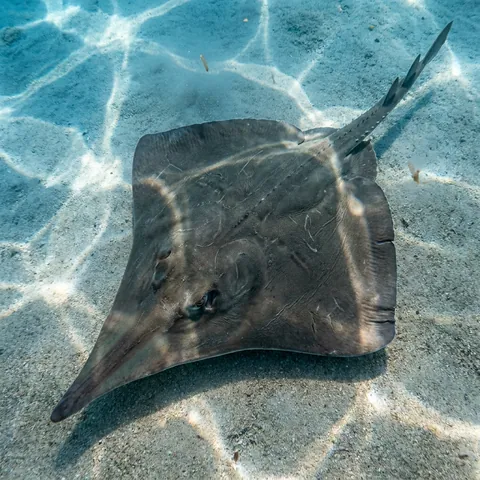
This skate has a diamond-shaped disc, pointed at the front and rounded at the back, with a tail as long as its body. The upper side ranges from light brown to grey, marked with dark wavy bands and small white patches, and the snout and edges often carry dark spots. The underside is creamy white with a grey rim. Small thorn-like spines run along its back, and two dorsal fins sit close together near the tip of the tail.
It lives in patchy pockets of the northeast Atlantic, from southern Ireland and England south to Senegal, and in parts of the western Mediterranean. It rests on sandy, muddy, or shell-strewn bottoms from coastal waters out to the upper edge of the continental slope, at depths of 50 to 200 metres.
Little is known about its day-to-day habits. It hunts along the seabed for small fish, crustaceans, mollusks, and other bottom-dwelling animals, using its flattened body to stay close to the sand and mud it feeds over.
This skate is oviparous, laying eggs from March to September, with reproductive activity peaking in winter. Each egg sits inside a tough, dark, leathery case with horn-like points at the corners, known as a mermaid's purse. Pairs have been seen mating in a close embrace.
This species is listed as Near Threatened. Its late age at maturity and slow population growth make it very vulnerable to fishing pressure, and numbers have dropped sharply in parts of the northeast Atlantic, including a total disappearance from catches in the English Channel. Since 2009 it has been illegal to keep undulate skates caught in EU waters, and any caught must be released unharmed.
Newly hatched undulate skate pups have been observed following large nearby objects, including their mother, a behaviour that has been specifically recorded for this species.
Describe what you saw and we name it, then keep every species you find in your Oceandex.