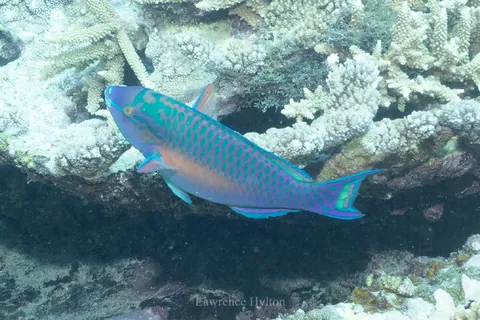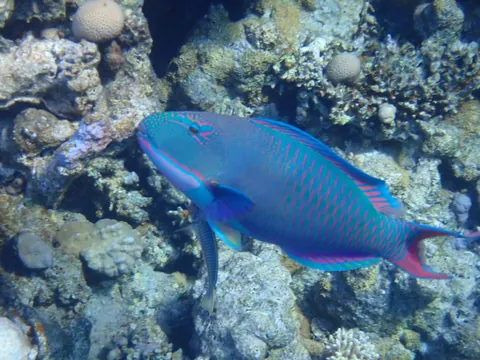
Bicolour parrotfish
Cetoscarus bicolor
Scarus tricolor
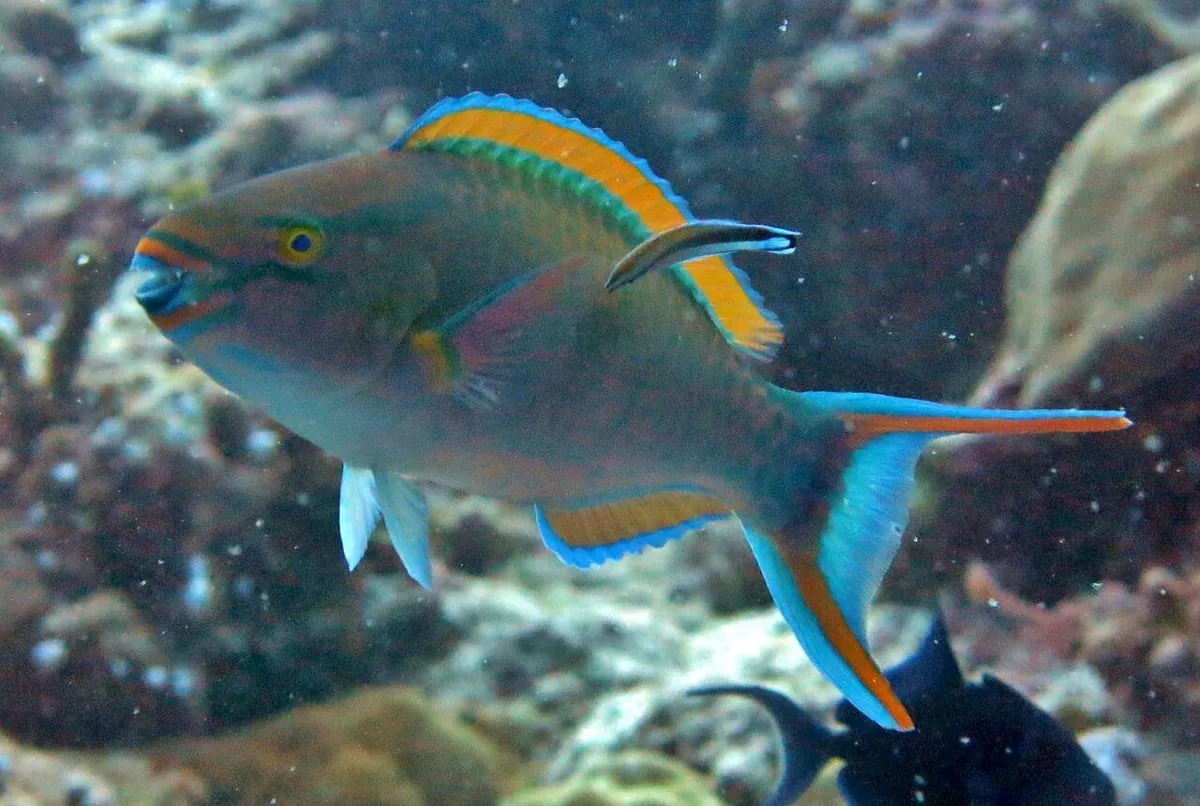
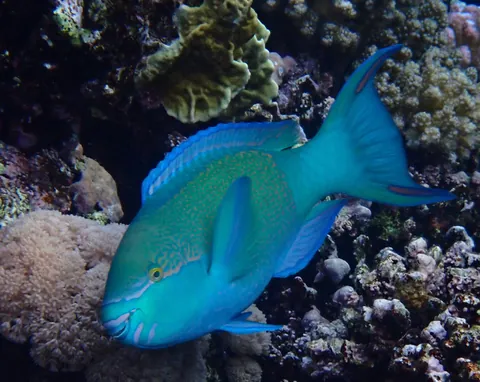
The tricolour parrotfish is one of the smaller members of its family, usually around 17.5 cm and reaching 26.6 cm. It earns its name honestly: green, pink and yellow all show on one fish, and the females wear a different set of colours again. You will usually meet it alone, grazing algae off the bottom in thick coral growth, though it sometimes joins a loose group.
Also known as: three-colour parrotfish, three-colour parrotfish, tricolor parrotfish, parrotfish, tricolor parrotfish
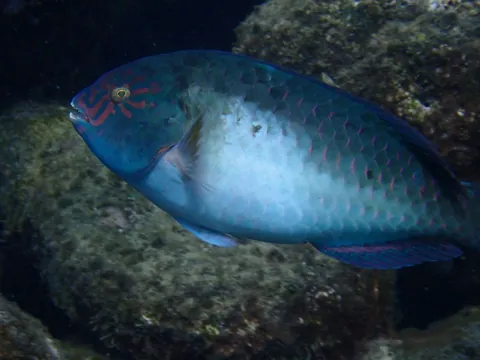
The fish this is taken for is Forsten's parrotfish, Scarus forsteni, and terminal males of the two are near enough identical at a glance. Wait until one lifts a pectoral fin, and look into the armpit behind it. On this species that hollow is yellow, on Forsten's it is not. Females are easier: the red tail and orange belly fin on a dark body are enough on their own.
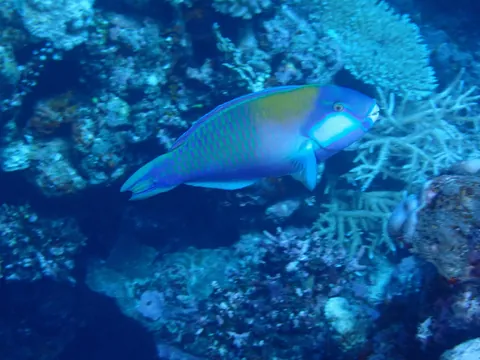
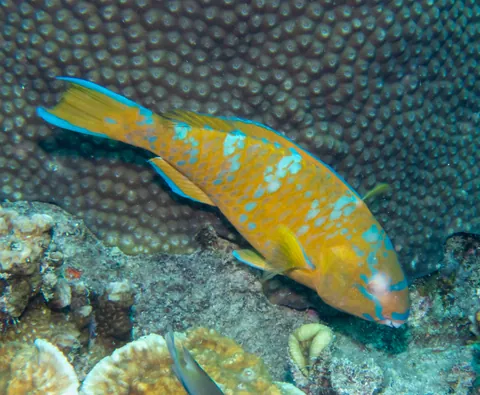
Terminal males are greenish, with pink or yellow tints spreading over the back half of the body. A purple band runs just inside the edge of each half of the tail fin. Females look quite different: dark grey to almost black on top, shading to blue or blue-green low on the sides, with each scale outlined in black. Their fins add the colour, with a red tail, an orange fin under the belly and yellowish to orange pelvic fins.
This fish has a wide Indo-Pacific range, from East Africa and Madagascar east through the tropical Indian Ocean and on into the western Pacific. It keeps to places with dense living coral, mostly on seaward reefs but also inside lagoons, between 2 and 25 m. It grazes algae off the bottom. Pairs form to spawn, and the eggs are released into the water.
Describe what you saw and we name it, then keep every species you find in your Oceandex.