Emperors
emperors
Lethrinus harak
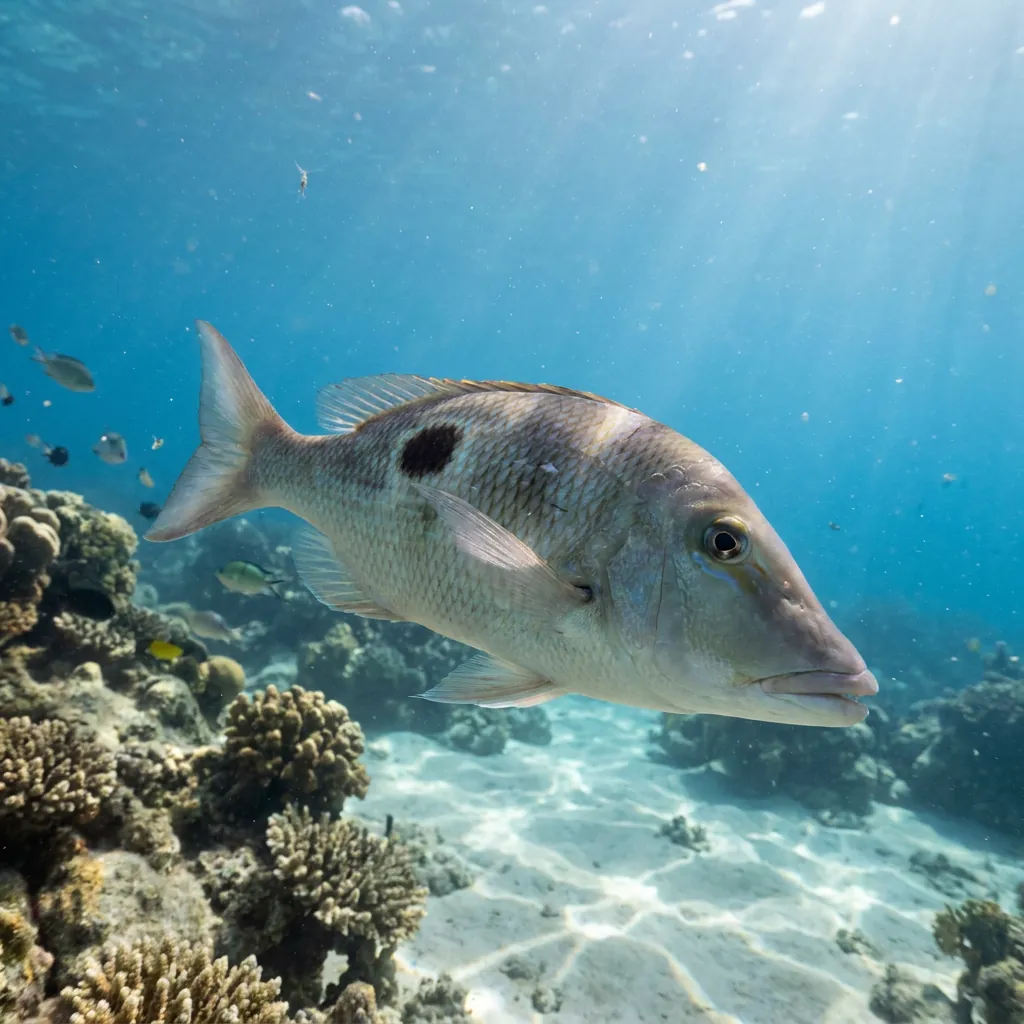
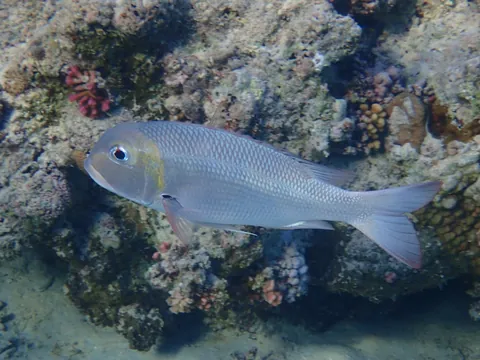
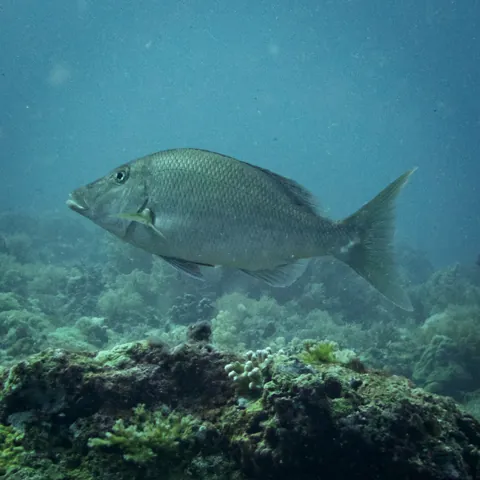
This olive-green reef fish carries its own name tag: a single dark smudge on each flank that looks like a thumb was pressed into wet clay. It reaches 50 cm at most, though 30 cm is far more typical.
Also known as: black-blotch emperor, blackspot emperor, thumb-print emperor, pigface bream, portrait, black blotch emperor, thumb print emperor, blackspot emperor, emperor, black-blotch emperor, black blotch emperor
Several reef fish share this olive colouring, but none carry a single, clean, dark oval spot sitting right on the lateral line the way this species does.
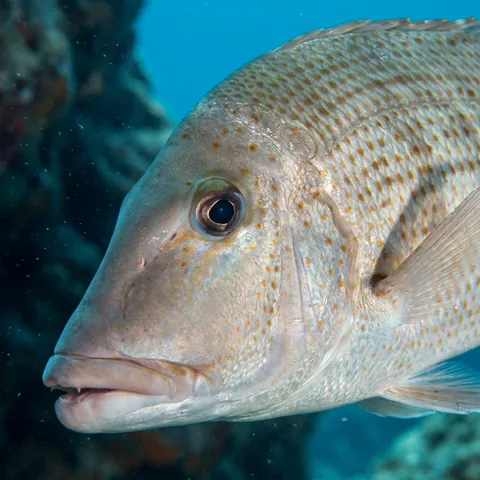
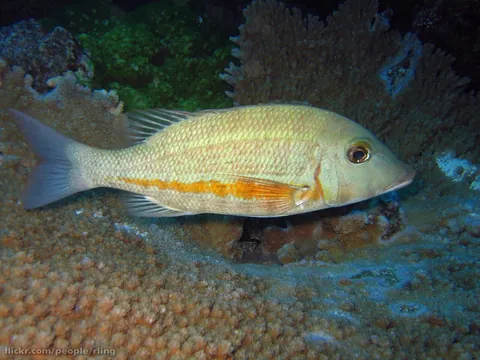
The body is olive-green, paling toward the belly. A large, dark, oval blotch sits on each side, directly beneath the lateral line (the faint sensory stripe running along its flank), often edged in yellow. Some individuals show pale blue dots around the nostrils and along the lower rim of the eye. The tail fin is reddish or orange, while the pelvic, dorsal, and pectoral fins are pinkish to white. The mouth is thick-lipped and can extend forward slightly.
It lives inshore over sandy bottoms, coral rubble, and in mangroves, seagrass beds, lagoons, and channels, always shallower than 20 m. It does not migrate and stays within a set patch of reef, either alone or in small schools, and juveniles use seagrass beds as nursery grounds.
Usually solitary or in small schools, this fish holds a small, defined home range. It feeds on crustaceans, molluscs, worms, sea stars and small fish. It is thought to change sex from female to male over its life, and gathers with others of its kind to spawn in large aggregations, often timed to the lunar cycle.
The size of its home patch is set by competition with neighbours of similar size - the bigger the fish, the bigger the territory it can defend.
Describe what you saw and we name it, then keep every species you find in your Oceandex.