Emperors
emperors
Monotaxis grandoculis
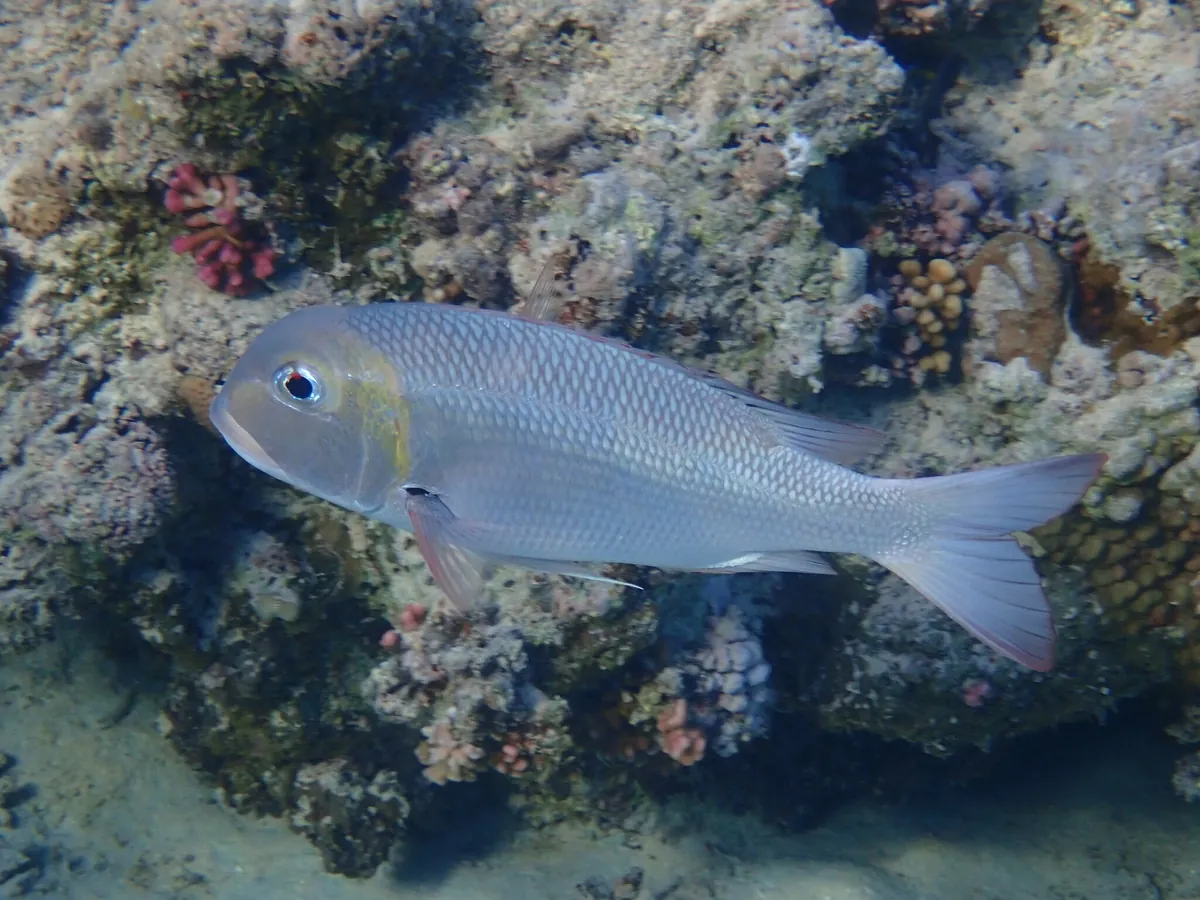
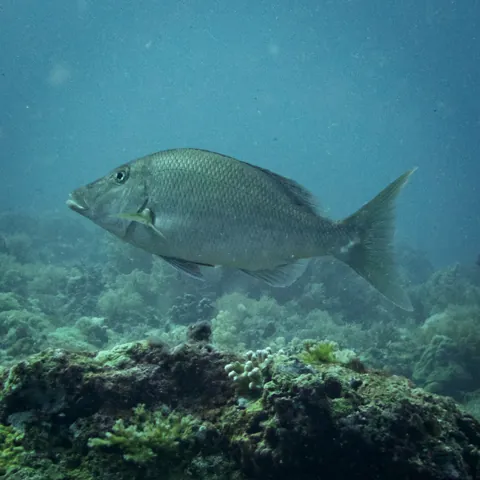
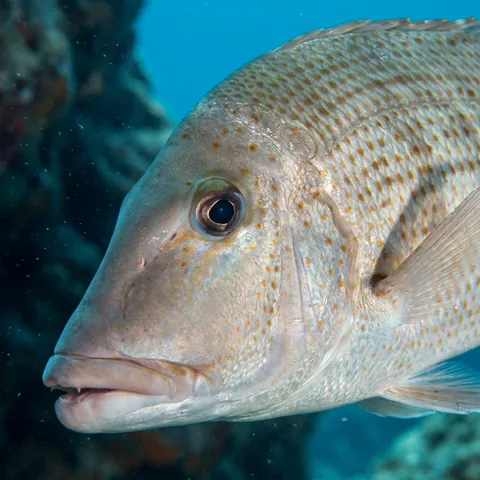
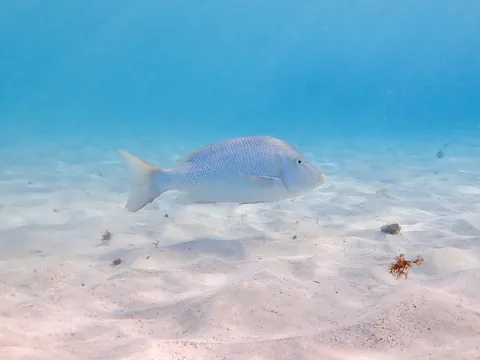
The humpnose big-eye bream is a large, silvery reef fish of the Indian and Pacific Oceans, reaching up to 60 cm and nearly 6 kg, though it is more commonly seen around 40 cm.
Also known as: bigeye emperor, humpnose big-eye bream, bigeye barenose, bigeye emperor, humpnose big-eye bream, emperor, humpnose bigeye-bream, large-eyed sea bream, hump-nosed bigeye bream, grand-eyed porgy fish, bigeye emperor, humpnose big-eye bream, roundtooth large-eye bream, big-eye bream, levovagan, large-eye bream, bigeye barenose, humpnose sea-bream, bigeye seabream, bigeye emperor, humpnose bigeye bream, large-eyed sea bream, big-eye bream, big-eye sea-bream, bigeye seabream, humpnose bigeye-bream, humpnose big-eye bream
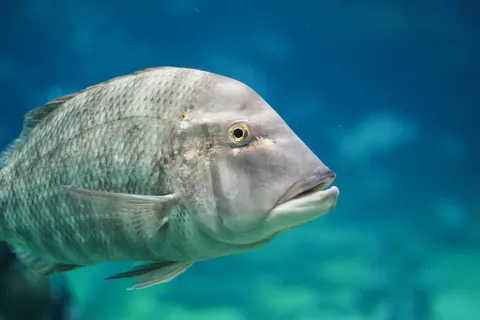
This fish is easy to lump in with other silvery Indo-Pacific breams and emperors sharing the same reefs. The steep, humped forehead in front of unusually large eyes, already noted, is the one mark to check, and it holds regardless of how many body bands are showing that day.
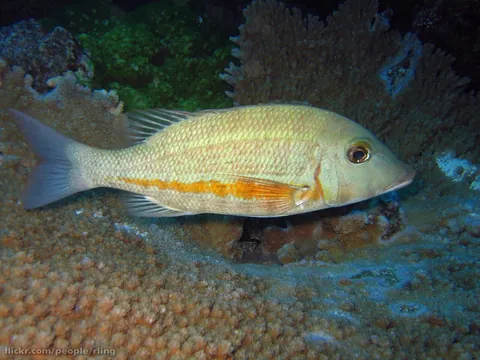
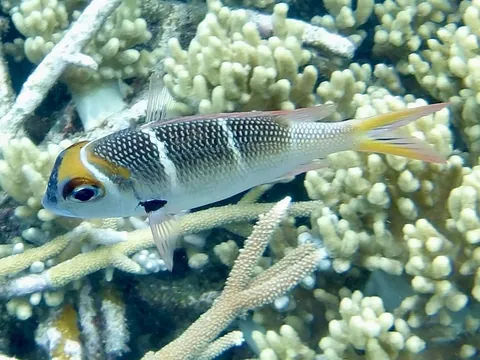
The body is oblong and silvery-grey, with thin dark margins on each scale and a large black blotch at the base of the pectoral fin. Adults usually show 3 to 4 dark vertical bands split by thinner pale bands on the back. Young fish have 3 wide dark brown to black bars that look like saddles. The profile of the head rises into a clear hump in front of the large eyes, with a steep snout below it.
This fish lives close to reefs, over sand and rubble areas, from 1 to 100 m deep but most often between 5 and 30 m.
It is often seen alone, but large adults can gather into schools of up to 50 fish. It feeds on invertebrates and small fish found on the seabed.
This fish was first named in 1775 by the explorer Peter Forsskål, who called it Sciaena grandoculis after finding it near Jeddah on the Red Sea. Later, in 1830, another naturalist gave it its own genus, Monotaxis, which is still used today.
Describe what you saw and we name it, then keep every species you find in your Oceandex.