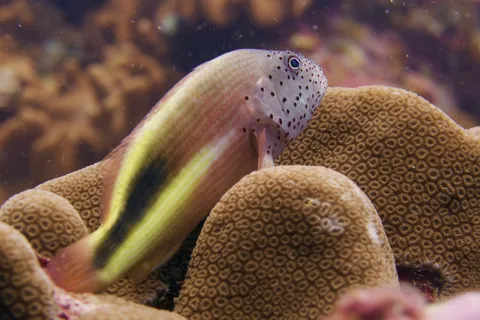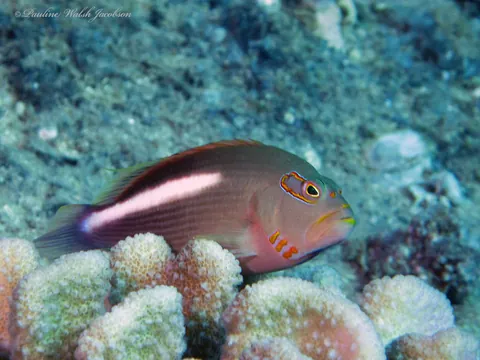
Arc-eye hawkfish
Paracirrhites arcatus
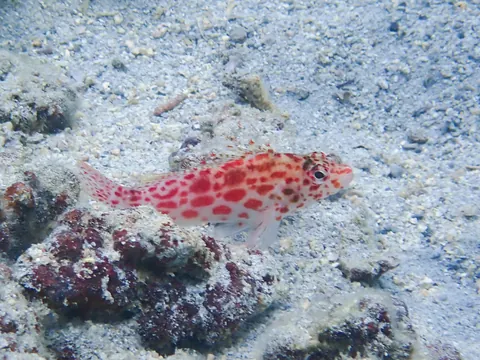
Cirrhitichthys aprinus
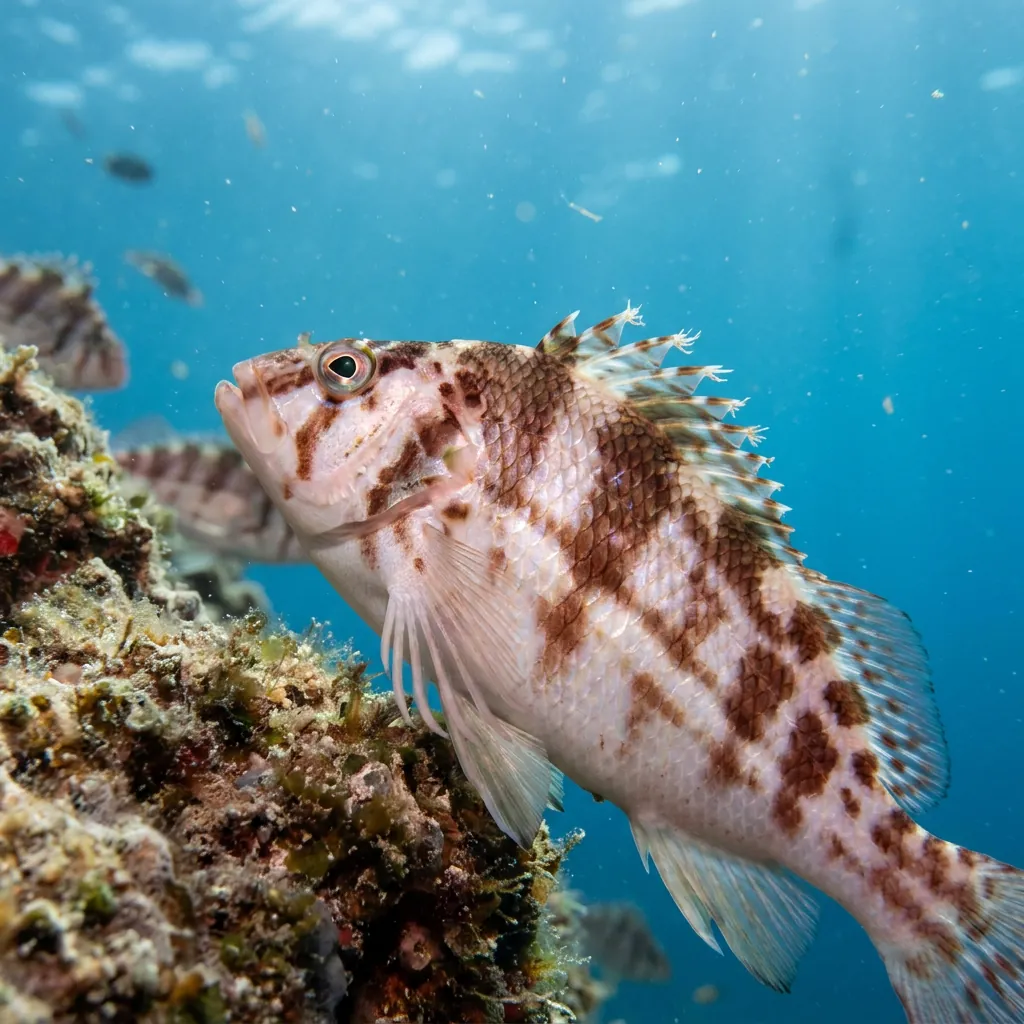
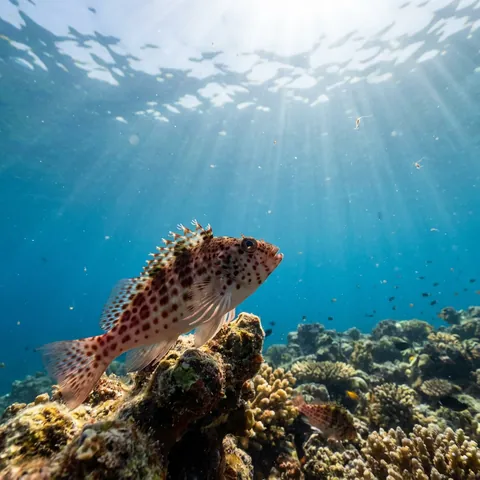
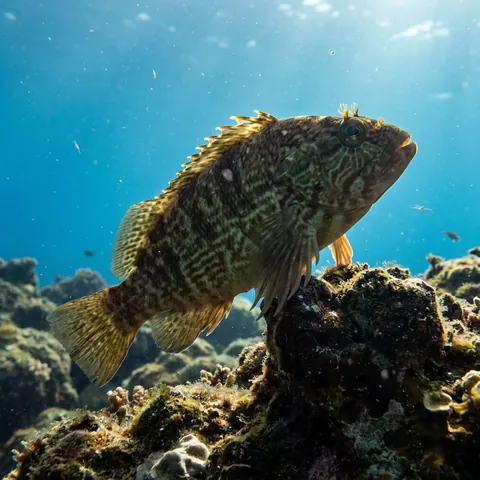
The threadfin hawkfish perches motionless on a sponge or coral head, propped up on its thickened fins like a bird on a branch, waiting to ambush anything small enough to swallow.
Also known as: spotted hawkfish, blotched hawkfish, red barred hawkfish, boar hawkfish
It shares its reef with several other small, perching hawkfish. The clearest mark is the pale-ringed dark spot on the upper edge of the gill cover, paired with the radiating dark lines around each eye; other hawkfish in the area do not share this combination.
This hawkfish has a whitish body crossed by wide, dark reddish-brown vertical bars. Where these bars cross the lateral line (the faint sensory line running along its side), they break into lighter patches marked with rhombus-shaped dark spots. A dark, pale-margined circular spot sits on the upper edge of the gill cover, and each eye has three or four dark bars radiating outward from it. The spines of the dorsal fin (the fin along its back) are tipped with short white threads, and the tail fin is clear and unmarked.
This species lives on rocky and coral areas of coastal reefs, from just below the low-tide line into deeper water, and sometimes ventures into shallow harbours and estuaries.
It is usually seen alone or in small groups, perched still on sponges or coral using its thickened lower pectoral fin rays as props, from where it ambushes small fish and crustaceans. It is thought to change sex over its life, living in harems of one male with several females. To spawn, a pair spirals a short way up through the water together before releasing eggs that drift with the plankton.
Its species name, aprinus, is Latin for 'boar-like.' It refers to the large, tusk-like canine teeth on the sides of its lower jaw, and is also why the fish is sometimes called the boar hawkfish.
Describe what you saw and we name it, then keep every species you find in your Oceandex.