Arc-eye hawkfish
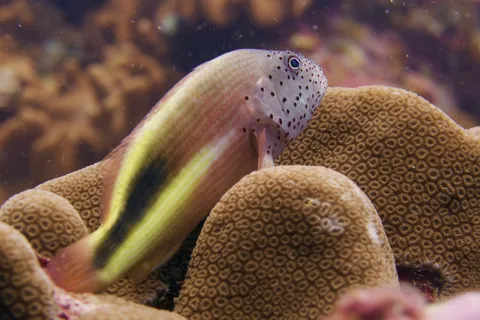
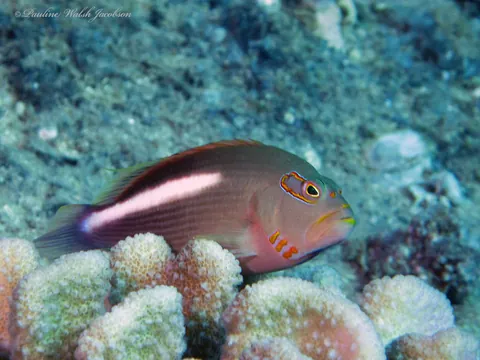
Paracirrhites arcatus
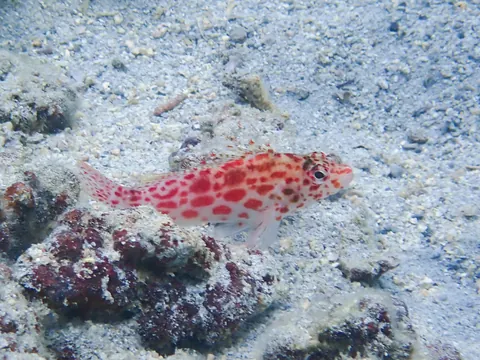
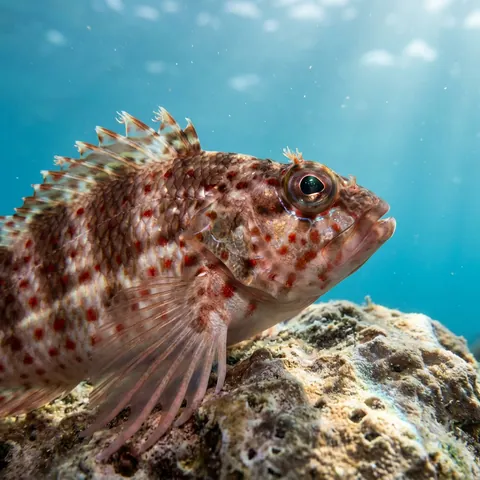
Cirrhitichthys falco
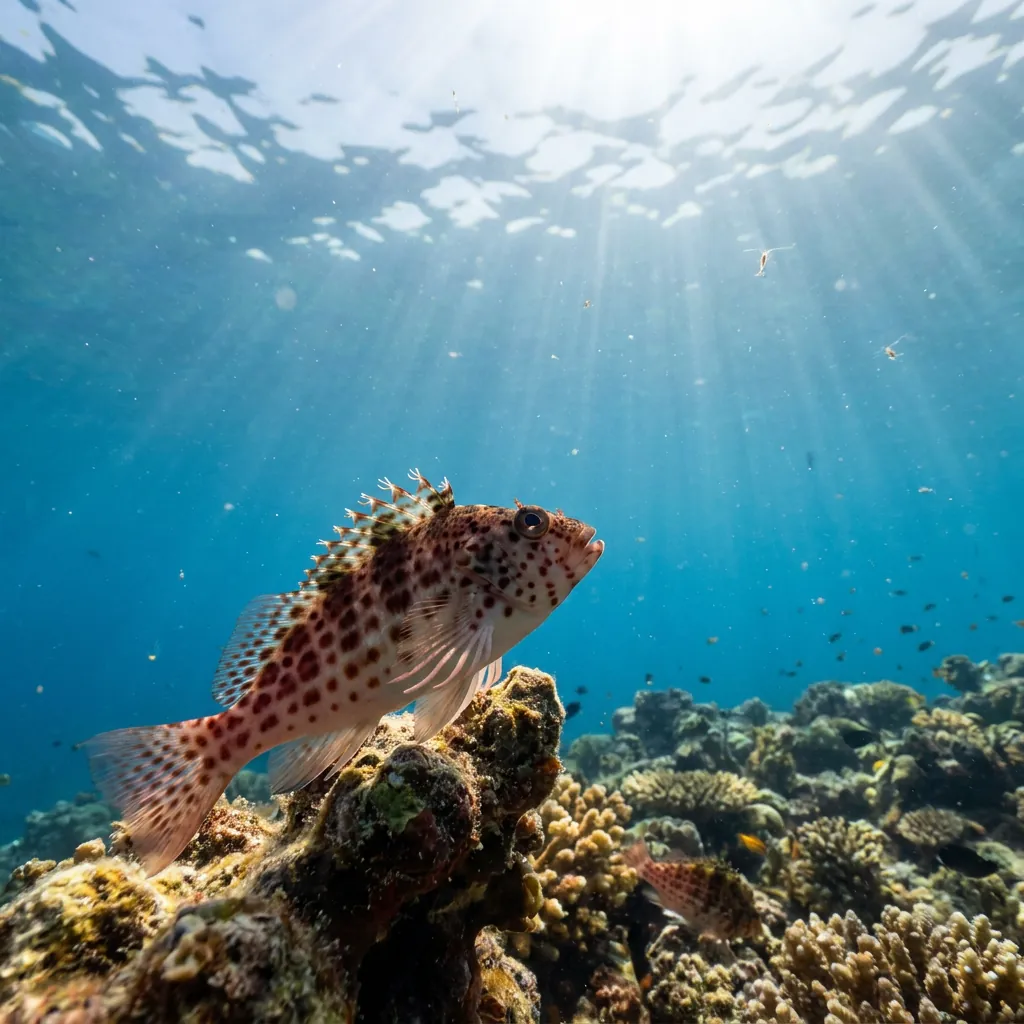
The dwarf hawkfish is a small, patterned reef fish that likes to perch rather than swim about. It grows up to 7 cm long and is usually found resting quietly on coral.
Also known as: coral hawkfish, falco hawkfish, falcon hawkfish, coral hawkfish, falcon hawkfish, falco hawkfish
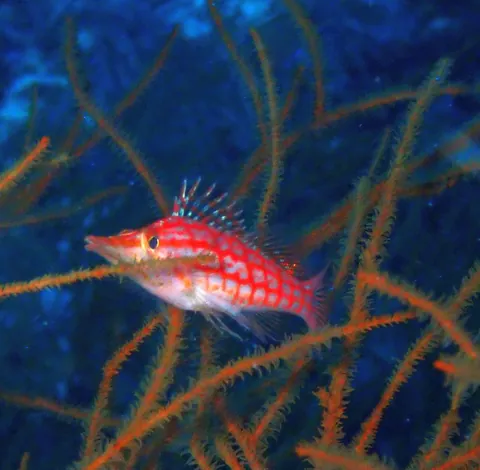
Several small hawkfish species share a similar mottled red-and-white pattern. Check under the eye for a pair of reddish bars, a fixed mark that helps confirm a dwarf hawkfish.
This fish is pinkish-red and white, with vertical bands and mottled patches. The rear half of the body carries rows of red-brown blotches, and there is a pair of reddish bars under each eye. Its dorsal and tail fins are spotted, and the spines on its back fin end in small, tassel-like filaments. Its pectoral fins are thick and spread out when the fish rests on the reef.
Dwarf hawkfish live on tropical reefs across the Indo-Pacific, from East Africa to the central Pacific. They are common on outer reef slopes and flats, usually resting near the base of large coral heads. They are typically found between about 10 and 20 m deep, in water from 24 to 28°C, though they can range down to about 46 m.
This fish usually rests alone or in pairs at the base of large corals, rather than swimming in open water. It feeds on fish larvae, small crustaceans, and other small invertebrates picked from the seabed. Dwarf hawkfish live in harems, where one dominant male lives with several females.
Most sex-changing fish only switch one way, but a dominant male dwarf hawkfish that loses a fight to a stronger rival can change back into a female, and go on to breed successfully in that role.
Describe what you saw and we name it, then keep every species you find in your Oceandex.