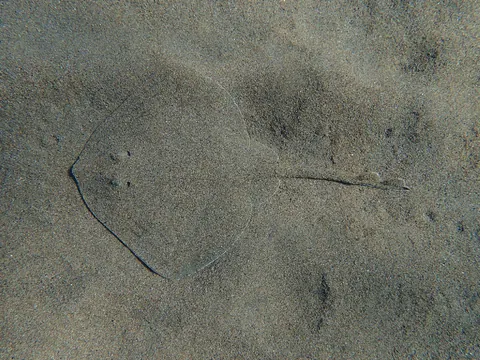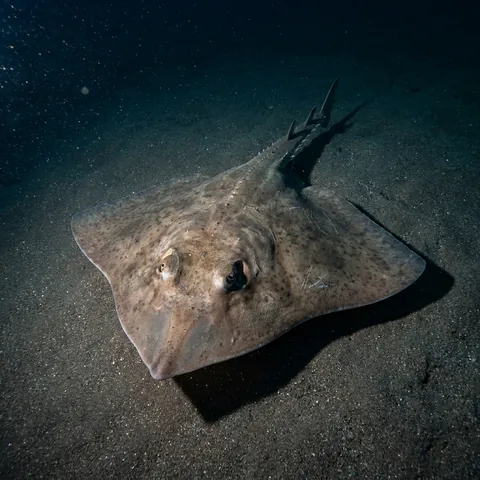
Big Skate
Beringraja binoculata
Amblyraja radiata
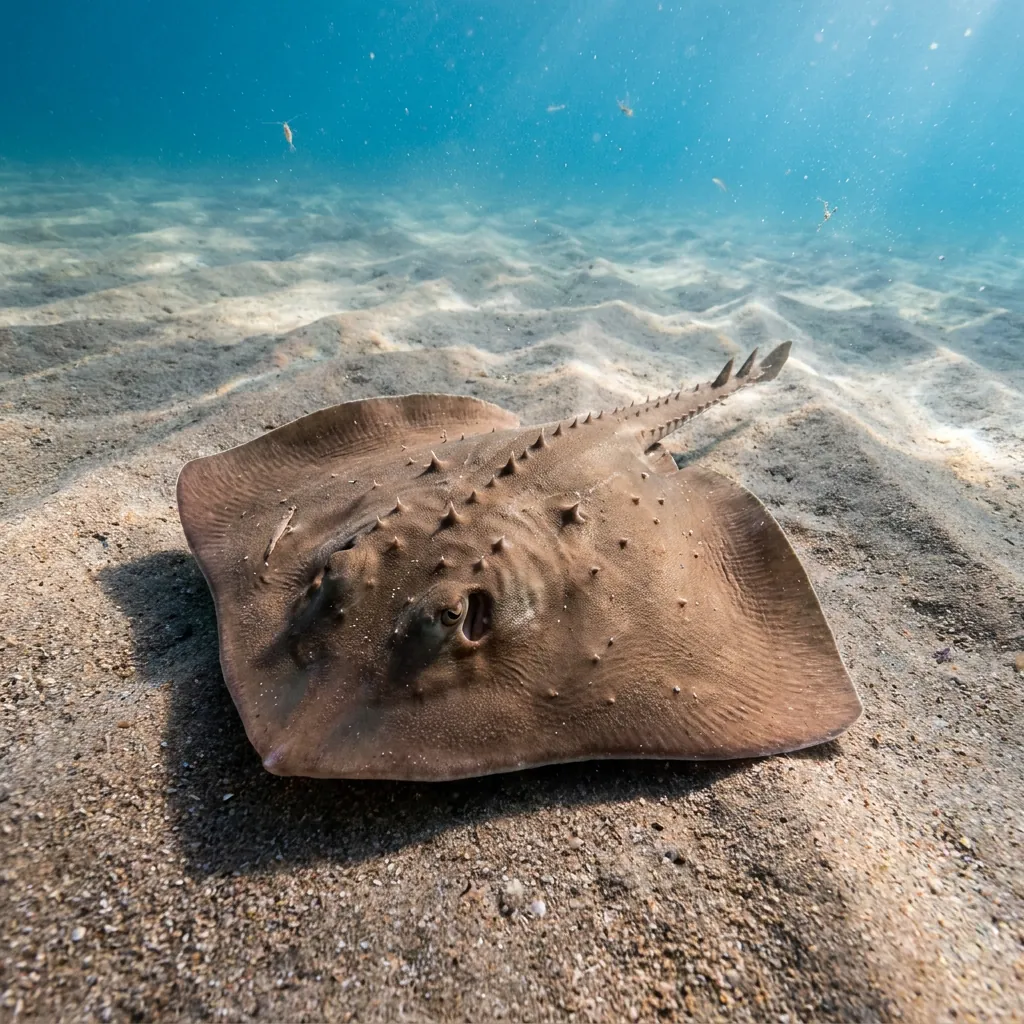
The thorny skate is a spiny, diamond-shaped bottom-dweller of cold northern waters, named for the rows of hard thorns covering its back. It grows up to 105 cm long and can weigh as much as 11.4 kg.
Also known as: thornback, starry ray
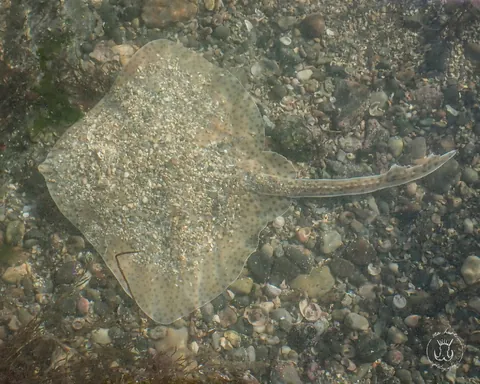
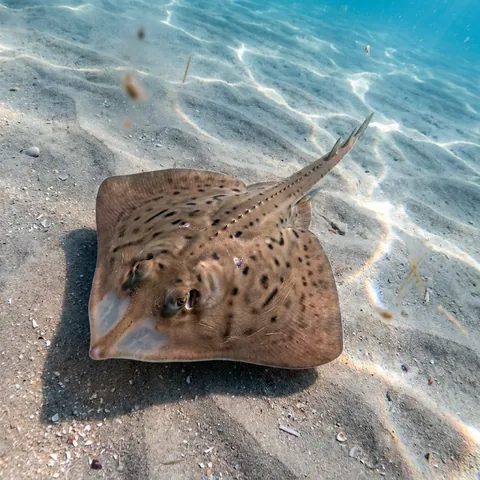
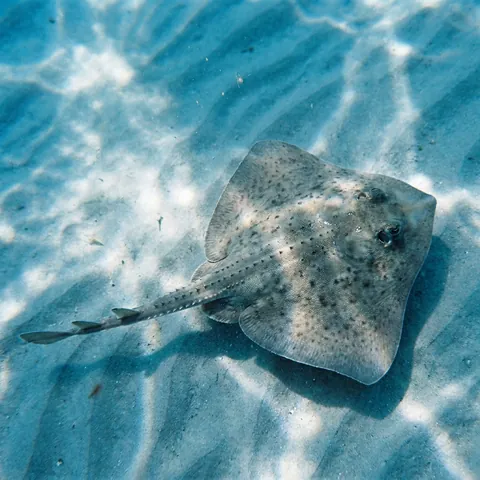
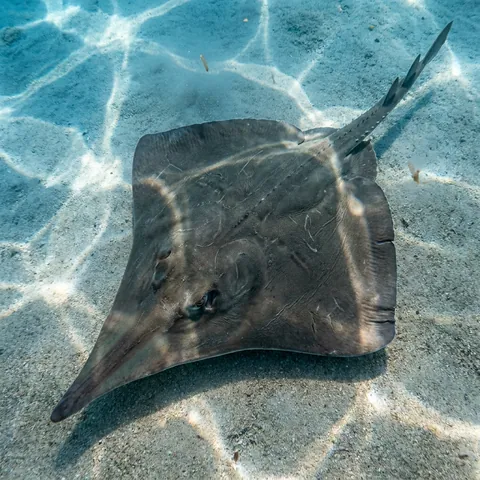
Several skates share this rough, thorny look. The thorny skate's black spot on the tip of the tail is a useful single mark to confirm the species.
Adults have a diamond-shaped body, though young skates are rounder. The snout is short, stiff, and bluntly triangular, and the tail is shorter than the body. The top side is very rough, covered in small thorns with a row of larger ones running down the middle from head to tail, while the underside is smooth. Colouring is brownish grey with scattered black blotches on top and white underneath.
This is a cold-water species that lives on the seabed, mostly over sand and mud. It has been recorded from 5 to 1,540 m deep, but is most common between about 25 and 440 m.
It feeds mainly on fish, crustaceans, and worms, but will also eat molluscs, cephalopods, and echinoderms, and scavenges when it gets the chance. Its diet shifts as it grows. It can sense the weak electric fields given off by hidden prey.
The thorny skate lays eggs in tough capsules that hatch outside the mother's body, rather than giving birth to live young. Hatching can take a long time, especially in colder, more northern waters.
The IUCN lists the thorny skate as vulnerable. It is often caught as unwanted bycatch in fisheries, and US fisheries managers treat it as a species of concern because of uncertainty about its status.
Describe what you saw and we name it, then keep every species you find in your Oceandex.