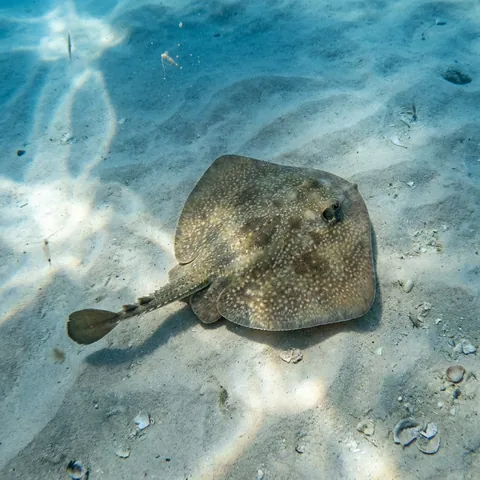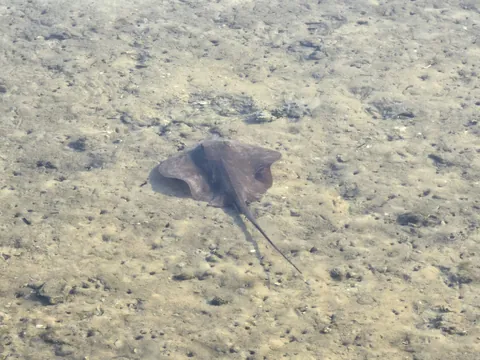
Atlantic Stingray
Hypanus sabinus
stingrays
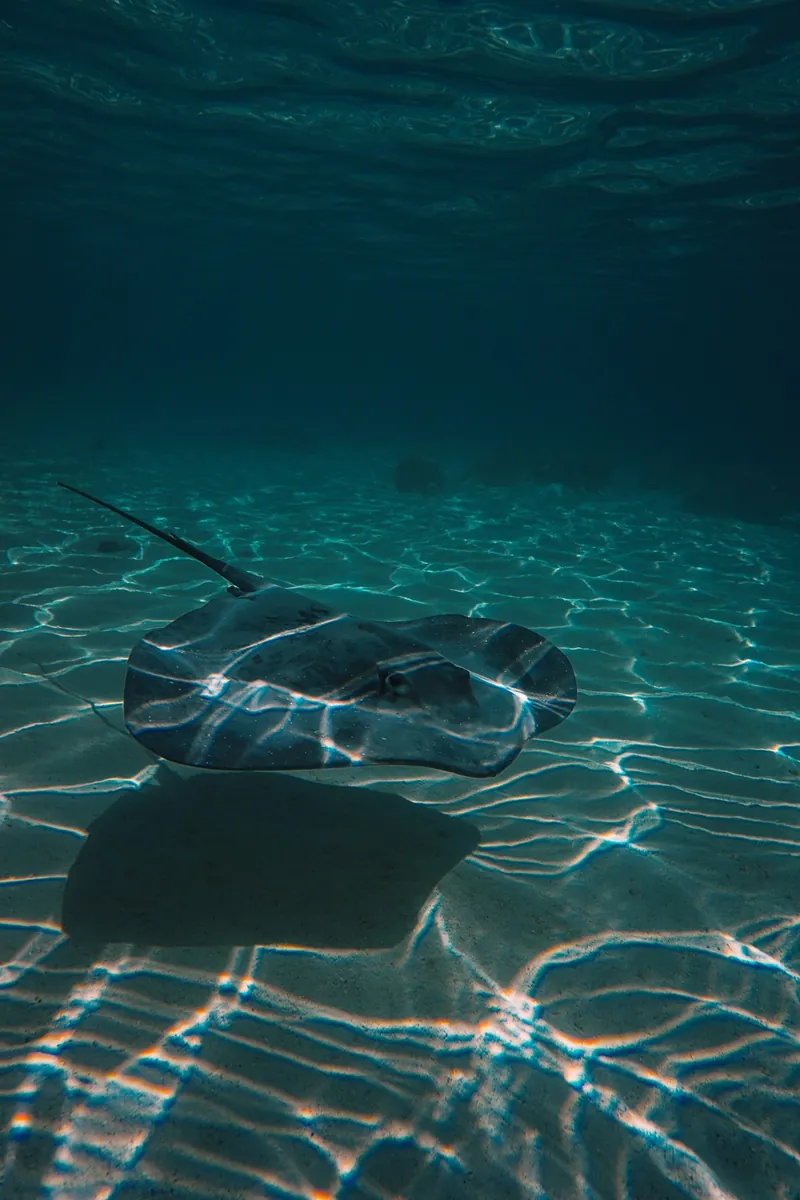
Stingrays are flat-bodied rays that often hide on the seabed and carry a stinging spine in the tail. In this app the group includes the Southern Stingray, the Ribbontail Stingray, and the Short-tail Stingray.
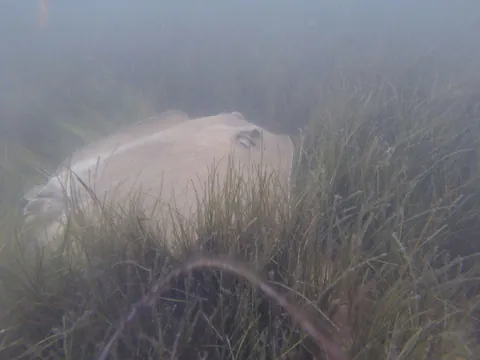
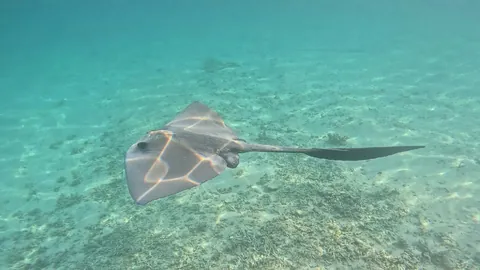
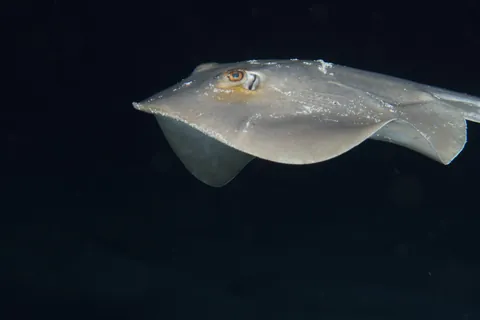
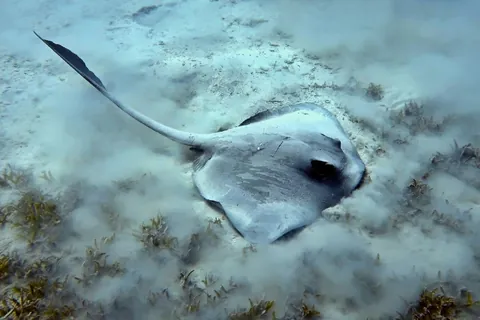
A flat disc-shaped body lying on or near the sand, with a whip-like tail, marks a stingray; unlike sharks, its gills and mouth sit on the underside. Colour and pattern on top of the disc are the easiest way to tell the different kinds apart.
Stingrays have a flat, disc-shaped body and a mouth on the underside. Many kinds show colours and patterns on top that help them blend in with the sandy bottom, and some can even change colour over days to match a new home. The tail usually carries one or more sharp, barbed spines.
Stingrays swim by rippling or flapping their large side fins (pectoral fins), not by swinging the tail like a shark. Many rest on the seabed and bury themselves in sand, waiting to ambush prey. Stingrays are not usually aggressive and mostly sting only when stepped on or handled.
Stingrays eat mostly shelled animals and small sea creatures, crushing hard shells with their powerful jaws. A ray waiting on the seabed sucks prey out from the sand underneath its body, using electrical sensors near its mouth to find hidden prey.
During the breeding season, a male stingray follows a female closely and bites at her body before mating. Some species stay paired for a long courtship period before eggs are fertilised.
venomous tail spine — never step on or corner; shuffle your feet in shallows
A stingray hunting in the sand cannot breathe through its mouth, so it draws clean water in through two small openings behind its eyes instead.
Describe what you saw and we name it, then keep every species you find in your Oceandex.