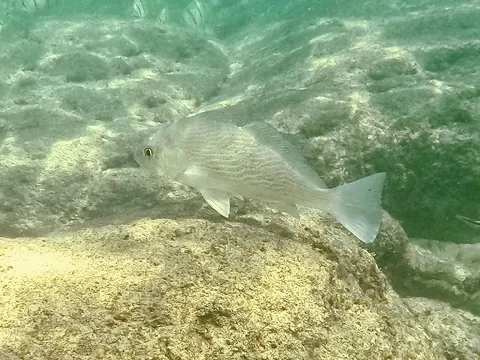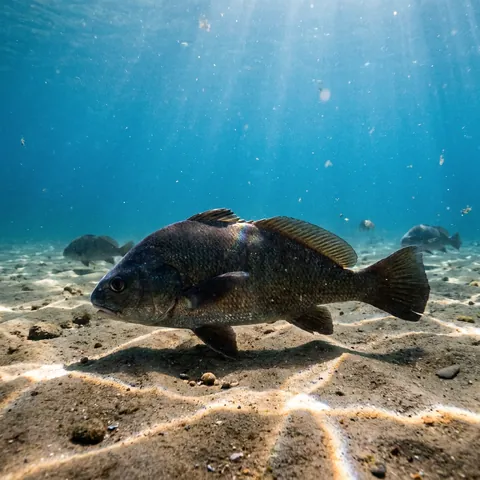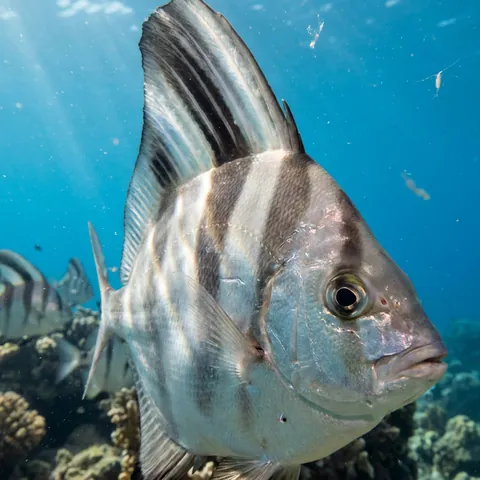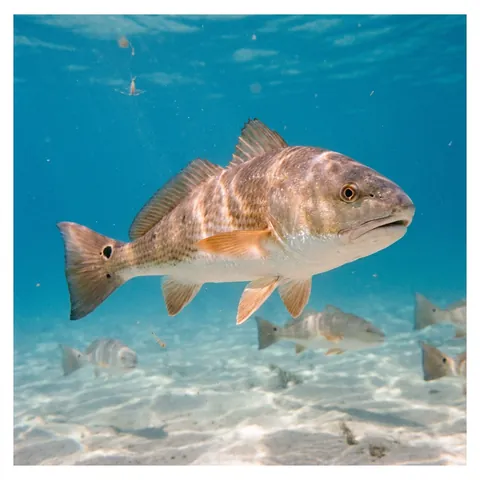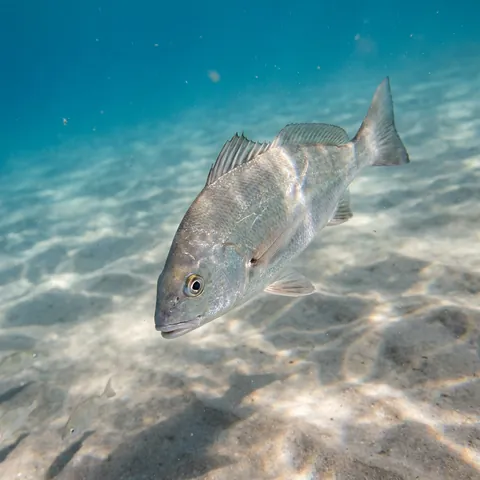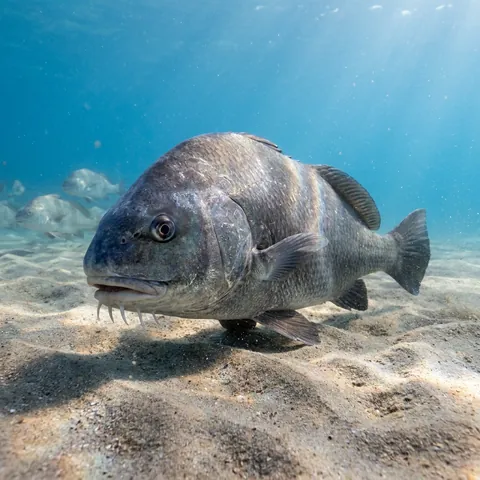
Black Drum
Pogonias cromis
Cynoscion nebulosus
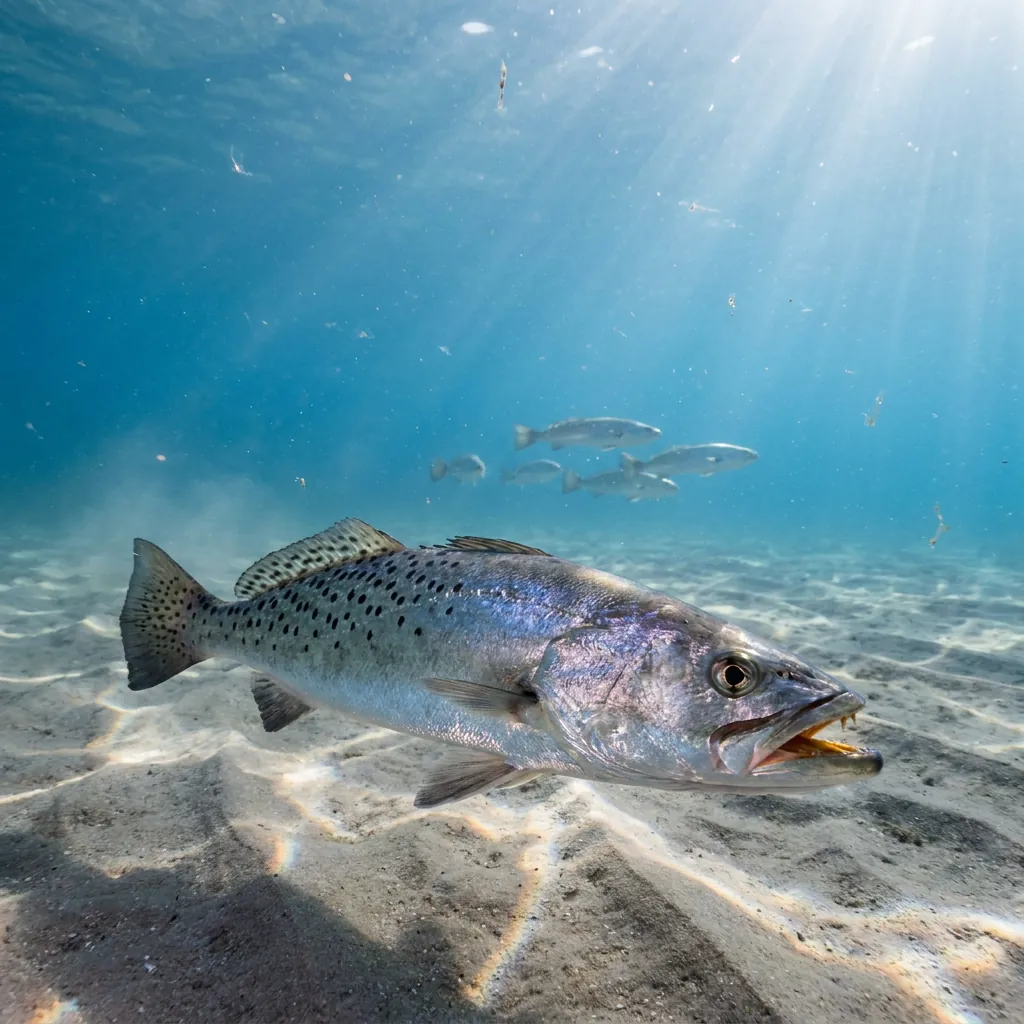
The spotted seatrout is a popular sport fish found along sandy coasts and estuaries, growing up to 100 cm long, though 36 cm is a more typical size. Its spotted body and trout-like shape make it a familiar catch for anglers and divers alike.
Also known as: speckled trout, spotted weakfish
Many drum-family fish look similar and carry barbels under the chin. This species has none - check under the jaw for smooth skin with nothing hanging from it.
Dark spots are scattered over its back, spreading onto the dorsal and tail fins. In murky water its background colour can turn golden. It has prominent canine teeth but no chin barbels, and its long dorsal fin is split by a deep notch. Its shape and colour recall a brown trout, though the two fish are not closely related.
Lives in estuaries, salt marshes, and shallow coastal water over sand bottoms, often near seagrass beds. It stays near the surface of the water column and moves into deeper offshore water during winter, returning to the coast in spring and summer.
Young spotted seatrout eat mostly shrimp and other crustaceans. As they grow, they shift to eating fish, and large adults strongly prefer mullet, sometimes swallowing one two-thirds their own length.
Spawning runs from spring through summer, in shallow, grassy areas of estuaries. Males make a drumming sound to attract females. Larvae reach about 170 to 200 mm within seven months, and most fish mature enough to reproduce by the end of their first year.
Spotted seatrout rank among the top ten most popular sportfish in the United States - in Louisiana alone, recreational anglers once landed more than 6 million of them a year.
Describe what you saw and we name it, then keep every species you find in your Oceandex.