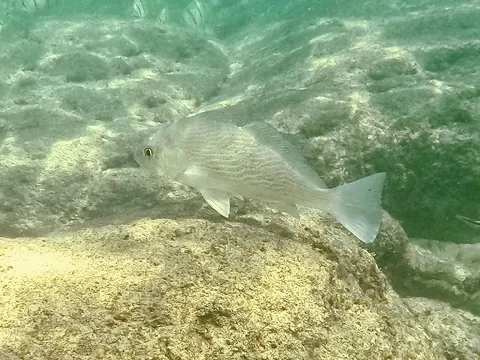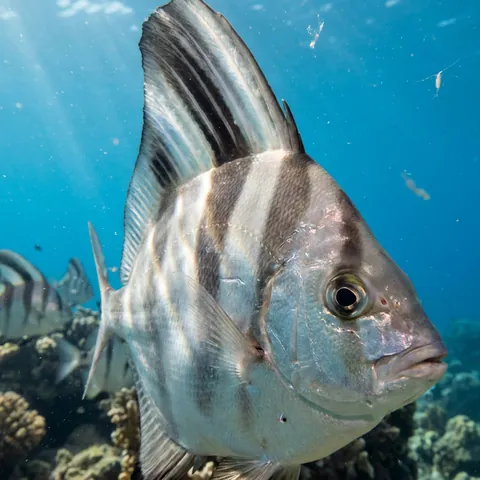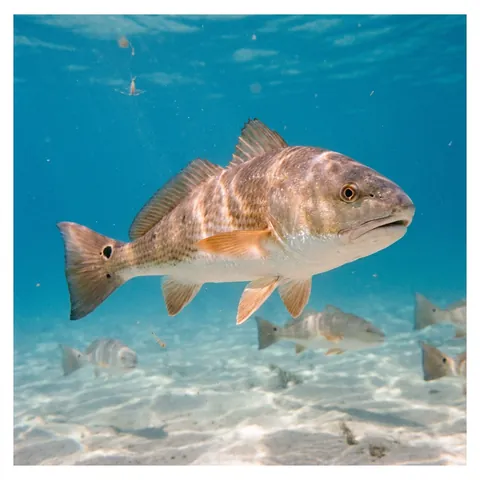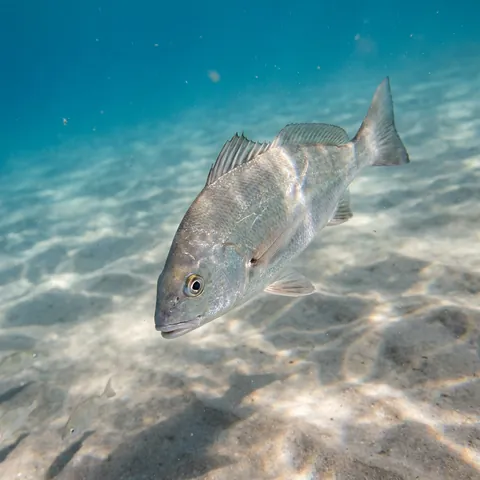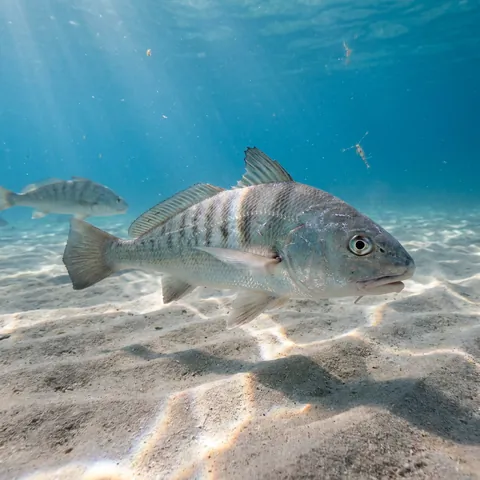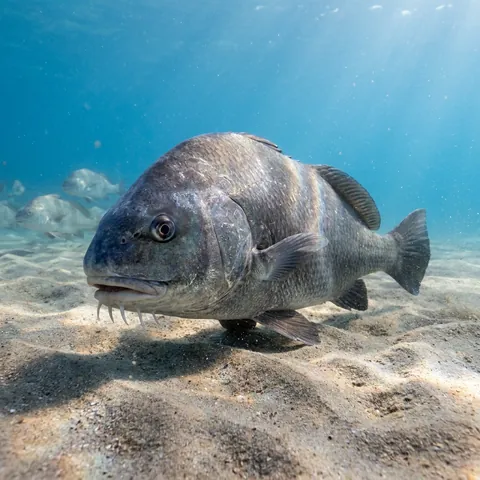
Black Drum
Pogonias cromis
Aplodinotus grunniens
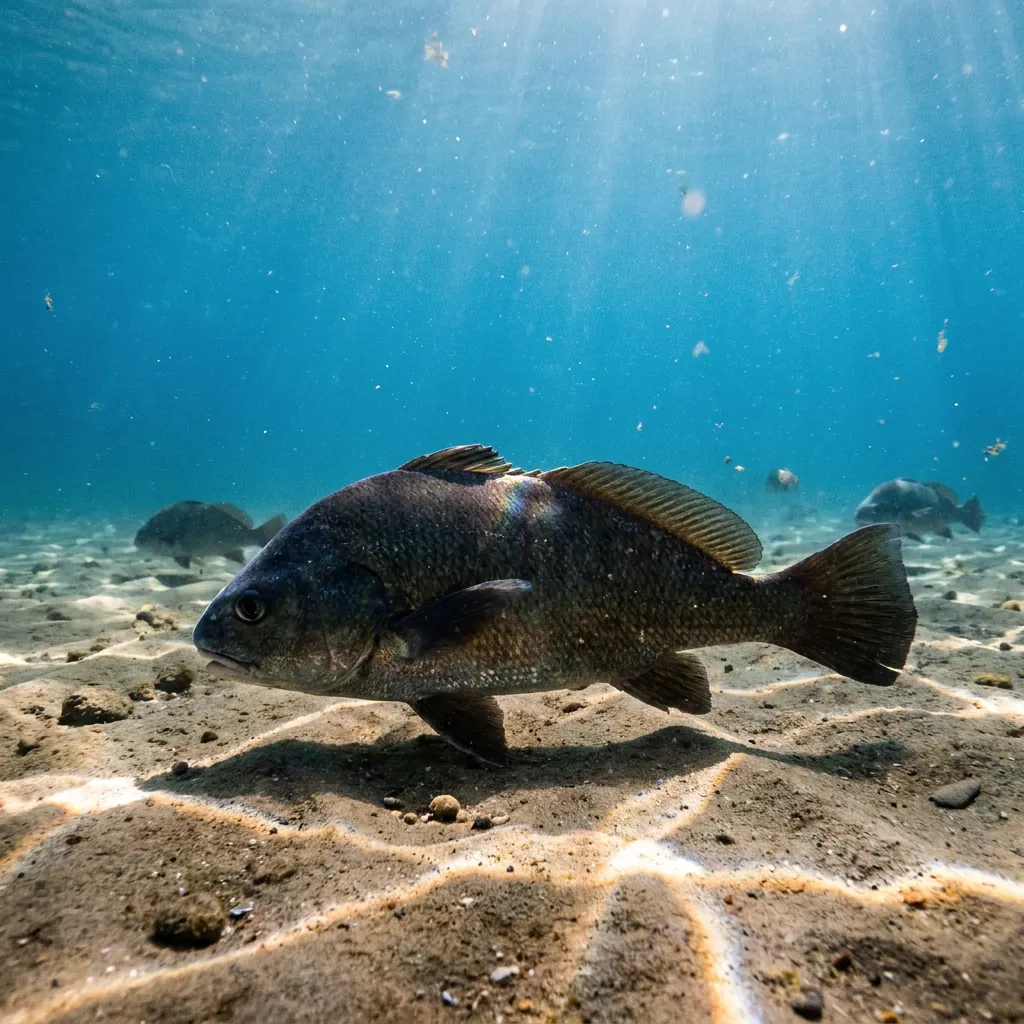
The freshwater drum is a heavy, deep-bodied fish that spends its whole life in rivers and lakes, never visiting the sea. It can grow to 95 cm and weigh close to 24.7 kg, making it one of the biggest fish many freshwater divers will ever meet.
Also known as: sheephead, silver bass, lavender bass, sheepshead, croaker, thunderpumper, grinder, bubbler
Several deep-bodied silvery freshwater fish share its range. Look for the lateral line running onto the tail fin itself, a trait most similar-looking fish do not share.
It has a tall, deep body that is grey or silvery, though some populations run more bronze or brown. The dorsal fin is divided into two parts, and the pectoral fins are long and pointed. Its lateral line, the sensory stripe along its side, runs all the way onto the tail fin, which ends in a rounded or slightly pointed edge.
It lives only in fresh water, ranging from Hudson Bay in the north down to Guatemala in the south, and is one of the most widespread freshwater fish in North America. It prefers clear water but tolerates murky rivers and lakes, and it favours a clean bottom of sand and gravel. It has been recorded down to about 30 m.
The freshwater drum feeds along the bottom, eating mostly insect larvae in spring and switching to small fish, mainly young shad, later in the year, along with mussels and crayfish. It spawns in open water, releasing eggs and sperm that drift and fertilise at random, with no parental care for the eggs or young.
Its ear bones, called otoliths, are L-shaped and are collected by people as good-luck charms known as 'lucky stones'.
Describe what you saw and we name it, then keep every species you find in your Oceandex.