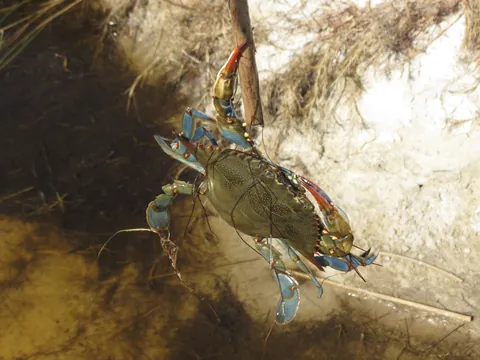
Atlantic Blue Crab
Callinectes sapidus
Arenaeus cribrarius
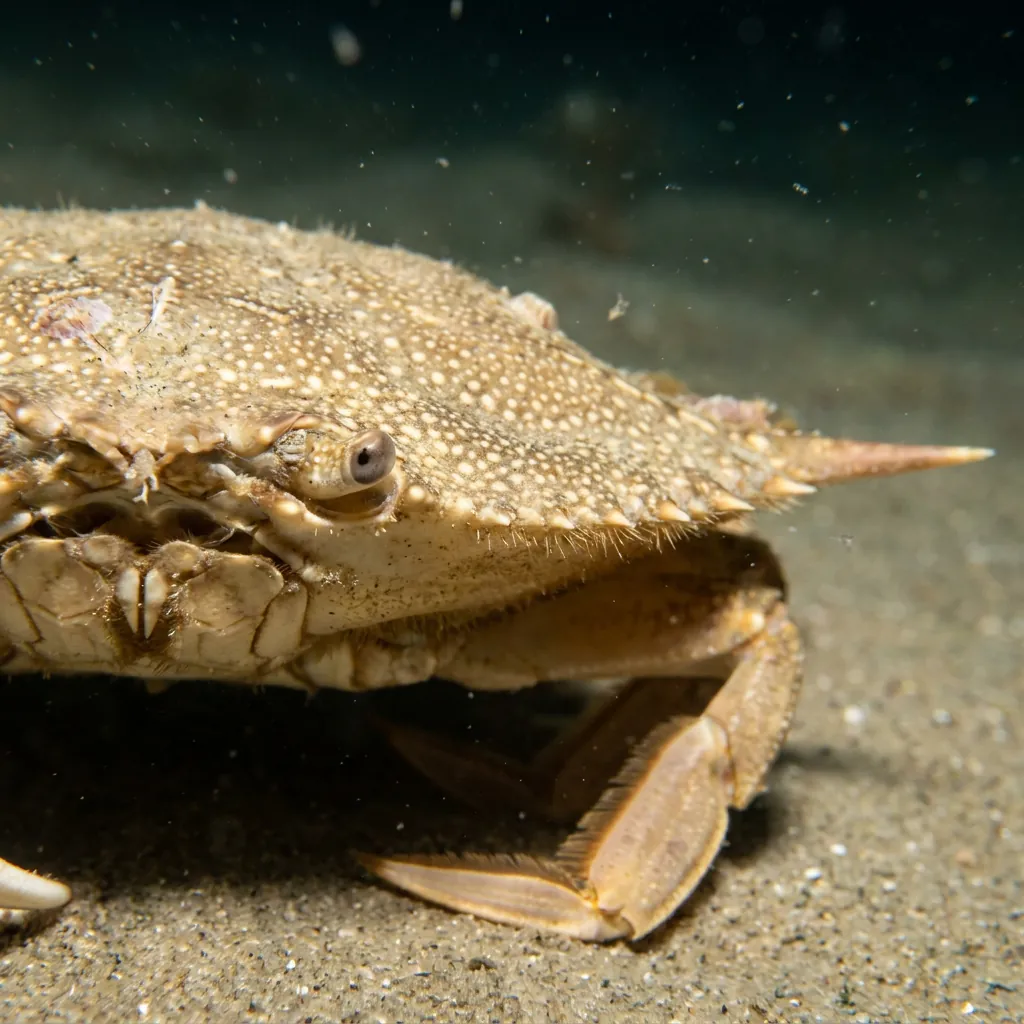
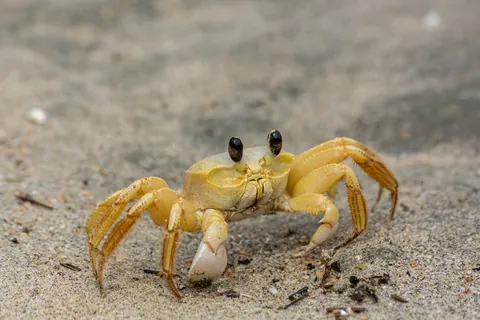
The speckled swimming crab spends its days buried in sand on open beaches, only its eyes and a breathing gap showing, then comes out after dark to hunt.
Also known as: speckled crab
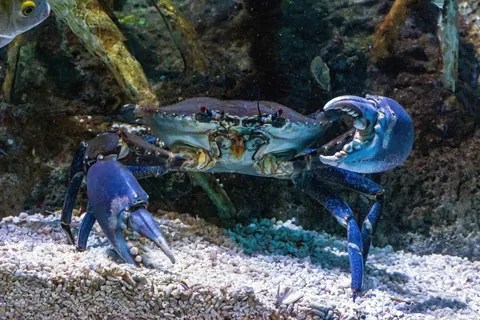
It looks much like the Atlantic blue crab. Check the shell pattern: the speckled swimming crab is covered in white or tan spots, while the blue crab's shell is plain.
This crab has a rounded shell in light brown, maroon, or olive, covered in white or tan speckles, with brighter colours on males. Each side of the shell has a row of pointed teeth, with the last one sticking outward, and the front edge between the eyes has a row of smaller fused teeth. Of its ten legs, the front four pairs are for walking and have yellow tips, while the back pair is flattened into wide paddles for swimming.
It lives on open sand beaches in shallow water down to about 68 m, in the surf zone where waves shift the sand. By day it buries itself in the sand, clearing a small gap around its mouth so water can still reach its gills, then digs out at night to hunt. It is a solitary crab and only seeks out others of its kind to breed.
It feeds mostly on detritus, the loose organic debris on the seabed, ambushing prey that wander close to where it lies buried. It also eats fish, molluscs, and other crustaceans, and has even been recorded catching sea turtle hatchlings crossing the sand.
Along the Brazilian coast, people catch this crab not just for its meat. Its shell is processed into chitin, a substance used to make everything from cosmetics to adhesives.
Describe what you saw and we name it, then keep every species you find in your Oceandex.