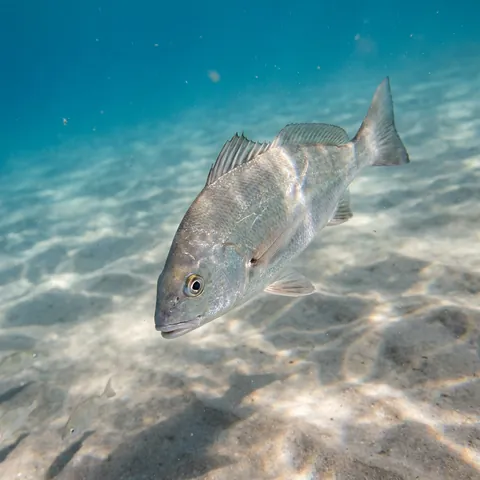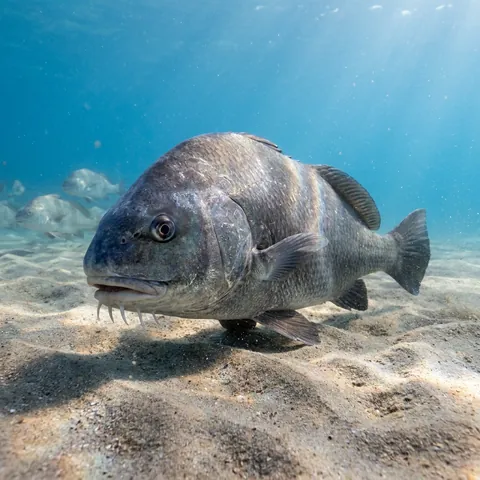
Black Drum
Pogonias cromis
Argyrosomus hololepidotus
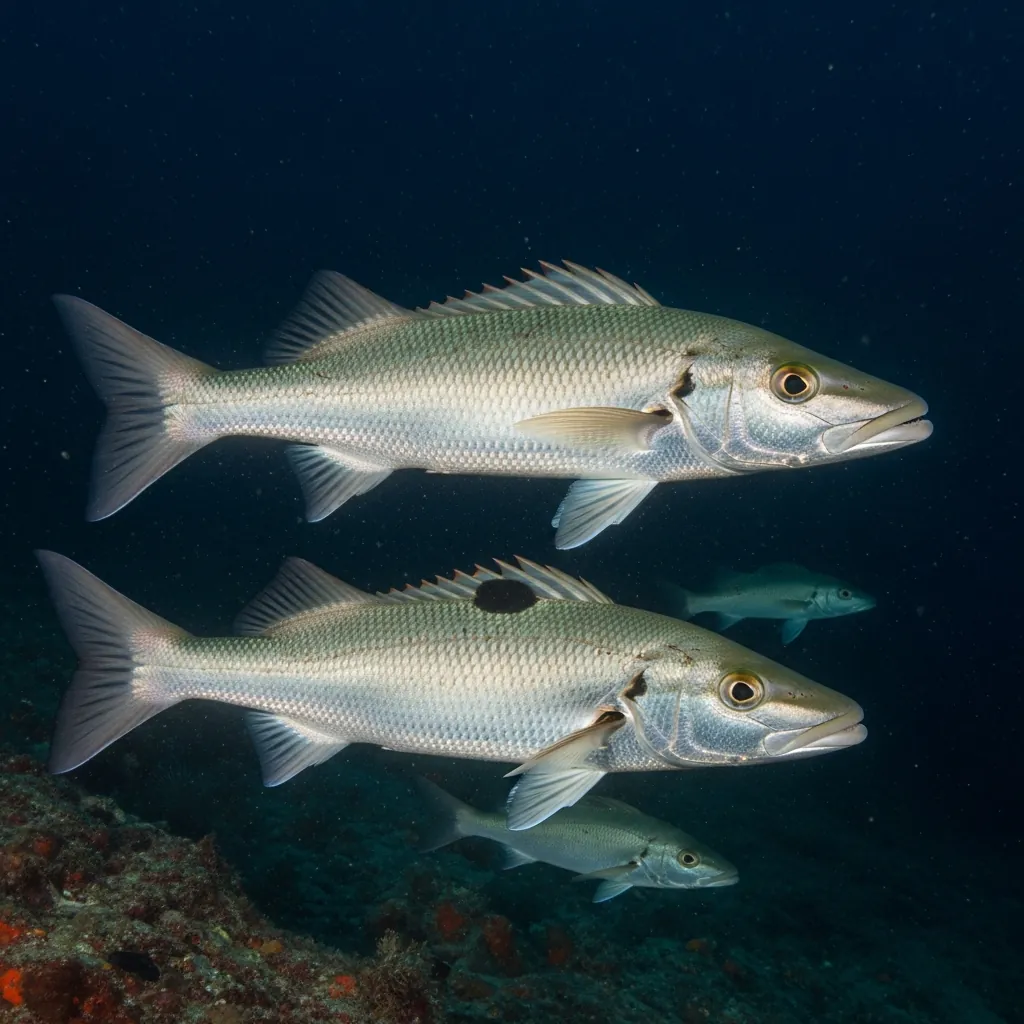
The southern meagre is a heavyweight hunter of Madagascar's coast, reaching 200 cm and 71 kg, though a fish of about 100 cm is more usual. It works the dark: most of its feeding happens at night or in water too cloudy to see through. Cuttlefish, fish, crabs, prawns and worms all end up in the same wide mouth.
Also known as: madagascar meagre, southern meagre, croaker, meagre, madagascar meagre, mulloway, southern meagre, drum, southern meagre(=mulloway), kob, southern meagre
Drums and croakers are a hard group, and several look like this one at a glance. Settle it at the shoulder: there is a single black blotch at the top of the base of the pectoral fin, where the fin joins the body. It sits in the same place on every fish and does not change with mood or background.
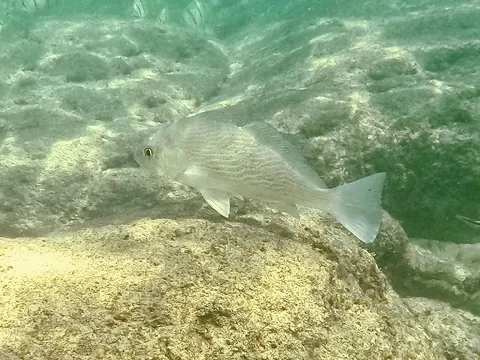
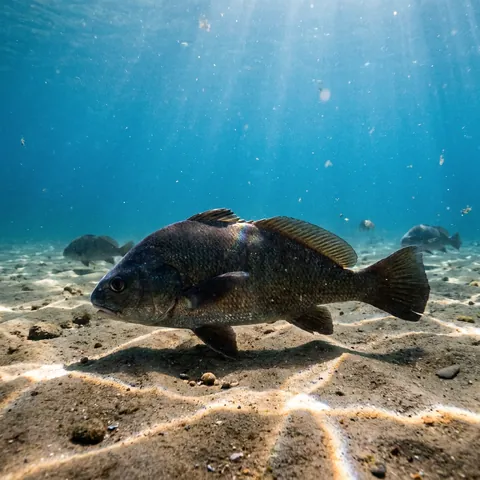
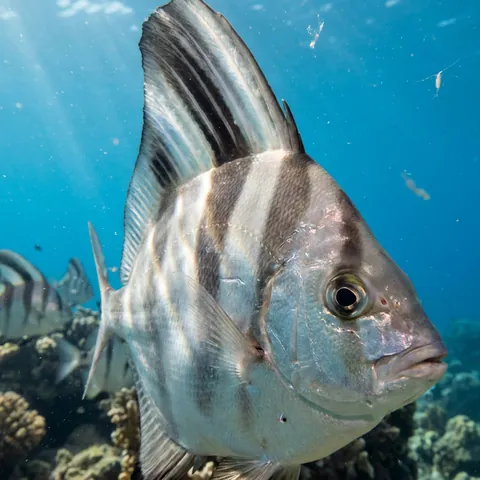
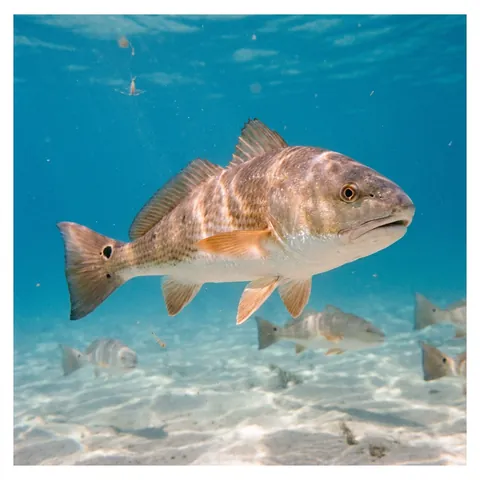
The body is long and deep, silvery grey overall. The back and upper sides darken towards blue, with a bronze sheen along the flanks, while the breast and belly stay white. A deep notch almost cuts the long dorsal fin into two separate fins. The dorsal, pectoral and tail fins are brownish grey; the pelvic and anal fins are off white with a grey streak.
This fish belongs to eastern Madagascar and is found nowhere else, with the biggest numbers in the southeast. It moves between very different places: the lower parts of rivers, estuaries, rocky reefs, the surf off open beaches, and the shelf further out. Most are between 15 and 150 m, though records reach 400 m. It lives in water of about 13 to 24 C and is taken both near the bottom and in midwater.
For nearly two centuries this fish was muddled with its relatives and often filed under another name. Only in 1995 was its identity pinned down, when scientists named a fresh reference specimen for it.
Describe what you saw and we name it, then keep every species you find in your Oceandex.