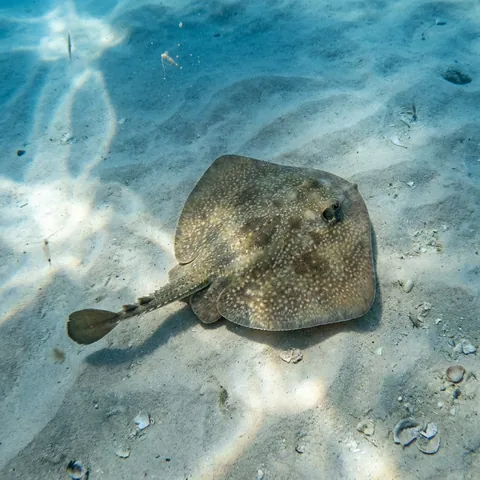
Atlantic Stingray
Hypanus sabinus
Bathytoshia brevicaudata
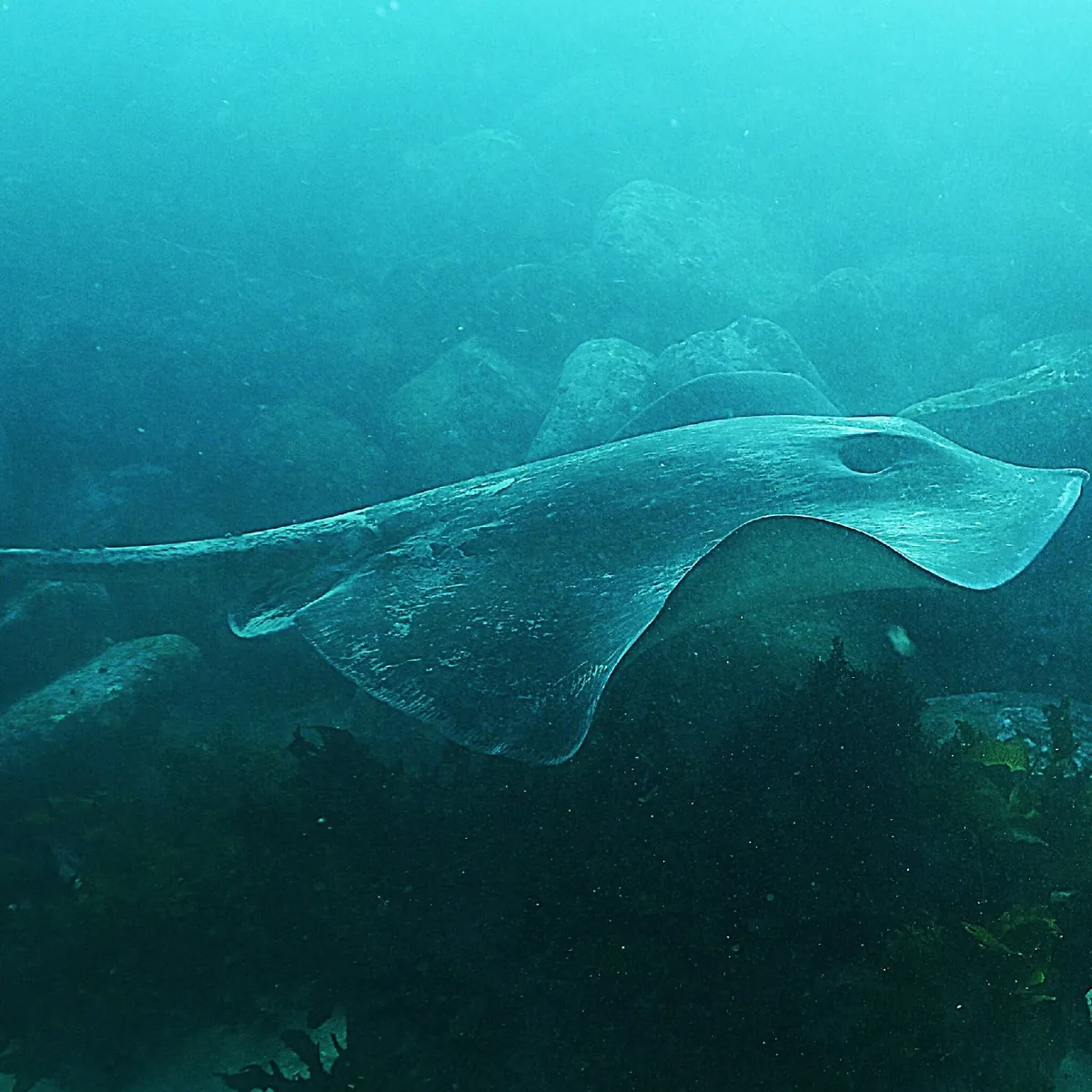
The short-tail stingray is a giant of its kind, with a heavy, diamond-shaped body that can span up to 430 cm across. Despite its bulk, it usually glides slowly over the seabed, saving sudden bursts of speed for when it really needs them.
Also known as: smooth stingray, shorttailed stingray, captain cook's stingaree, giant black ray, giant stingray, new zealand short-tail stingaree, new zealand short-tailed stingaree, schreiners ray, short-tailed stingaree, whai repo, short-tailed stingray, pitted stingray, bathytoshia matsubarai
This species can be confused with other large rays such as the pink whipray. The tail is the mark to check: on this species it is thick at the base and shorter than the body disc, unlike the long, thin, whip-like tail of a whipray.
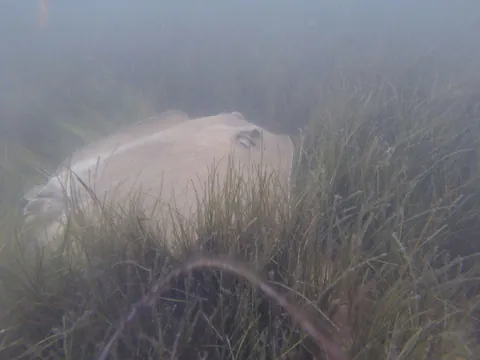
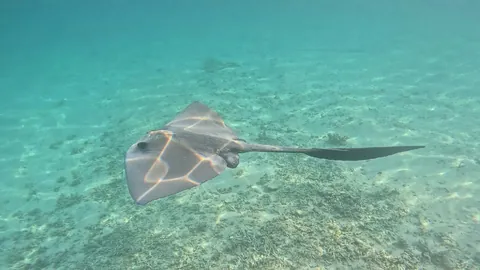
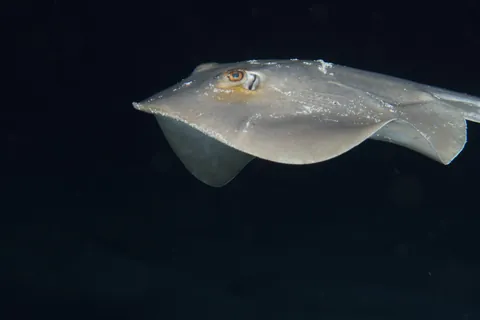
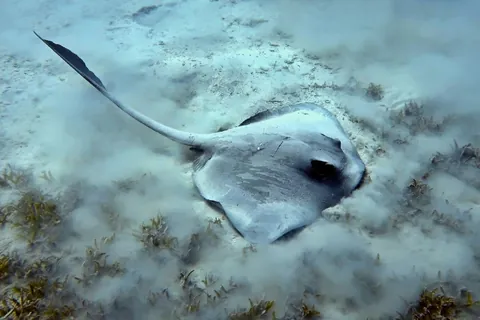
This ray has a plain-coloured, diamond-shaped disc formed by its pectoral fins, with no scales even as an adult, and a pair of white pores beside its head. Its body colour ranges through shades of dark grey or black, sometimes with rows of white spots along each wing. Its tail is thick at the base and usually shorter than the disc itself, armed with large bumps and a row of thorns running along the middle in front of the venomous spine.
It is a bottom-dwelling ray of temperate southern waters, living across a wide range of places from brackish estuaries and sheltered bays to sandy flats, rocky reefs, and the outer edge of the continental shelf, though it will also swim up into open water.
This ray is usually slow-moving but can flap its fins hard enough to create a loud, audible bang in the water when it needs a burst of speed. It tends to stay within a limited home area rather than migrating long distances, moving to deeper water in winter. It also forms large seasonal gatherings at certain sites. When threatened, it raises its tail warningly over its back, scorpion-style, though it is considered more curious than aggressive toward divers.
When this ray beats its fins hard for a burst of speed, it can move the water fast enough to cause cavitation, creating a loud, audible bang, an unusual side effect of swimming rarely reported in other stingrays.
Describe what you saw and we name it, then keep every species you find in your Oceandex.