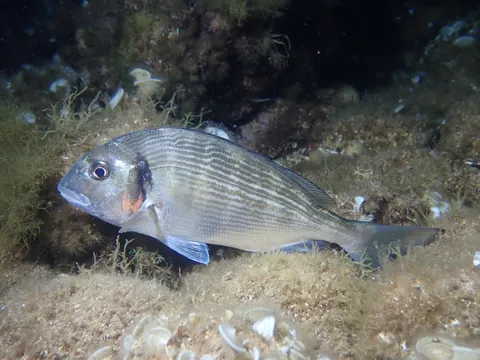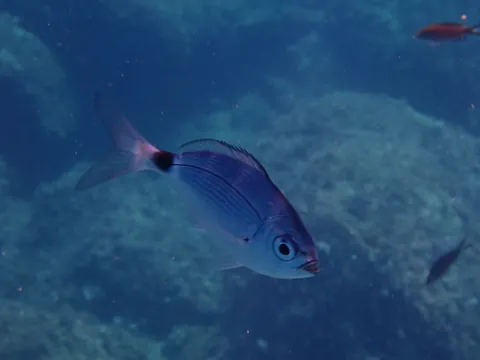
Annular Seabream
Diplodus annularis
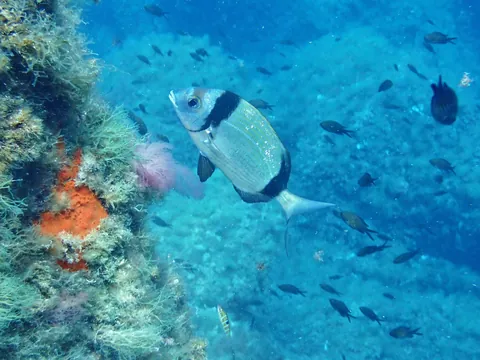
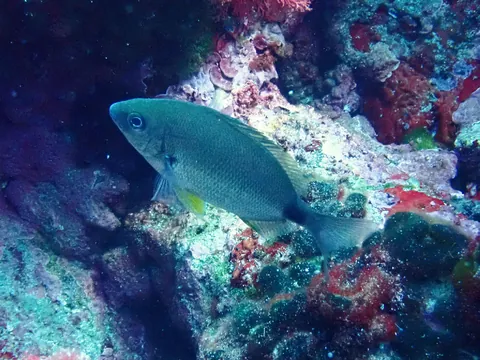
Diplodus puntazzo
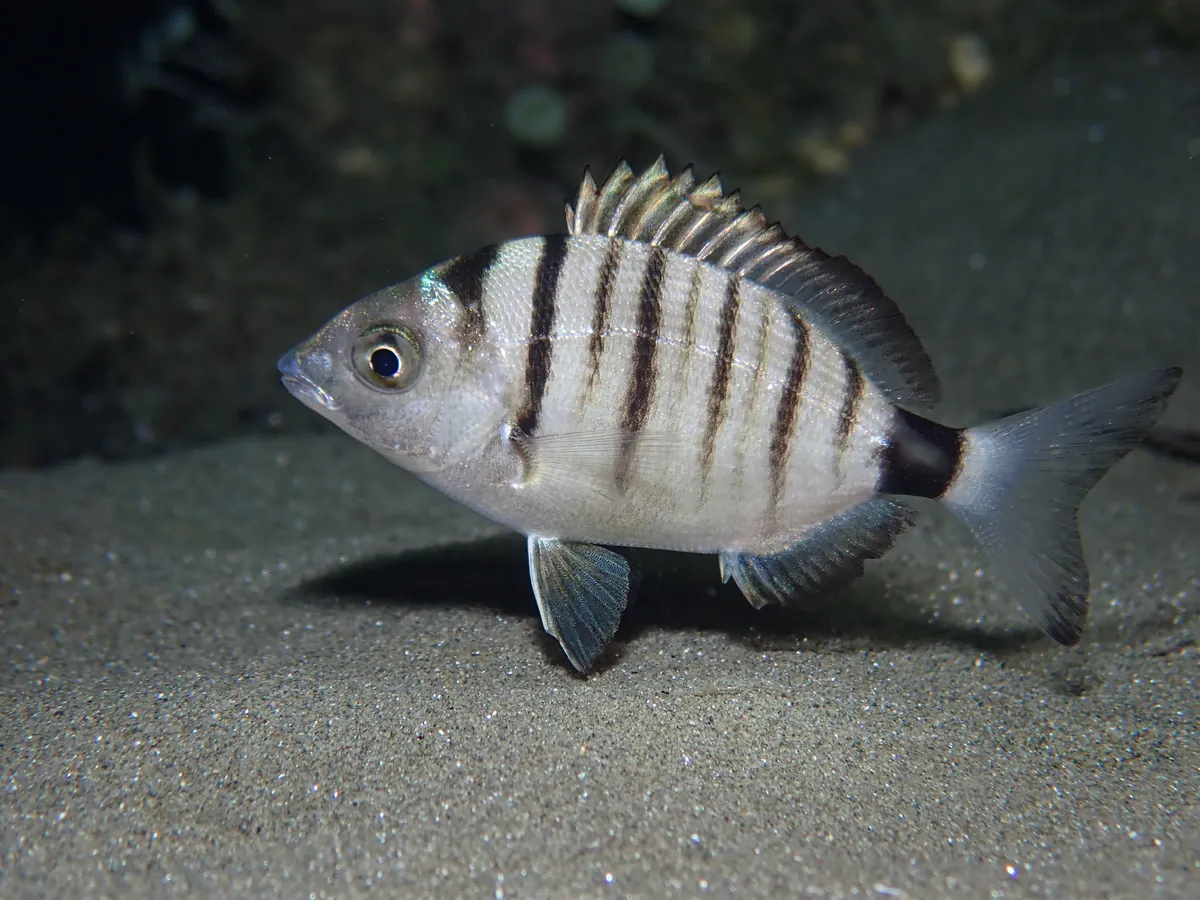
The sharpsnout seabream is a common sight over Mediterranean rock and sand, growing to a common length of 30 cm and a maximum of 60 cm. Its silvery, barred body and pointed snout make it easy to pick out among rocks.
Also known as: sheephead bream
It can be confused with other Diplodus seabreams that share similar bars. The dark band that almost rings the base of the tail, rather than sitting on the tail fin itself, is the mark to check.
The body is oval and flattened side to side, with a pointed, slightly protruding mouth. Colour is silvery grey with 6 or 7 vertical bars along the upper body, alternating dark and light. A dark band almost rings the base of the tail, darkest in young fish, and the outer edge of the tail fin is black. There is also a dark spot at the base of the pectoral fin. The bars can fade once the fish is out of the water.
Lives over rocky or sandy bottoms in coastal waters, from the surf zone down to 150 m, though it usually stays above 60 m. Young fish often shelter in brackish tide pools and lagoons, while adults move into the surf zone and open coastal water.
This is a social, day-active fish that forms groups over rock and sand. It eats both plants and animals, and plants can make up most of its diet in some areas, though it also eats seaweed, worms, molluscs, and shrimp. Some individuals pick parasites off other fish, acting as cleaners.
The sharpsnout seabream is a permanent hermaphrodite, carrying both male and female tissue, and some fish start as males before becoming female later in life. Spawning runs from late summer through autumn. Eggs measure 0.85 mm across, and larvae hatch out at 1.7 mm long.
A genetic study found that this fish's closest relative is not another Diplodus seabream at all, but the saddled seabream, a fish in a different genus entirely.
Describe what you saw and we name it, then keep every species you find in your Oceandex.