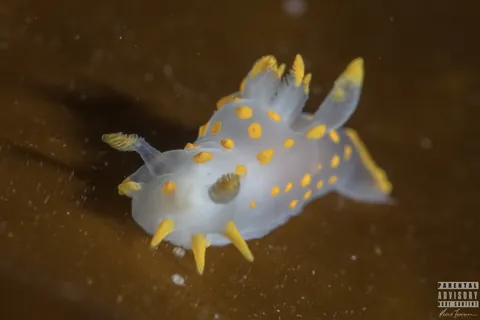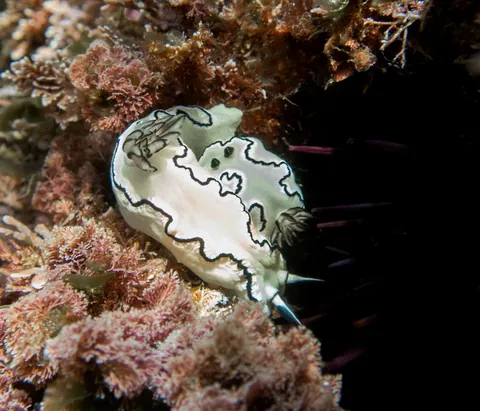
Black-margined Nudibranch
Doriprismatica atromarginata
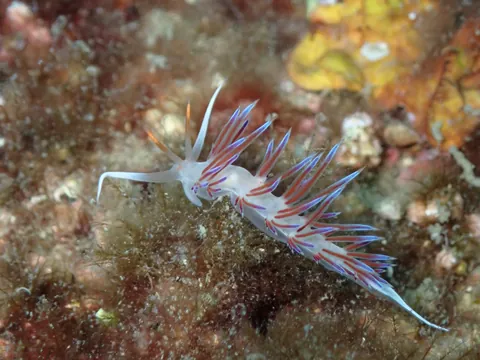
Aeolidia papillosa
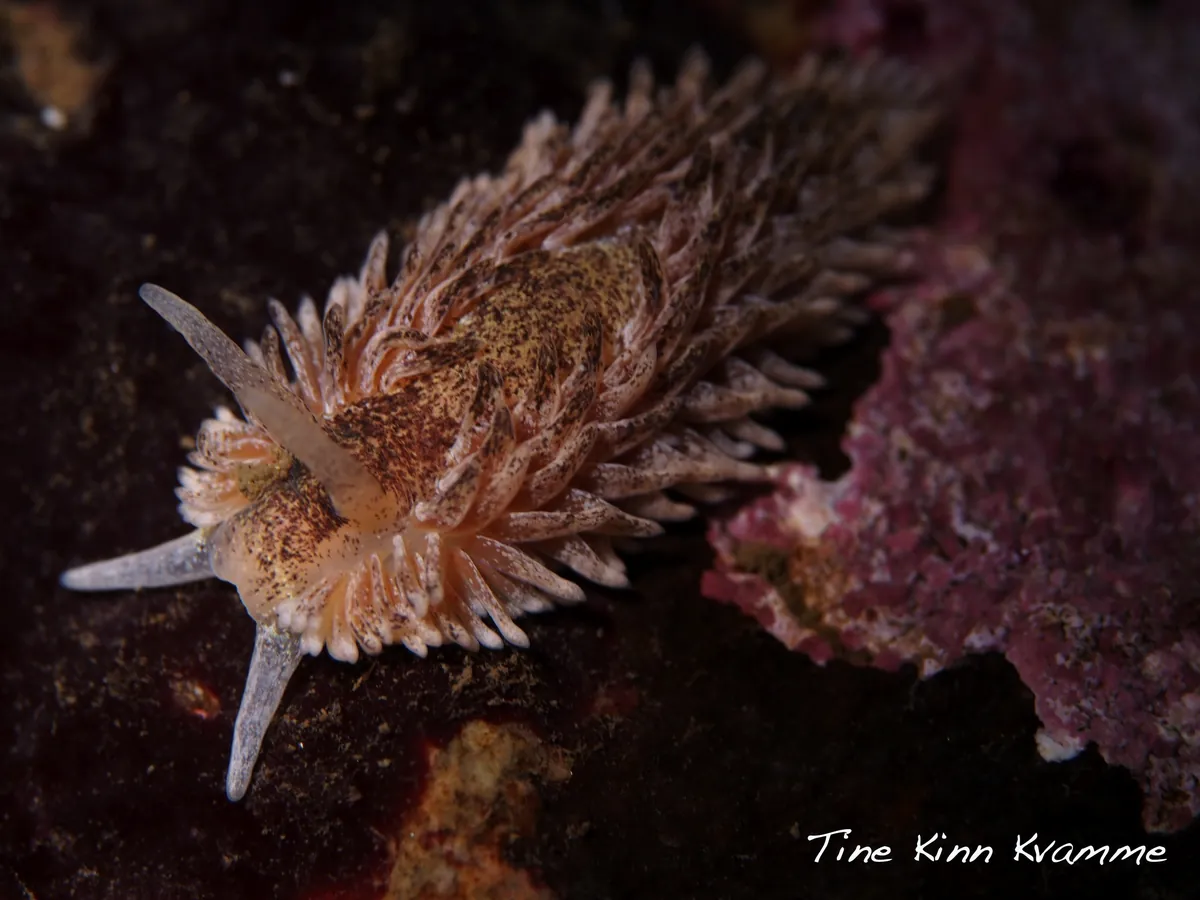
The shag-rug nudibranch looks like a small, shaggy rug crawling over the rock. Each of its soft, finger-like bumps hides a stolen weapon, taken from the same anemones it eats.
Also known as: common grey sea slug
It can be confused with other Aeolidia species that also have dense cerata over the body. Look for a clear V-shaped mark on its head, running from one feeler to the other. Similar species do not have this exact mark.
This sea slug grows up to 10 cm long. Its body is covered in thick, finger-like bumps called cerata. There is a bare triangle between its two rhinophores, the paired feelers on its head, that runs back along the middle of its back. Its colour varies, usually with darker spots on the head and back.
This nudibranch lives in cold, temperate seas, from the shore down to 380 m deep. It is found on hard, rocky ground on both sides of the North Atlantic and along the north Pacific coast of North America.
This species is often found in large groups of thirty or more, wherever their prey is common. It can turn up anywhere from shallow water near the shore to much deeper water.
The shag-rug nudibranch eats sea anemones, especially the frilled anemone. It eats the anemone's stinging cells without setting them off. It stores them, still working, in sacs at the tip of each ceras. Later it uses these stolen stingers to defend itself.
A single shag-rug nudibranch can shed more than 20 million eggs in one spawning, laid out in a spiral ribbon on hard ground such as rock.
Describe what you saw and we name it, then keep every species you find in your Oceandex.