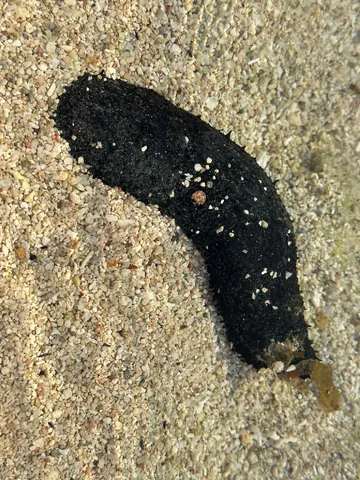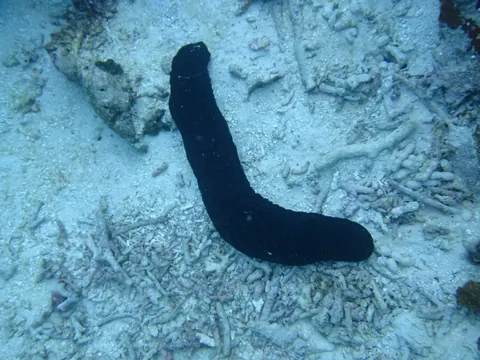
Black sea cucumber
Holothuria atra
sea_cucumbers_g347
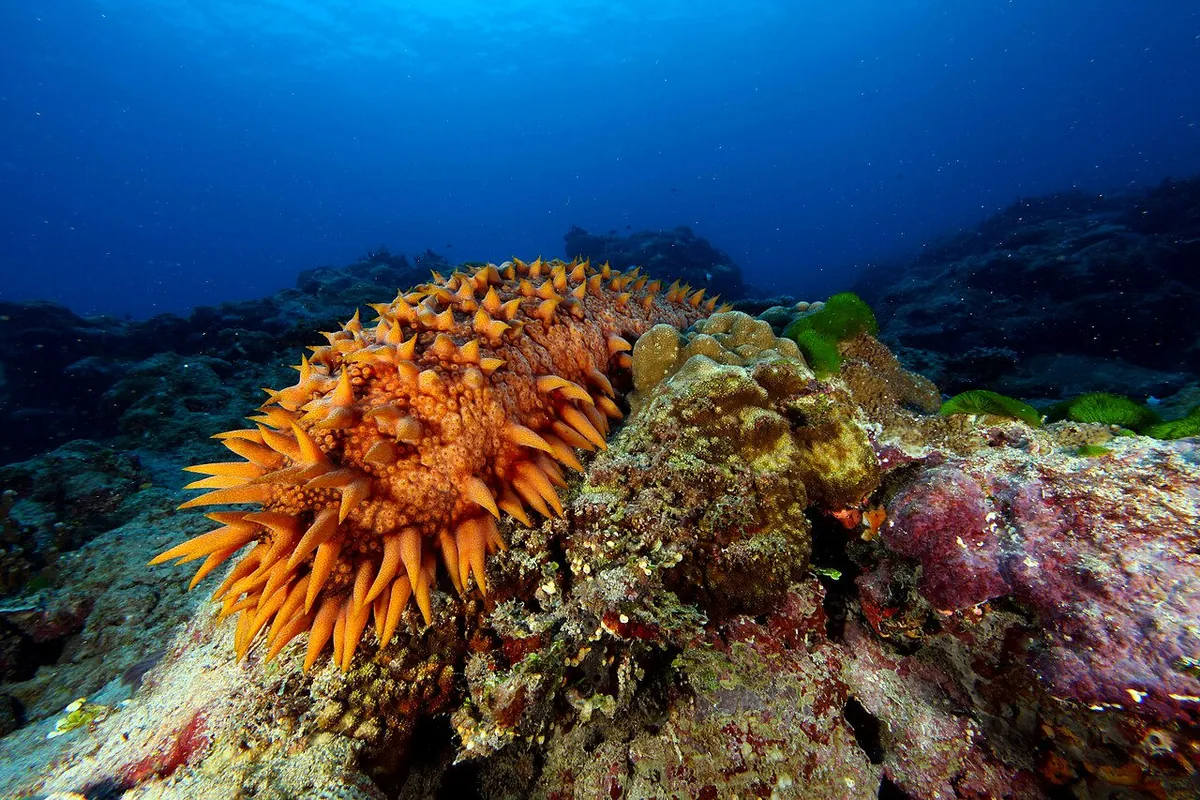
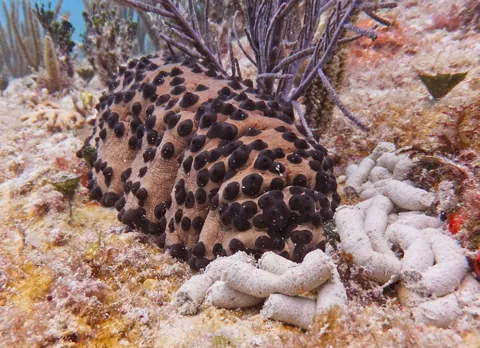
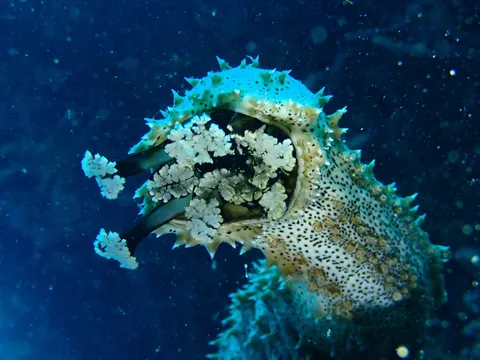
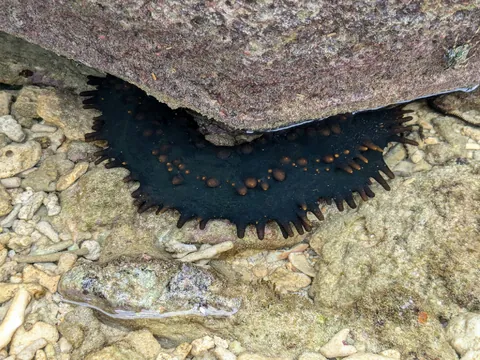
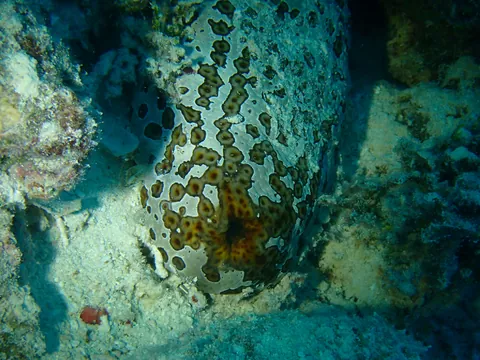
Sea cucumbers are soft, slow-moving animals that lie on the sea floor and clean up debris. In this app the group includes the black sea cucumber, the greenfish sea cucumber, and the leopard sea cucumber.
Look for a soft, tube- or sausage-shaped body lying on the sea floor with no arms and a ring of tentacles at one end to know you have a sea cucumber, rather than a sea slug, which has a flatter body and often gill-like plumes on its back. To tell members apart, look at overall body shape, skin texture, and colour or pattern.
Sea cucumbers have a soft, roughly cylinder-shaped body, without arms like a starfish. Their shape can be almost round, worm-like, or the classic sausage shape. A ring of tentacles surrounds the mouth at one end and can be pulled back inside the body. Most divers see individuals between 10 and 30 centimetres long, though some species are much bigger or smaller.
Sea cucumbers live on the sea floor in oceans worldwide, from shallow reefs down to the deepest parts of the ocean.
Sea cucumbers move slowly across the sea floor. Some bury themselves in sand or silt with only their feeding tentacles showing, ready to pull back in at any sign of danger. Most predators avoid them because of the toxins in their skin.
Sea cucumbers mostly feed on debris, plankton, and decaying matter on the sea floor. Some catch food drifting past with their tentacles, while others sift through sand and sediment for food.
Most sea cucumbers reproduce by releasing sperm and eggs into the open water, where fertilisation happens. The fertilised eggs usually develop into free-swimming larvae before settling on the sea floor as young sea cucumbers.
Some small fish, called pearlfish, live safely inside a sea cucumber's rear end, using it as a hiding place and even a source of food.
Describe what you saw and we name it, then keep every species you find in your Oceandex.