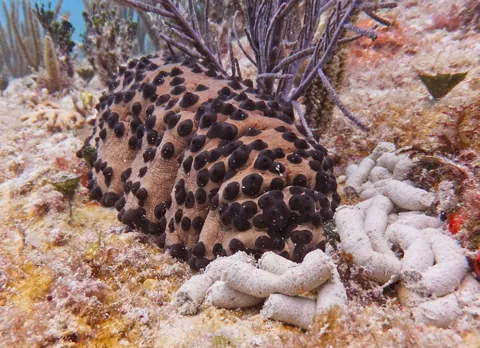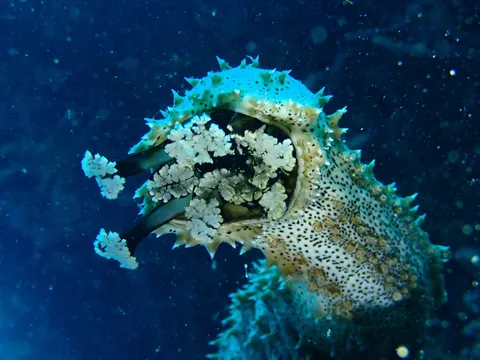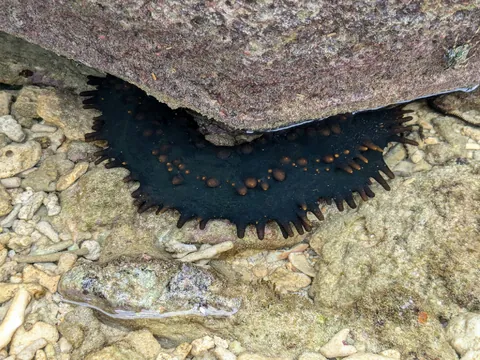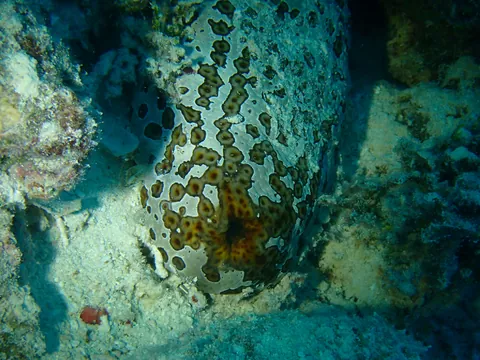
Black Sea Cucumber
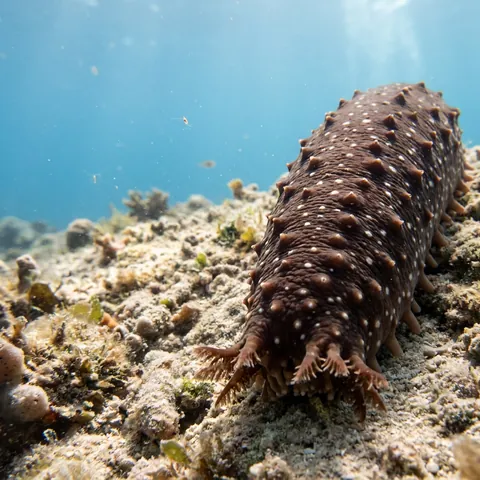
Holothuria leucospilota
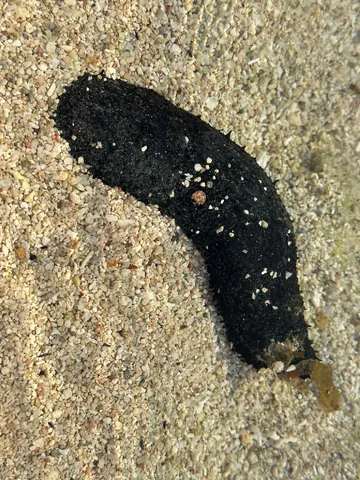
Holothuria atra
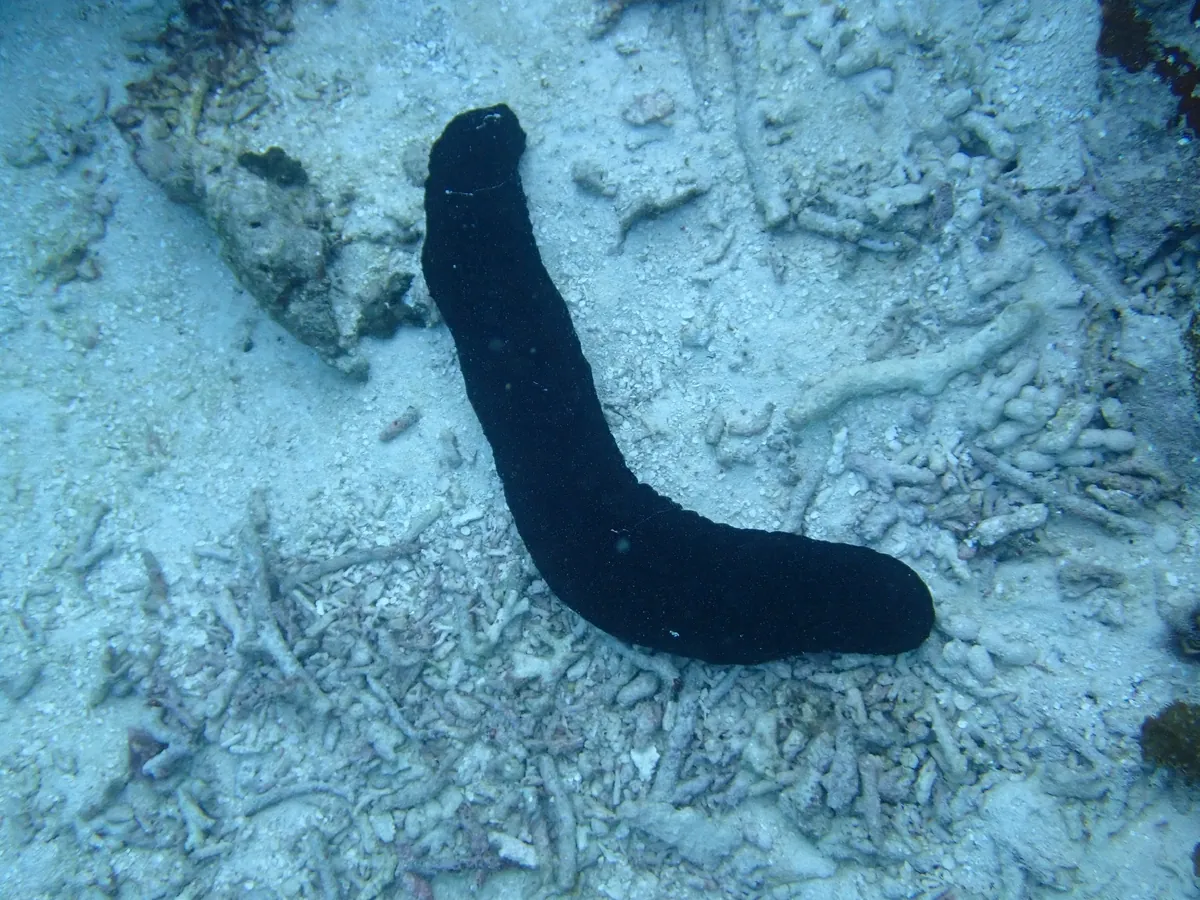
The black sea cucumber is a plain, soft, sausage-shaped animal that lies out in the open on shallow reef flats and sand. It works as a cleaner of the seabed: it sweeps sediment into its mouth with a ring of tentacles, digests the detritus and other organic matter in it, and passes the clean sand out the other end. By turning the sediment over in this way it helps keep the reef healthy. It grows to 60 cm long, though 20 cm is a more usual size, and a big one can weigh a kilogram. It has few natural enemies and can be very common, so you often see several on one dive.
Also known as: holothuria atra, holothuria atra jaeger, 1833, lolly fish, lollyfish
Look for a smooth, unmarked black tube on open sand or reef flat, wearing a coat of sand grains over its top so that it looks half-buried even when it is not. The mix of a sandy back and clean, glossy black skin showing through in patches is the giveaway. Do not pick it up to check; the sand coat and the plain black skin are clear at arm's length.
The skin is smooth, soft and completely black, with no spots or stripes. In most animals a layer of sand sticks to the upper surface, which can make the body look grey or beige with black patches showing through where the sand has come off. Small individuals are usually the most heavily coated. The mouth sits on the underside at one end and is ringed by short, black, branched tentacles. The anus is at the far end. Males and females look the same.
It lives across the tropical Indo-Pacific, from the Red Sea and East Africa east to Australia. Look for it in shallow water: inner and outer reef flats, back reefs and shallow coastal lagoons, on sandy or muddy ground with rubble, coral patches and seagrass. It is rarely found deeper than about 30 m. It prefers reef flats that are sheltered from the waves but still have well-mixed water, and the shallows beside slabs of rock. In the shallowest spots it survives in sun-warmed tide pools that get very hot. Animals in shallow water are packed closer together and are smaller; animals on deeper or outer reefs are more spread out and grow larger.
It feeds slowly and constantly, sifting sediment with its tentacles. Its defence is chemical: if its skin is rubbed or damaged it leaks a toxic wine-red fluid. If something really attacks it, it does not fire out sticky threads like some other sea cucumbers do. Instead it pushes its internal organs out through its anus and later grows them back. It can also reproduce by simply splitting in two. A groove appears around the middle of the body, deepens, and in time the animal separates into two short halves. Smaller individuals are the ones that usually divide.
On Guam, people use this animal as a tool: the red fluid it leaks is squeezed into holes in the reef to drive hiding octopuses out.
Describe what you saw and we name it, then keep every species you find in your Oceandex.