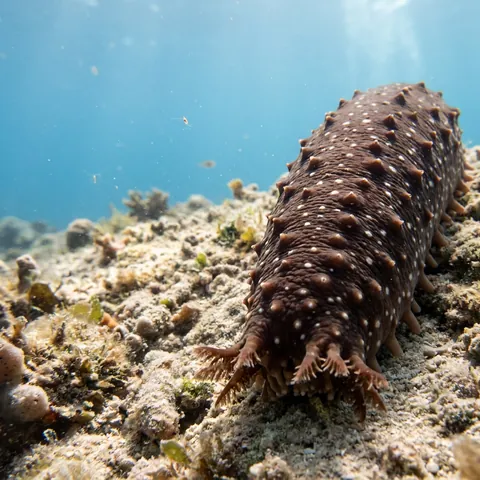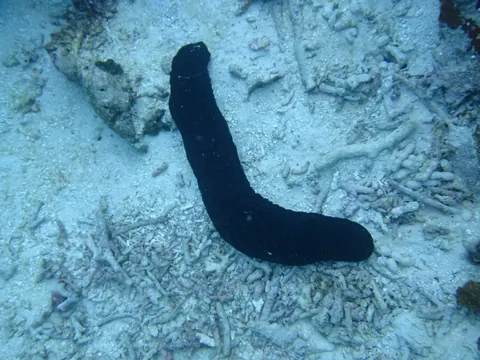
Black sea cucumber
Holothuria atra
Stichopus chloronotus
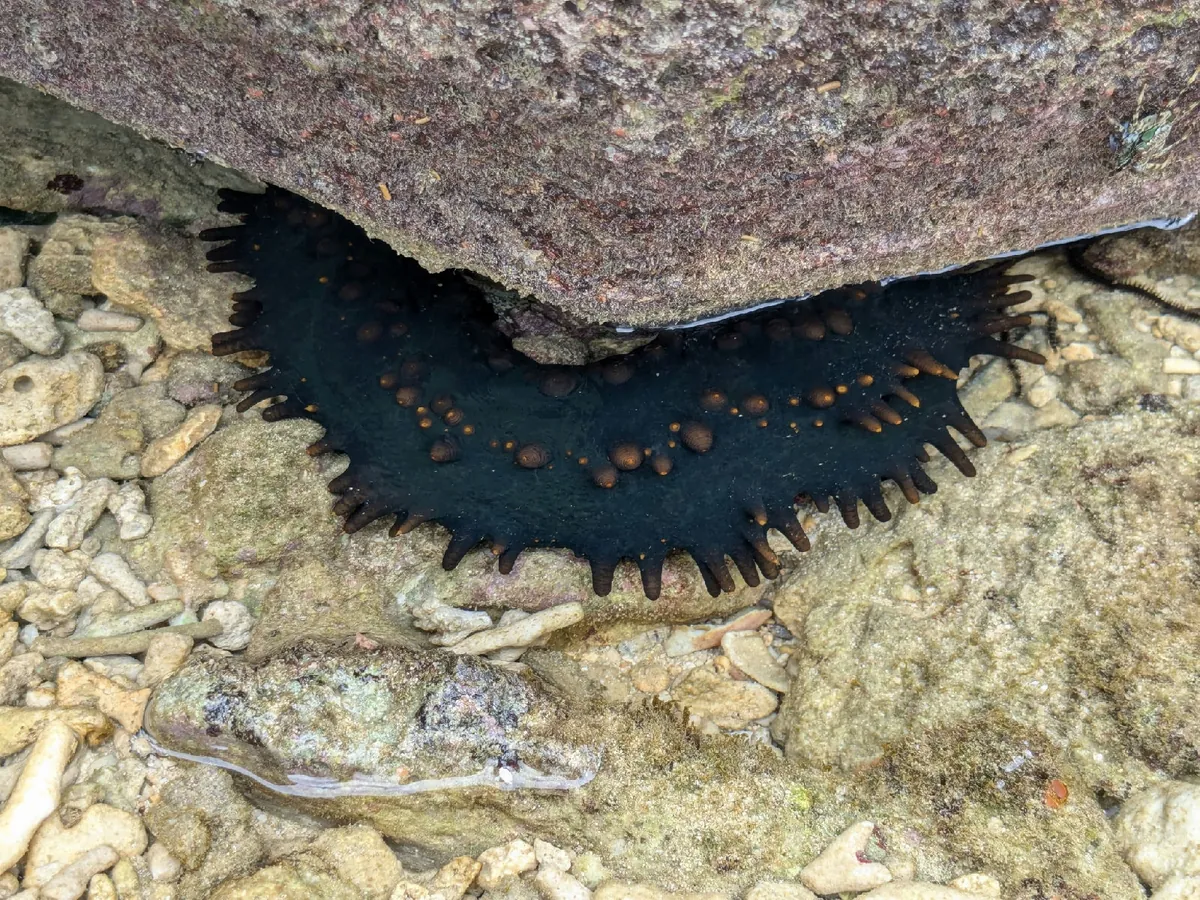
The greenfish sea cucumber is a dark, knobbly sea cucumber of Indo-Pacific reefs. It grows to about 40 cm, is commonly around 18 cm, and can weigh up to 1.5 kg. It lives in shallow water down to about 15 m. It is common over much of its range and is listed as Least Concern, though it is collected for food in some places.
Also known as: black knobby sea cucumber, spiky sea cucumber
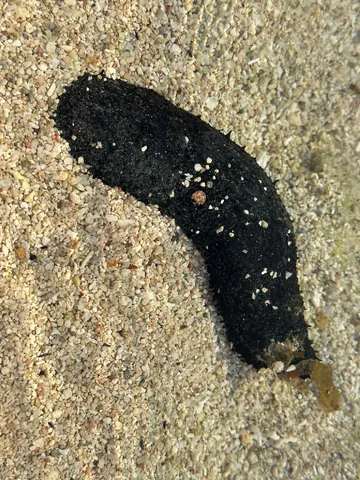
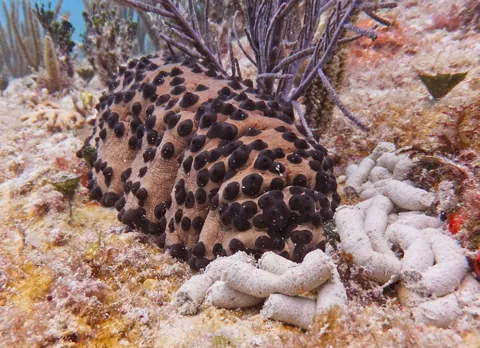
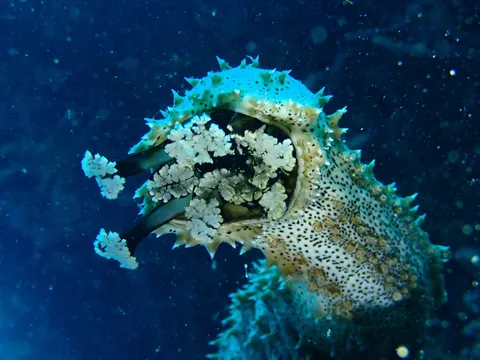
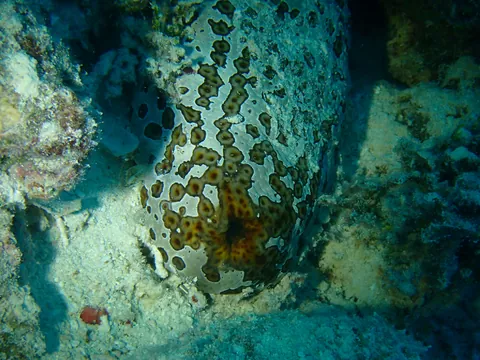
Look for the shape and the tips. This is a dark blackish-green sea cucumber with a squared-off, four-sided body rather than a round one, covered in rows of pointed fleshy bumps. The bumps have bright yellow or red tips, which stand out against the dark skin at viewing distance and are the surest sign.
The body is fairly large, firm but bendy, and square in cross-section, so it looks four-sided rather than round. The skin itself is smooth, but rows of cone-shaped fleshy bumps, called papillae, run along the length of the body, and they are biggest along the lower edges of the two sides. The colour is a deep blackish green. The tips of the bumps are yellow or red.
It lives across the Indo-Pacific, from the Red Sea and the East African coast eastwards to the islands of the western Pacific. Look for it on reef flats and upper slopes, on sandy patches and on rubble on the outer reef flat, from close to the surface down to about 15 m. It reaches its highest numbers on hard ground. Animals in shallow water are generally smaller than those living deeper.
This sea cucumber is a sediment eater. It sweeps the seabed with its tentacles and takes in detritus and other organic matter: plant and animal remains, bacteria, single-celled animals, tiny algae and droppings. It swallows a lot of sand along the way, so it turns over and airs the seabed as it feeds. It can breed in the normal way, with eggs and sperm, but it can also reproduce without a partner.
It can split itself across the middle into two pieces, and each half then regrows the parts it is missing, so one animal becomes two.
Describe what you saw and we name it, then keep every species you find in your Oceandex.