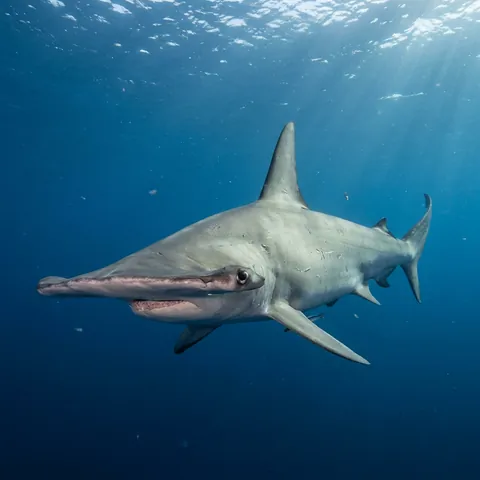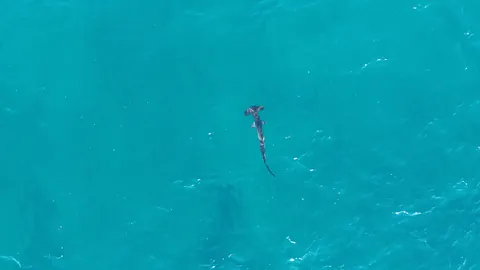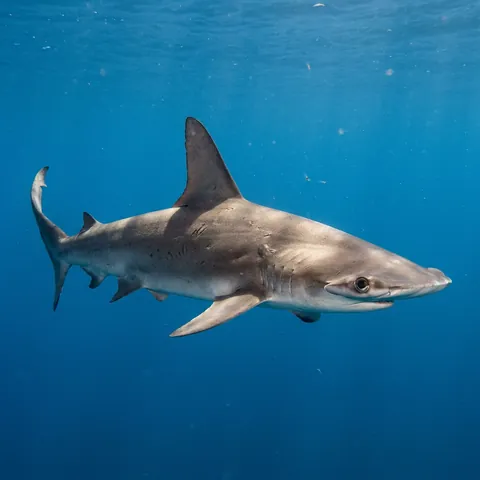
Bonnethead
Sphyrna tiburo
Sphyrna lewini
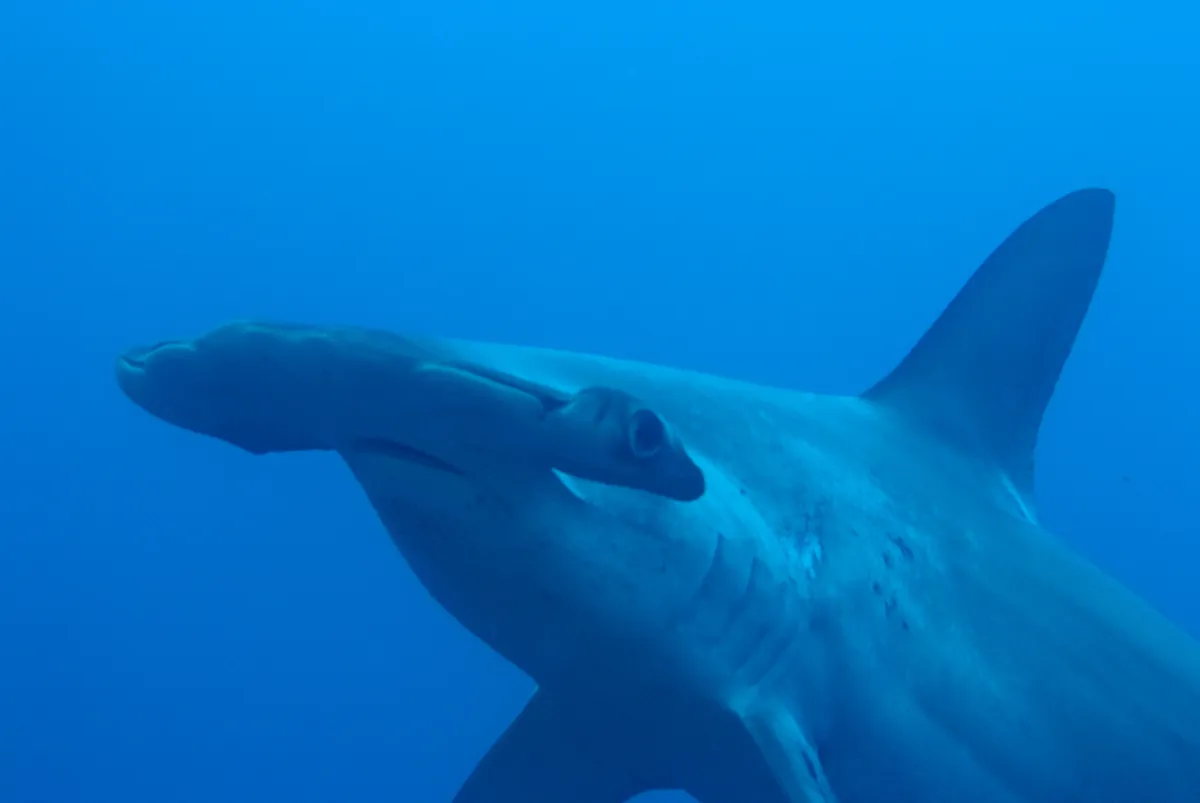
Its wide, hammer-shaped head does more than look strange - it spreads the shark's eyes, nostrils, and sensing organs apart, giving it an unusually broad view of its surroundings. The scalloped hammerhead reaches up to 430 cm, with most adults around 360 cm, and weighs up to about 152 kg.
Also known as: sphyrna lewini, bronze hammerhead shark, gebuchteter hammerhai, great hammerhead, hammerhead, hammerhead shark, kidney-headed shark, scalloped hamerhead, scalloped hammer head, scalloped hammerhead shark, smooth hammerhead, southern hammerhead shark
Other hammerheads have a smoother front edge to the head; this species alone shows the central notch flanked by two smaller scallop-like notches, giving the outline its name.
The head is flattened and extended sideways into a hammer shape, with the eyes and nostrils set at the tips. A central notch sits at the front margin of the head, flanked by two smaller notches on either side, giving the head its scalloped outline. The first dorsal fin is large and slightly hooked, with a smaller second dorsal fin behind it.
This shark lives in warm temperate and tropical coastal waters worldwide, over continental and island shelves and in nearby deeper water, down to depths of 1000 m though usually shallower than 25 m. It tends to stay closer to shore by day and moves offshore to hunt at night. Juveniles and pups shelter in shallow bays and mangroves, which offer protection and nutrient-rich water.
Adults are found alone, in pairs, or in small schools, while young sharks gather in much larger schools, sometimes numbering in the hundreds, seen swimming together during the day, night, and morning. It uses the seafloor and other environmental features to navigate, much like reading a map, and swims in coordinated, point-to-point groups. Males tend to stay in deeper water than females.
It feeds on bony fish such as sardines, mackerel, and herring, along with squid, octopus, cuttlefish, lobsters, shrimp, and crabs. Larger sharks also take smaller sharks and rays, and in the Indo-West Pacific they have been seen preying on sea snakes.
Females give live birth after a gestation of around 12 months, producing a large litter of pups. They likely give birth annually, usually in summer, and return to the same nursery grounds year after year.
generally not aggressive toward divers — observe calmly
It was the first shark species protected under the US Endangered Species Act. Slow growth, late maturity, and low reproduction rates make it especially vulnerable to overfishing, and its fins are highly valued in trade.
Even during food shortages, this species has not been observed attacking or eating its own kind.
Describe what you saw and we name it, then keep every species you find in your Oceandex.