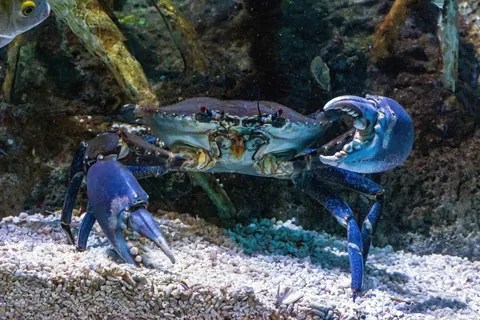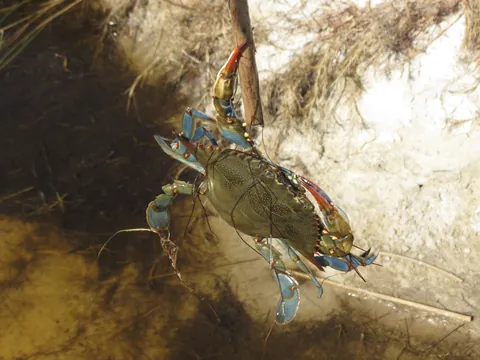
Atlantic Blue Crab
Callinectes sapidus
Grapsus grapsus
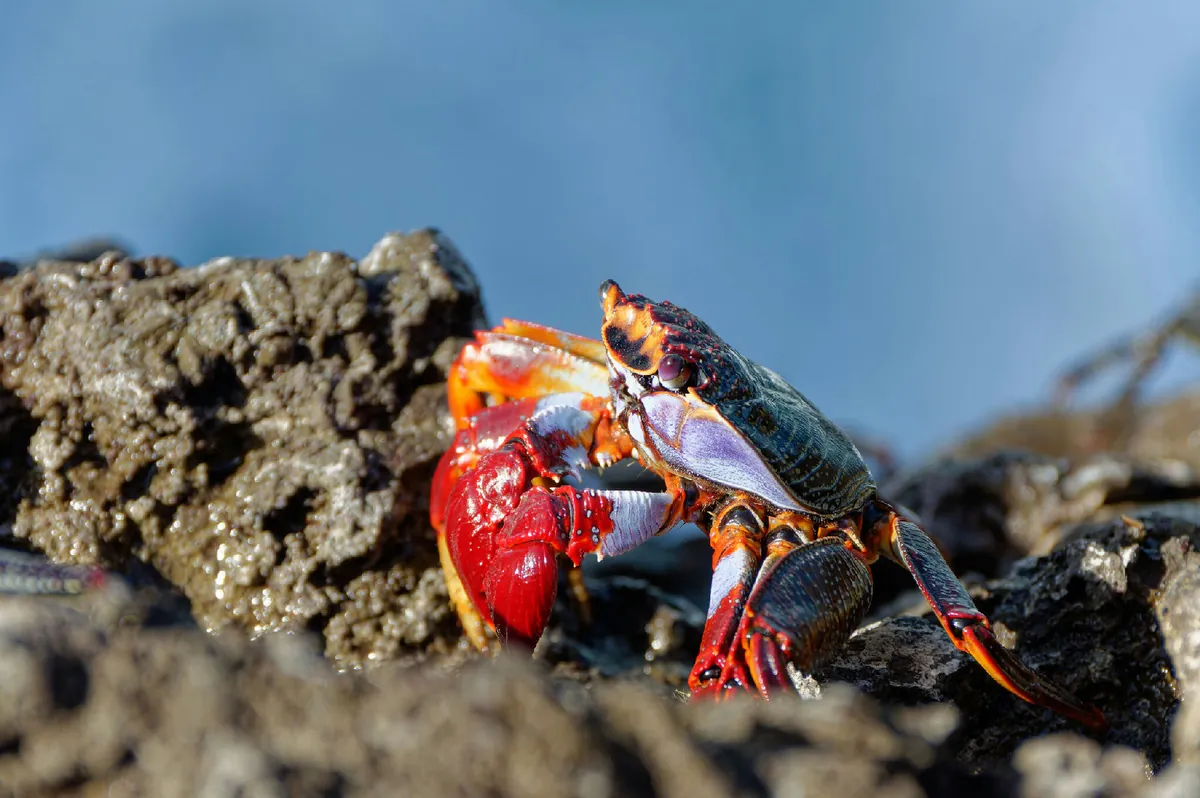
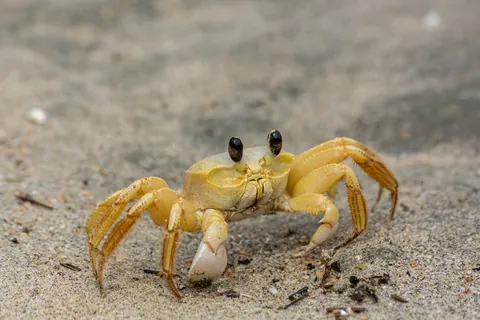
Perched on wave-splashed lava rock, the Sally Lightfoot crab is one of the easiest animals to watch on a Pacific shore. It rarely sits still for long, skittering sideways over rock and darting into cracks the moment a wave surges in.
Also known as: red rock crab
Several shore crabs in the region share the nickname 'Sally Lightfoot,' so colour alone will not confirm this species, since adults range from reddish to mottled pink and yellow. The steadier clue is its stance. This crab's four rear leg pairs are broad and flat, walking on just their tips. This gives it a low grip on the rock, rather than a raised, spidery walk.
This crab has a round, flat carapace (shell) and five pairs of legs. The front pair carries small, blocky, matching claws. The other four pairs are broad and flat. Only their tips touch the rock as it moves. Young crabs are black or dark brown. This colour hides them well against dark volcanic rock. Adults look very different: their colour varies widely, from muted brownish-red to a mottled mix of brown, pink, and yellow.
Look for it on rocky, wave-battered shorelines along the Pacific coast of the Americas, from Mexico down to northern Peru, including the Galápagos Islands. It is also found on rocky Atlantic shores of South America. It stays on the rocks just above where the sea spray reaches, moving between the splash zone and the water's edge rather than out on open reef.
Grapsus grapsus was first described by Carl Linnaeus himself, in 1758, under the name Cancer grapsus. It was not split from its Atlantic look-alike, Grapsus adscensionis, until 1990, based on small differences in colour and larva shape. No one has ever found a genetic difference between the two, yet they are still treated as separate species.
Describe what you saw and we name it, then keep every species you find in your Oceandex.