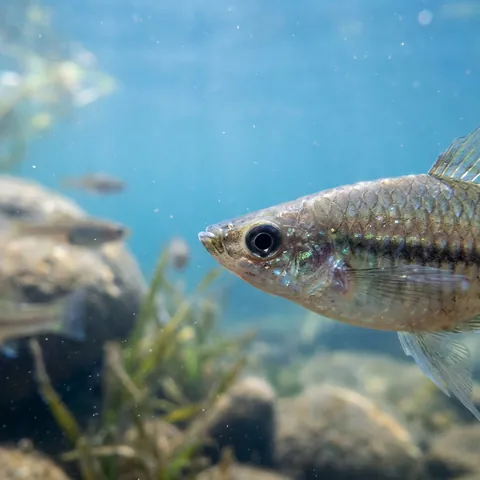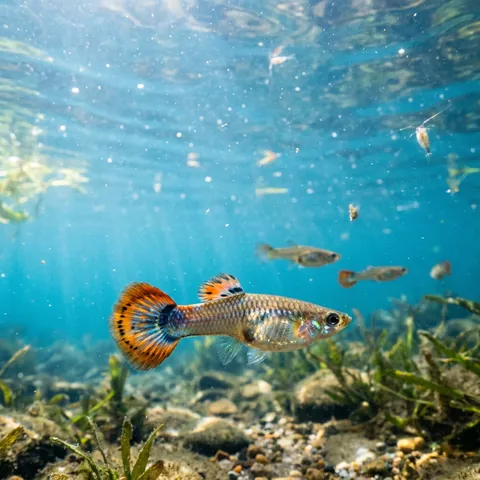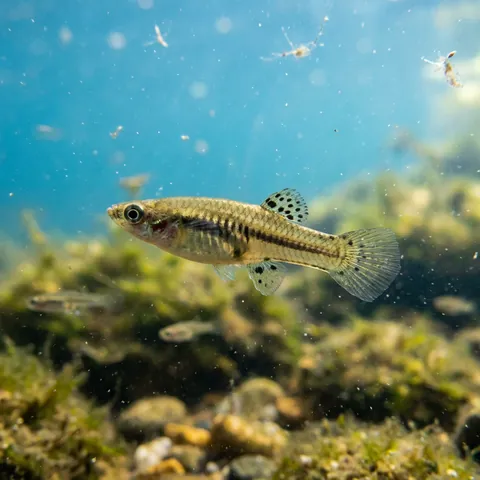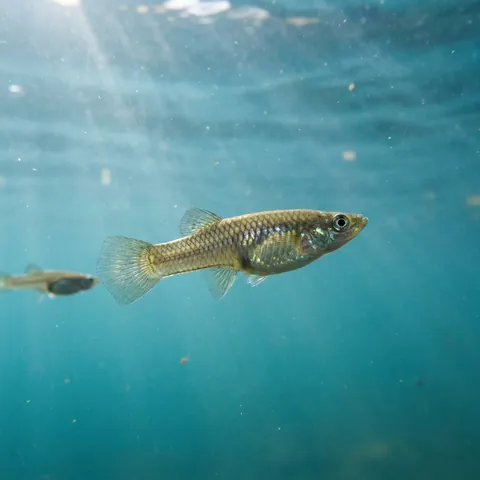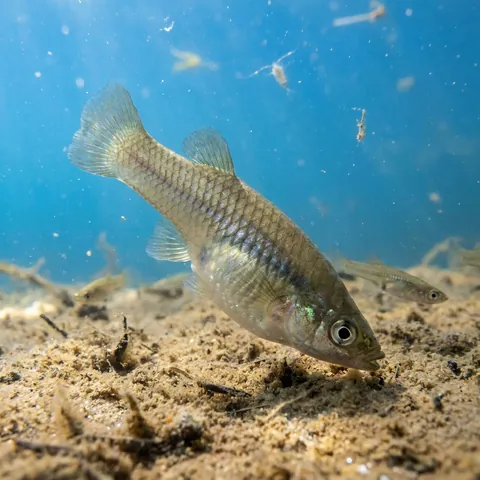
Eastern Mosquitofish
Gambusia holbrooki
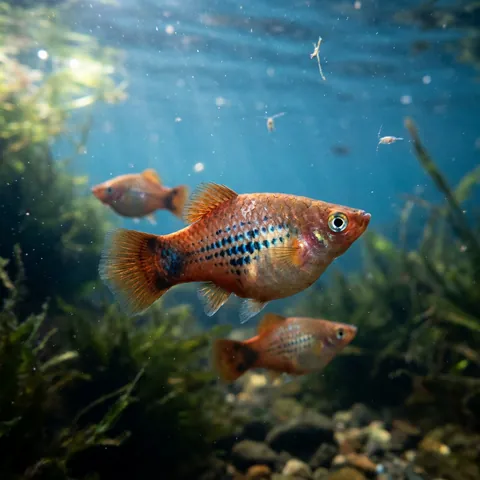
Poecilia latipinna
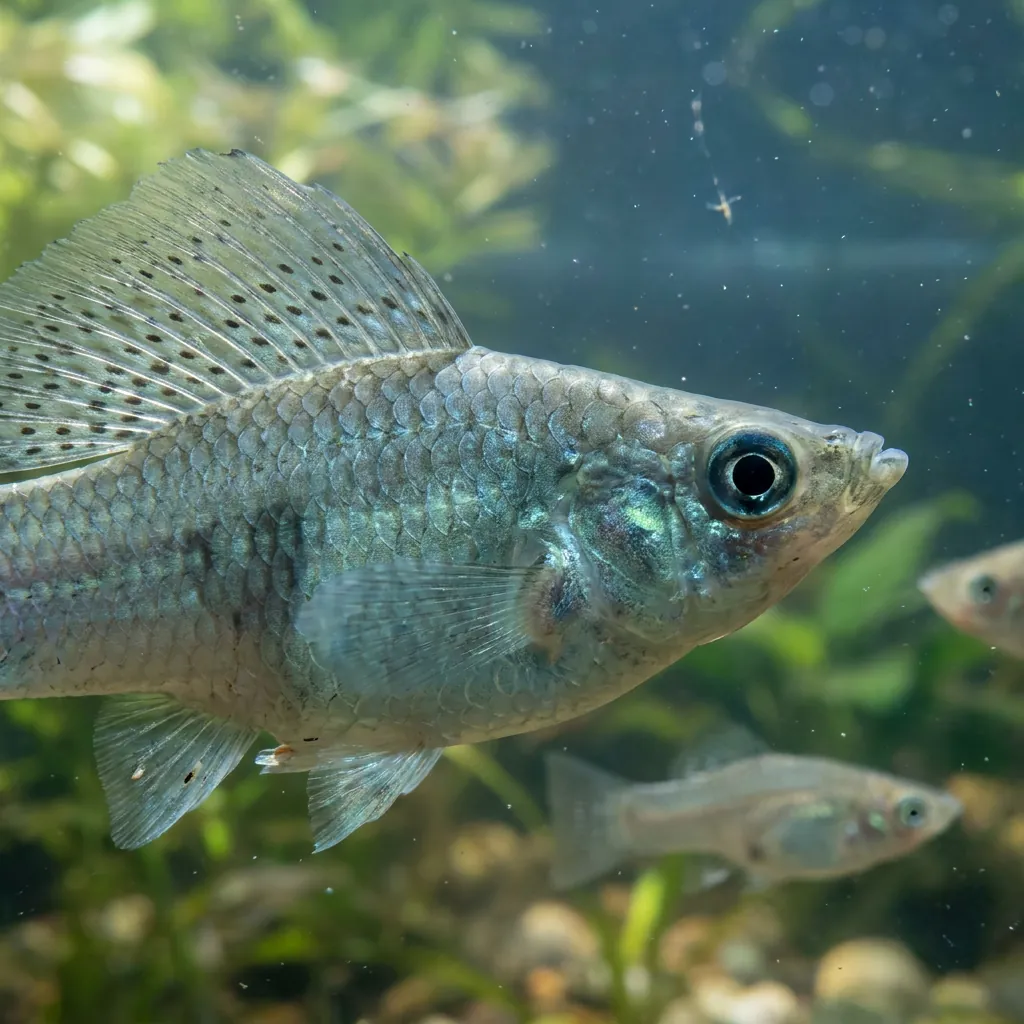
A familiar aquarium fish in the wild, the sailfin molly gets its name from the male's oversized, flag-like dorsal fin.
Also known as: dalmatian lyretail molly, sail-fin molly
The sailfin molly is often confused with the similar Yucatan molly, a close relative sold alongside it in the aquarium trade. Compare the dorsal fin between them to tell them apart. This species is also the smaller of the two.
The body is oblong and light grey, with rows of spots along the sides, back and dorsal fin that often merge into stripes. The head is small and flat on top, with a small, upturned mouth. The caudal peduncle, the muscular base of the tail, is broad, and the tail fin is large and rounded, sometimes tipped in black. Mature males grow a much bigger, sail-like dorsal fin and a colourful tail, both used to attract females. Breeding males can also turn greenish-blue. Females are larger and more plainly coloured than males.
Lives in shallow freshwater and brackish water along the coast - marshes fed by lowland streams, mangrove swamps, river deltas and estuaries, and even roadside ditches. It usually stays near the surface, close to floating plants or other cover.
Sailfin mollies sit low on the food chain. Larger fish, wading birds, reptiles and other predators all hunt them. Males spend much of their energy showing off their sail-like fin and colourful tail to females, rather than staying hidden. This may put them at greater risk.
Fertilisation happens inside the female: males pass sperm using a special anal-fin part called a gonopodium. Females give birth to live young in broods, and can have several broods across the year. A female may keep breeding using stored sperm even after her mate has died. Broods are born with equal numbers of males and females. But adult groups tend to be mostly female, because males' bright colours and constant display make them easier targets for predators and disease. There is no parental care.
The popular aquarium 'black molly' - a solid-black fish - is a hybrid between this species and a related molly, not a natural colour form of either parent.
Describe what you saw and we name it, then keep every species you find in your Oceandex.