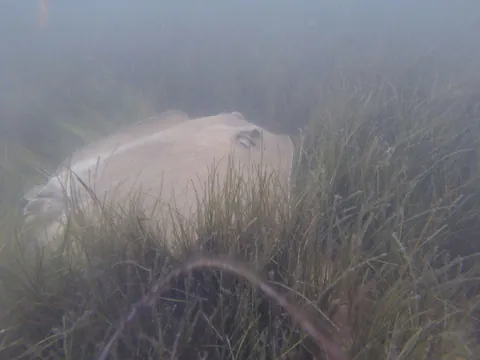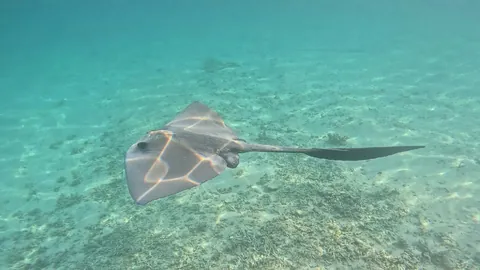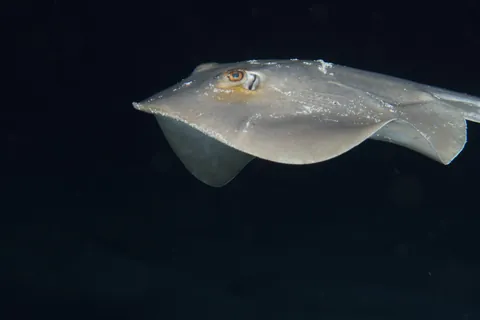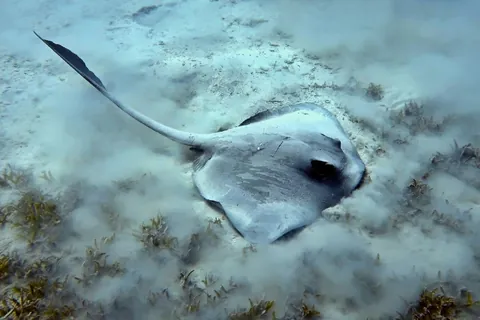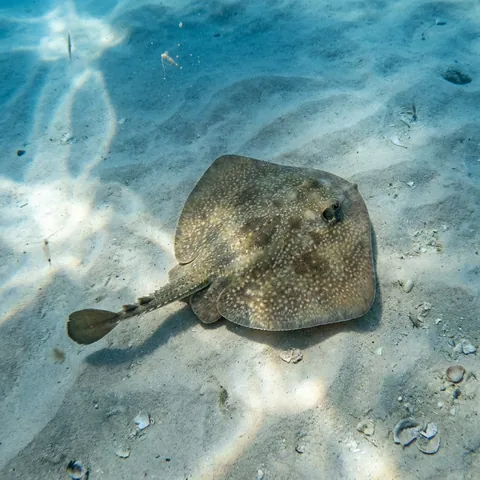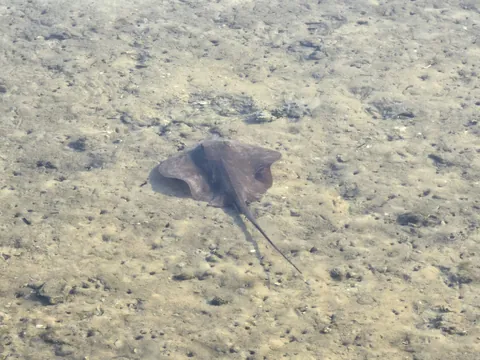
Atlantic Stingray
Hypanus sabinus
Taeniurops meyeni
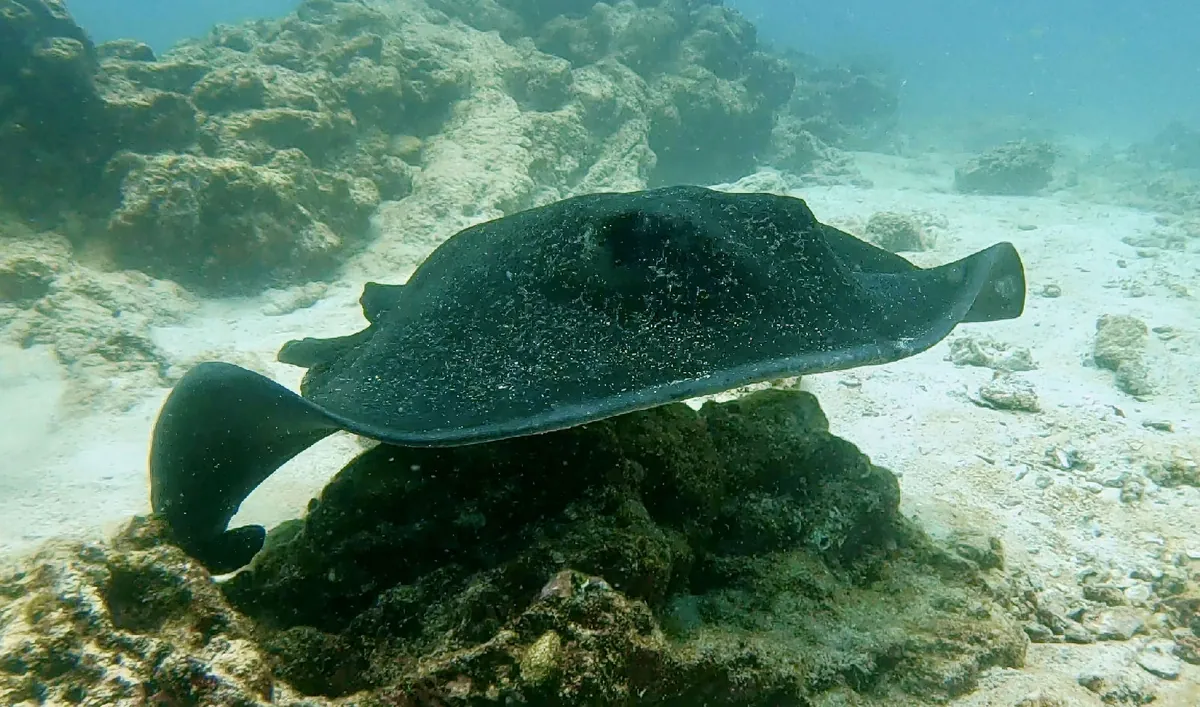
This is one of the largest stingrays divers will ever meet, a slow-moving giant that spends its days resting motionless in caves and under ledges, waiting for night to hunt.
Also known as: black-blotched stingray, black-spotted stingray, blotched stingray, blotched fantail ray, round ribbontail ray, fantail stingray, giant reef ray, speckled stingray, round ribbontail ray, round ribbontail ray, giant ribbon-ray fish, fantail stingray, stingray, black-blotched stingray, black spotted ray, ribbon-ray fish, black-spotted stingray, giant reef ray, giant reef gray, fantail ray, speckled stingray, round ribbontail ray, marbled ray
Several large stingrays share a similar rounded disc, but this species' tail is solid black, standing out clearly against the mottled body. That black tail is the easiest way to tell it apart underwater.
This ray has a thick, rounded disc formed by its pectoral fins, covered on top with small tubercles, hard bumps in the skin. Its tail is relatively short, with a deep fold running along its underside. The upper surface carries a variable pattern of light and dark mottling, and the tail itself is black.
It is a bottom-dweller found across the tropical Indo-Pacific, favouring sand or rubble bottoms in shallow lagoons and near coral or rocky reefs, and sometimes entering estuaries. It usually stays between about 20 and 60 metres deep, though it has been recorded from close to the surface down to 500 metres.
This ray is mostly active at night and rests motionless for much of the day, often close to vertical structures, in caves, or under ledges. It may be alone or in groups, and is often followed closely by jacks or cobia, which feed on food it stirs up or use its body as cover to approach their own prey. To hunt, it presses the edge of its disc against the bottom, draws in water through the openings behind its eyes, and blows it out through its mouth to expose buried prey such as shellfish, crabs, and shrimp. If threatened, it raises its tail forward over its back and waves its venomous spine in warning.
It is often escorted by jacks or cobia, which trail close behind it to snap up food it stirs from the sand or to hide in its shadow while stalking their own prey.
Describe what you saw and we name it, then keep every species you find in your Oceandex.