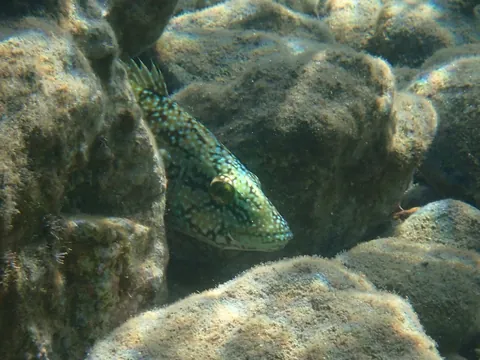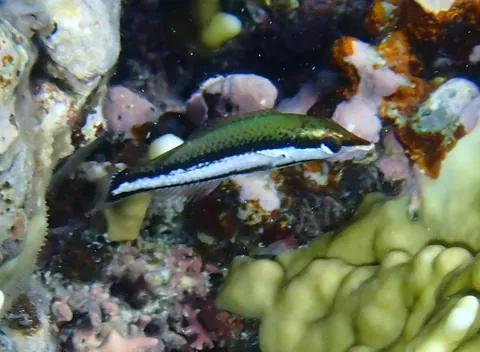
Bird wrasse
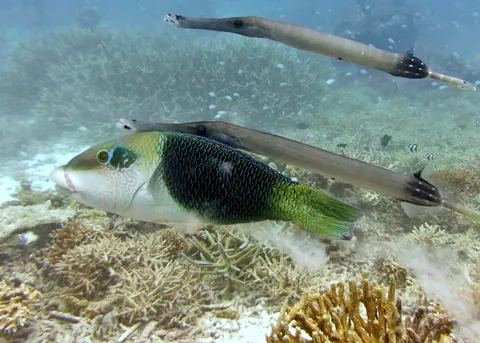
Gomphosus varius
Novaculichthys taeniourus
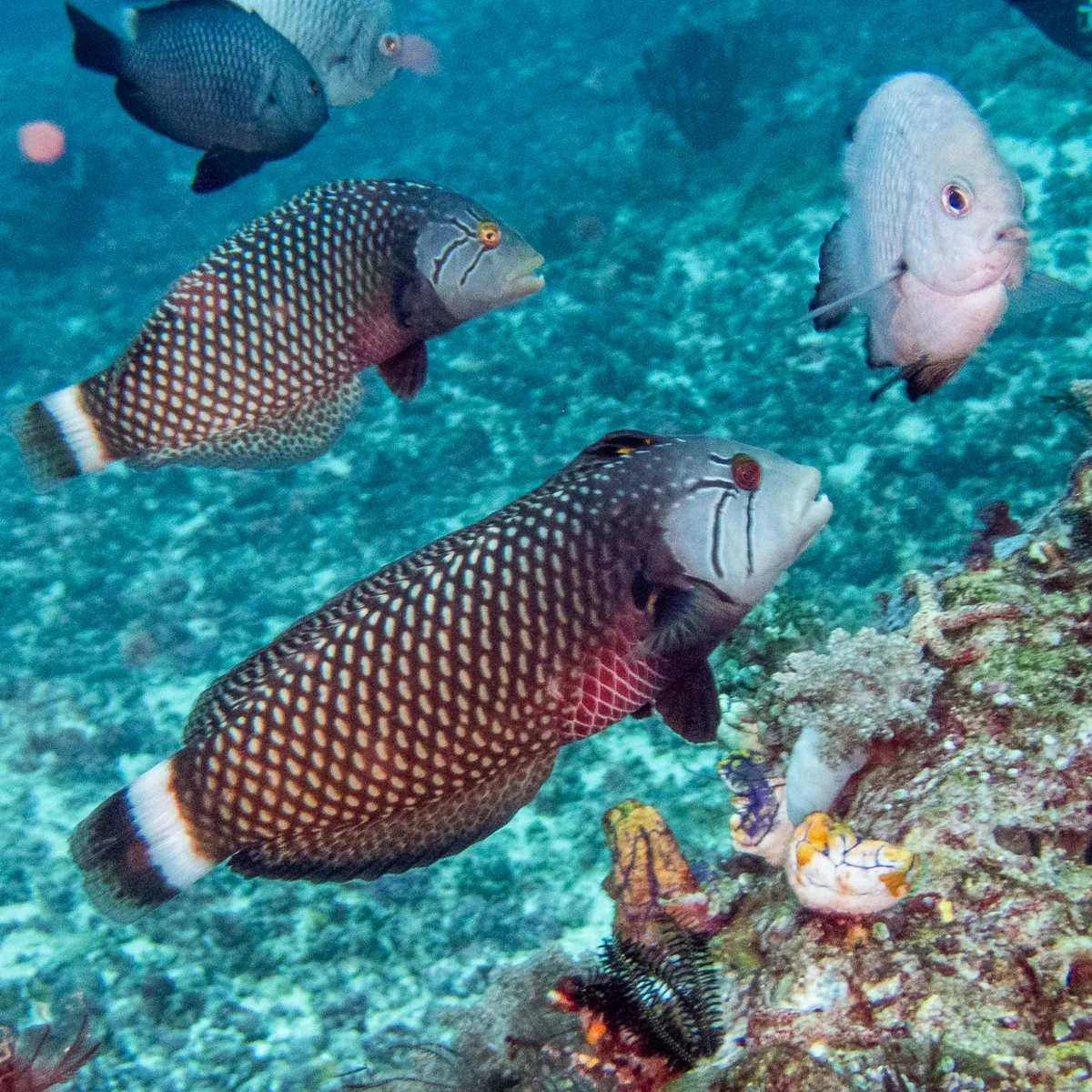
The rockmover wrasse is the only member of its genus and gets its name from the way it feeds: it tips over small stones and pieces of reef rubble to find the animals hiding underneath. It grows to about 30 cm and lives from 3 to 25 m, usually shallower than 14 m. Adults and young look so different that they have separate names, rockmover wrasse for the adult and dragon wrasse for the juvenile, which has long, drawn-out spines on its back fin. It is listed as Least Concern.
Also known as: masked razorfish, rockmover wrasse, masked wrasse, olive-scribbled wrasse, reindeer wrasse, tahiti sand wrasse, clown wrasse, rockmover, carpet wrasse, rockmover wrasse, wrasse, bar-cheeked wrasse, rockmover wrasse, reindeer wrasse, bar-cheeked wrasse, carpet wrasse, olive-scribbled wrasse
This wrasse lives on coral reefs and in lagoons across the Indo-Pacific, from the East African coast to the Pacific islands and on to the coast of Central America. Look for it on semi-exposed reef flats and on lagoon and seaward reefs. It is common where sand and rubble are mixed together and a mild surge runs over the bottom. Young fish stay shallow, on rubble beside large coral heads or in sheltered open patches on the reef crest, where they drift along the bottom as if they were a floating leaf. Adults range over a wide stretch of reef, usually in pairs.
A pair hunts as a team. One fish grabs a lump of rubble with its mouth or shoves it over with its snout, and while it is busy the other snaps up whatever runs out from underneath.
Describe what you saw and we name it, then keep every species you find in your Oceandex.