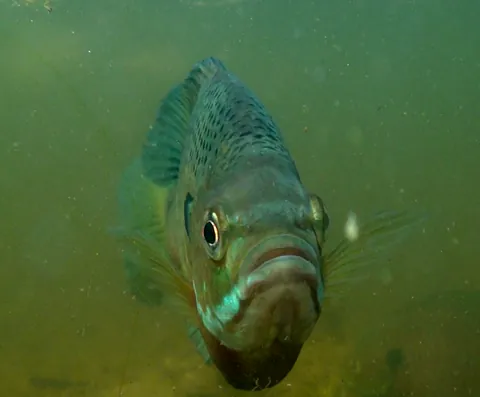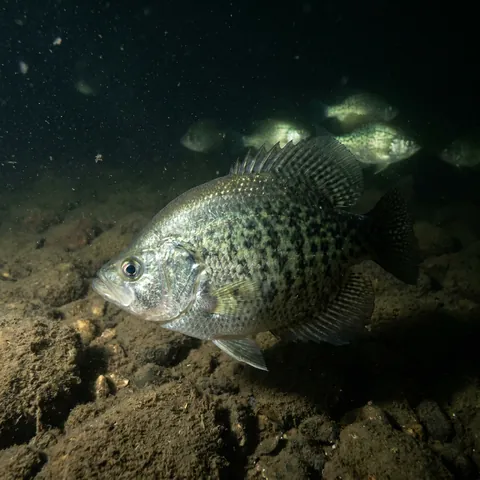
Black Crappie
Pomoxis nigromaculatus
Lepomis auritus
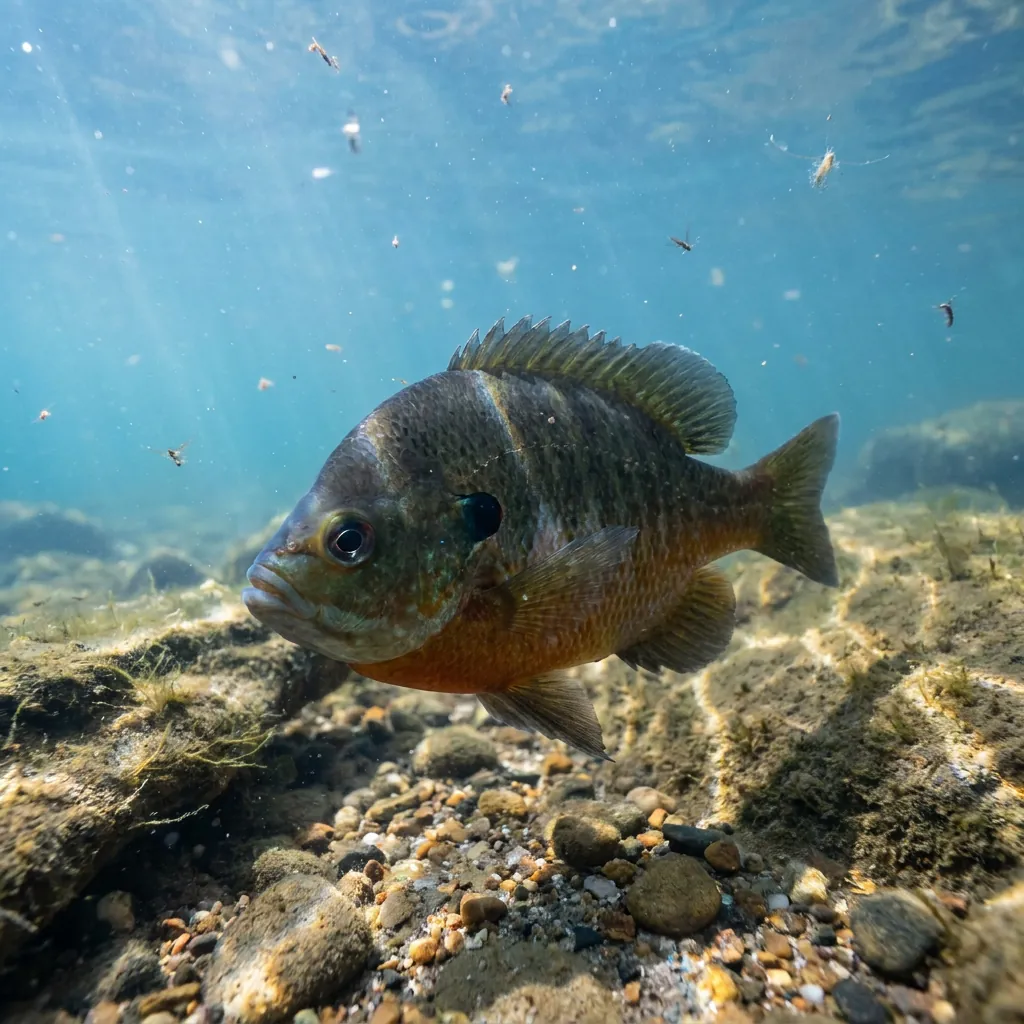
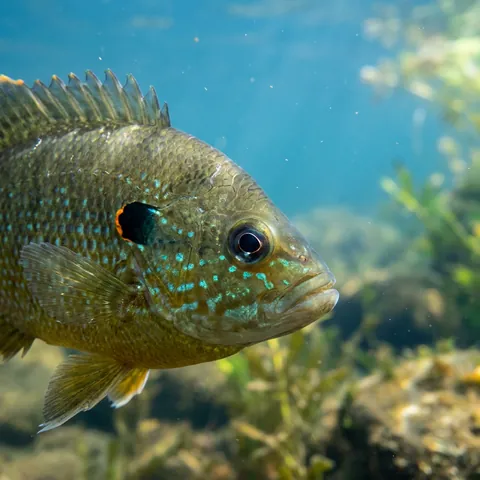
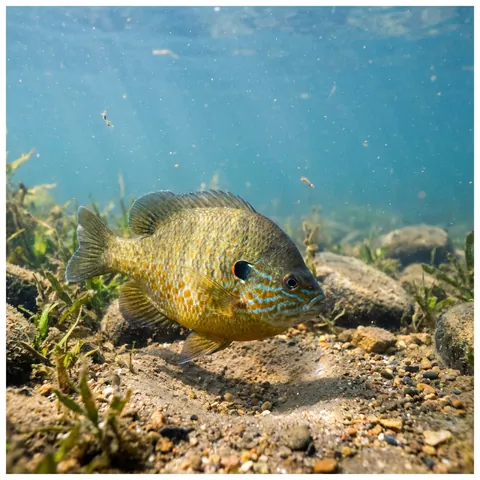
The redbreast sunfish is a small, colourful panfish of cool eastern rivers, best known for the long black flap behind its eye and the fiery orange belly of the males.
Several sunfish share its range, but the black flap behind the eye is longer on this species than on most others - a quick length check settles it.
Its body is olive-green with faint vertical bars that fade into blue-green near the lateral line, the sensory stripe along its side. A few streaks of blue shimmer across the head. Males show a darker belly than females, ranging from orange-yellow to orange-red. It has a long black flap on the gill cover, and the tail fin is shallowly forked, sometimes tinted orange or red.
It is native to rivers draining into the Atlantic across the eastern United States and Canada, and prefers cooler rivers, though it also lives in lakes and streams. It has spread west to Louisiana and Texas, and beyond North America to a few other countries. It favours spots near banks and overhanging branches for food and cover, and needs some current to thrive.
Redbreast sunfish spawn in spring, with males clearing a nest on sand or gravel in shallow water. The female lays her eggs there, and the male fertilises and guards them. Sometimes another male sneaks in to fertilise eggs left in a nest he did not build. The species feeds mainly on immature aquatic insects such as mayflies and dragonfly larvae, along with small fish and crayfish, and is preyed on by larger fish such as bass.
It will strike a moving fly in cold water more readily than a bluegill will, making it a favourite winter target for fly anglers.
Describe what you saw and we name it, then keep every species you find in your Oceandex.