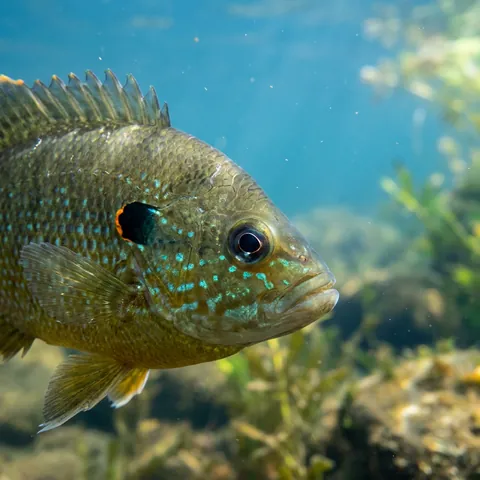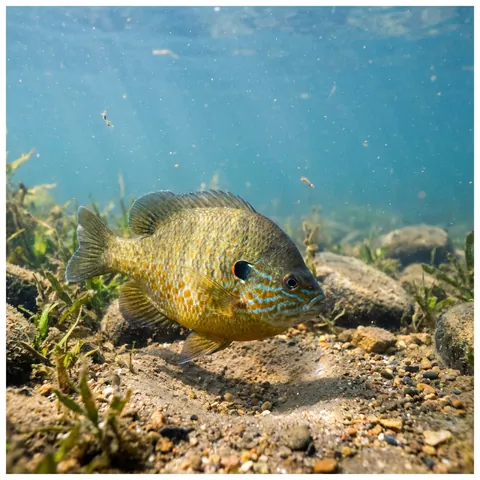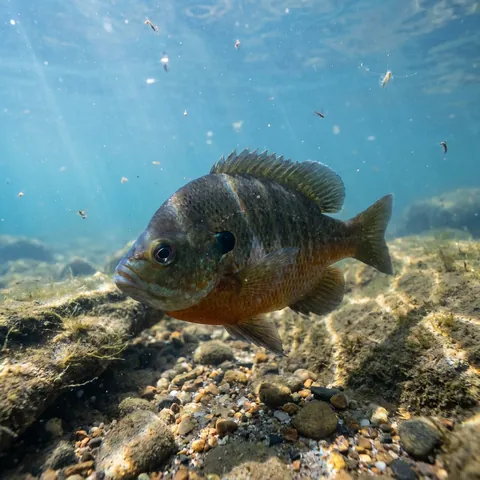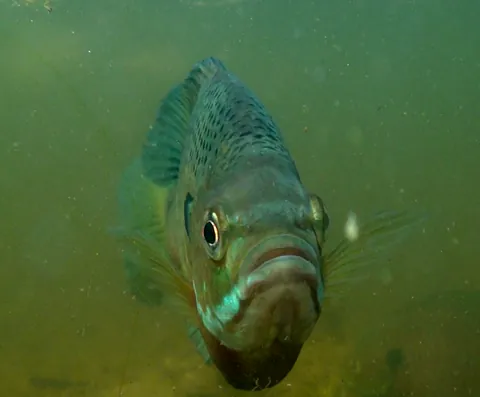
Bluegill
Lepomis macrochirus
Pomoxis nigromaculatus
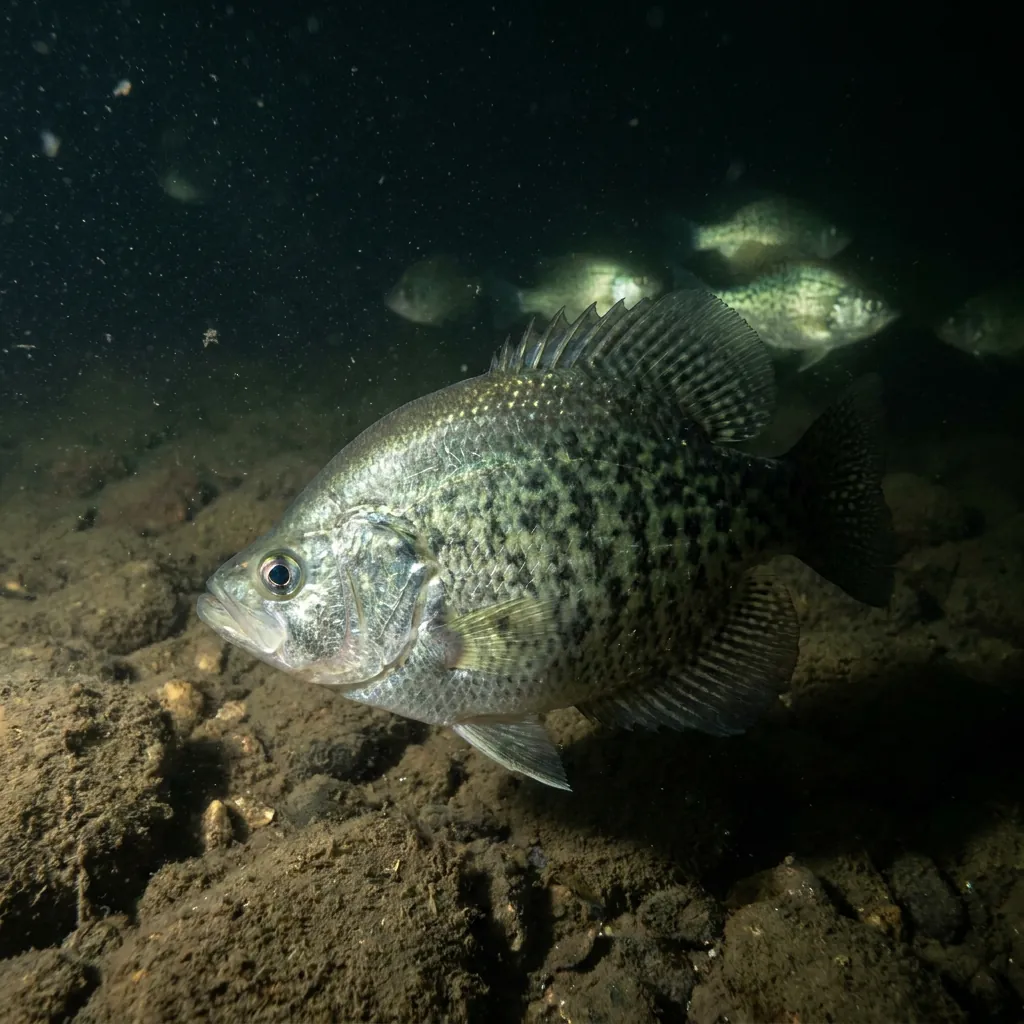
The black crappie moves through calm, weedy waters in loose groups, blending into the shadows of submerged timber and plants until it darts out after prey.
Also known as: calico bass, speck, speckled perch, black spotted crappie
It is easily confused with the closely related white crappie, which shares its lakes and rivers. This species looks noticeably darker, with an irregular pattern of black splotches rather than the paler look of its relative.
This fish has a deep, flattened body in silvery-grey to green, covered with irregular black mottled splotches. Rows of dark spots run along its dorsal, anal, and tail fins. Its mouth is large, reaching back to below the eye, with thin lips built for grabbing other fish.
It lives in lakes, reservoirs, and slow sections of large rivers, favouring calm, clear water with plenty of cover such as submerged timber or thick aquatic plants, over sand or mud bottoms.
Smaller crappies eat plankton and tiny crustaceans, while larger ones add small fish such as shad and minnows to their diet. As adults, this species eats fewer fish than the closely related white crappie, relying more on insects, insect larvae, and crustaceans such as mysid shrimp and amphipods.
Breeding season falls in spring and early summer, though the exact timing shifts across its wide range. The male sweeps out a nest in sand or mud in shallow water, usually near the shore and vegetation, then guards the eggs until they hatch. The young stay in the nest for several days before moving into shallow, sheltered water.
This fish feeds mainly at two narrow windows: early morning, and again around midnight.
Describe what you saw and we name it, then keep every species you find in your Oceandex.