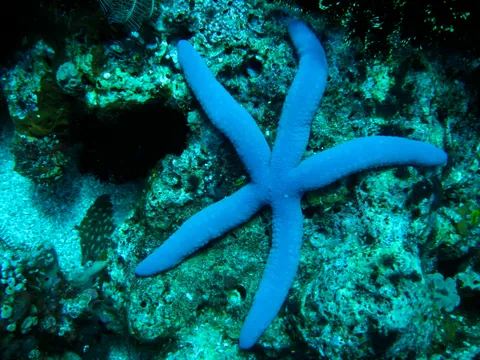
Blue sea star
Linckia laevigata
Oreaster reticulatus
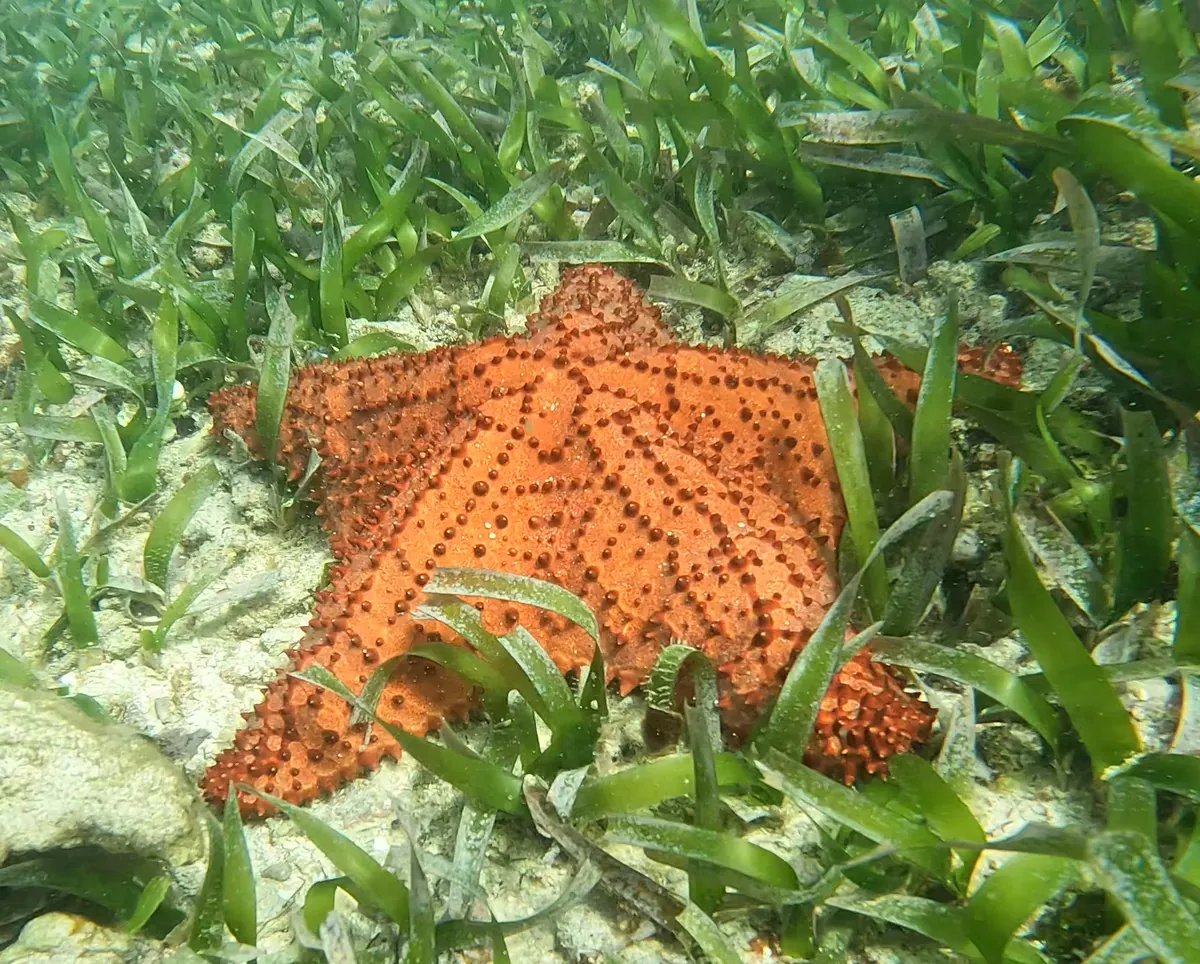
The red cushion sea star is a heavy, thick-armed giant among sea stars, often spotted resting in the open on sand and seagrass beds. It is the largest sea star found in its range.
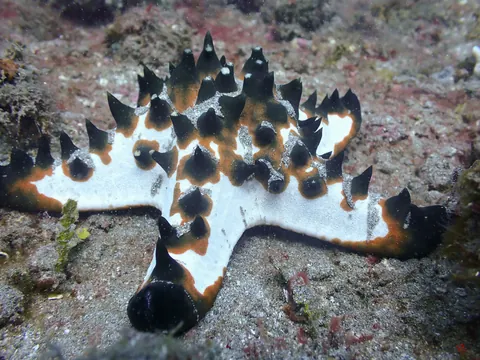
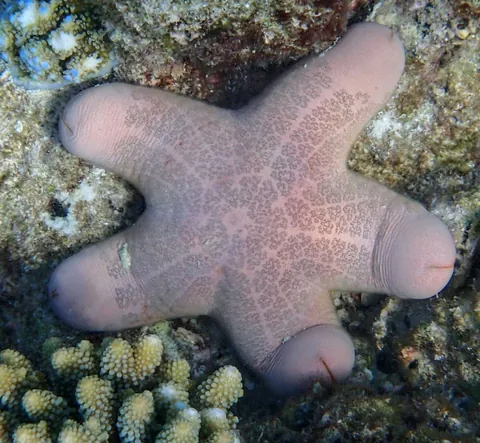
Many sea stars have thin, tapering arms. This species is unmistakable by its heavy, cushion-like body and thick, rounded arms studded with blunt bumps, unlike the flatter, spinier stars nearby.
It has a broad, cushioned disc with five thick arms, though some have four, six, or seven. The upper surface is hard and studded with blunt spines. Adults are red, orange, yellow, or brown, while young sea stars are greenish-brown with mottled markings that help them hide in seagrass.
Found in shallow water across the western Atlantic and the Caribbean, down to about 69 m. Adults rest on sandy bottoms and coral rubble, while young ones stay hidden in seagrass meadows.
It feeds by raking up sediment, turning part of its stomach inside out over the pile, and digesting whatever algae, sponges, and small animals it contains. In winter it moves offshore to calmer water to avoid rough surf.
At breeding time it can gather in crowds of up to fourteen sea stars per square metre, boosting the odds that eggs and sperm released into the water meet.
Describe what you saw and we name it, then keep every species you find in your Oceandex.