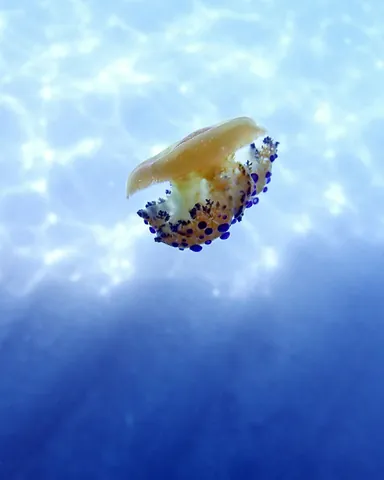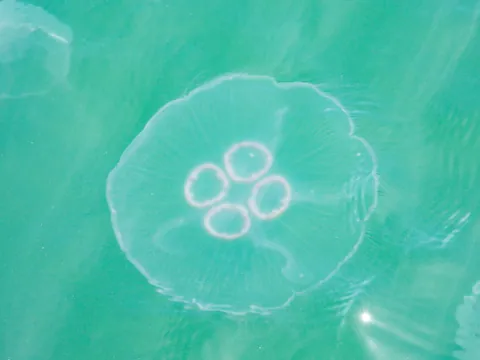
Asian moon jelly
Aurelia coerulea
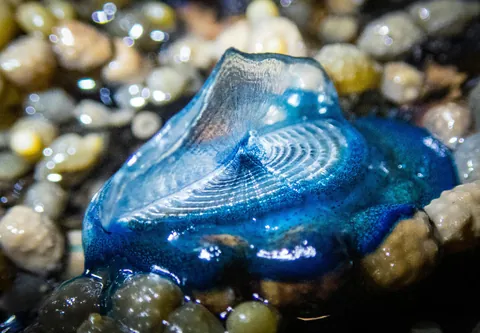
Physalia physalis
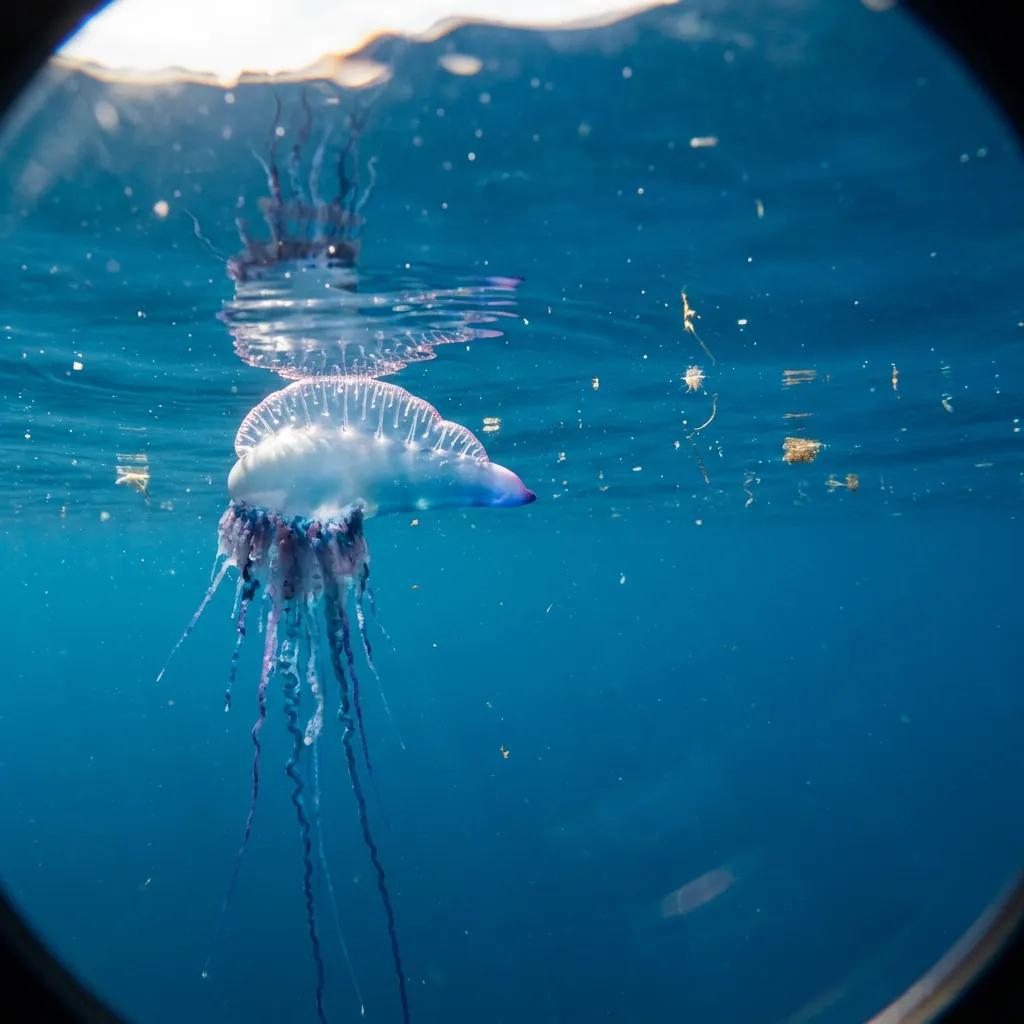
The Portuguese man o' war looks like one jellyfish, but it is really a colony of many tiny animals working together as one. It trails venomous tentacles beneath a floating, balloon-like sail.
Also known as: bluebottle, physalia physalis, portuguese man o' war, portuguese man o' war, portuguese man'o war, portuguese man-of-war
People often mistake it for a true jellyfish, but it is not one. Look for the float: a man o' war rides with a balloon-like sail above the water, something no true jellyfish has.
This animal is a colony of many small parts, called zooids, that hang together below a large, gas-filled float. Each zooid has its own job, such as feeding, breeding, or catching prey, but they stay joined and act as one body. The float sits above the water, while long tentacles trail down beneath it.
The Portuguese man o' war lives right at the surface of the ocean, with other life that floats there in strong sun and rough seas. It cannot swim or steer itself, so it drifts wherever the wind, currents, and tides take it. This can push large numbers of them into bays or onto beaches.
Each colony is either male or female, and it releases eggs or sperm straight into the water to breed. The stinging tentacles still work even after they tear off or the animal dies, so one washed up on the sand can sting just as badly as a live one in the water. Some fish shelter among the tentacles, safe from predators that the sting keeps away.
The Portuguese man o' war eats other animals. It uses its venomous tentacles to trap and stun prey, then pulls it in toward its feeding zooids. It usually catches small fish, molluscs, small crustaceans, and other tiny drifting animals near the surface.
A small fish called the man-of-war fish lives right among the venomous tentacles. It seems unharmed by the sting, and it even feeds on the tentacles themselves.
Describe what you saw and we name it, then keep every species you find in your Oceandex.