Mantis shrimp
mantis_shrimp_g334
Odontodactylus scyllarus
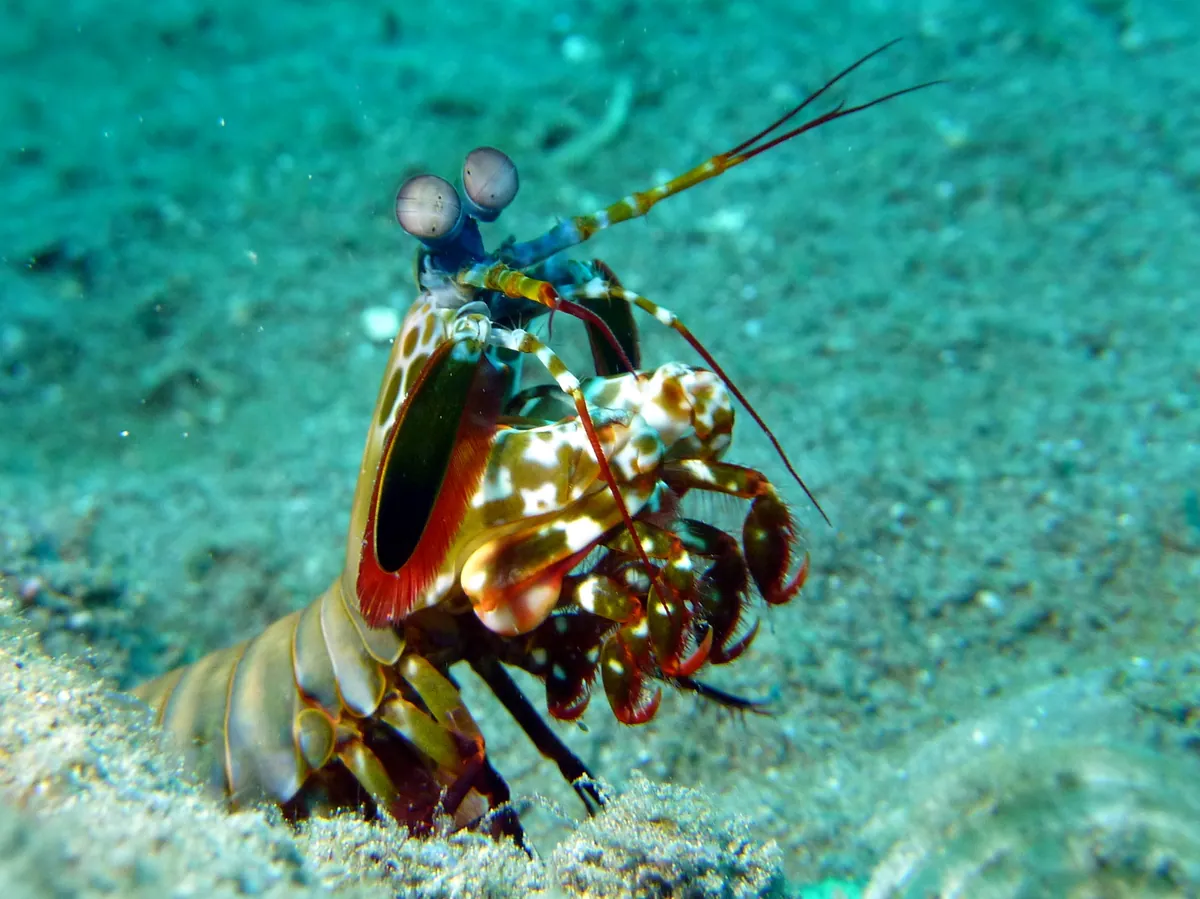
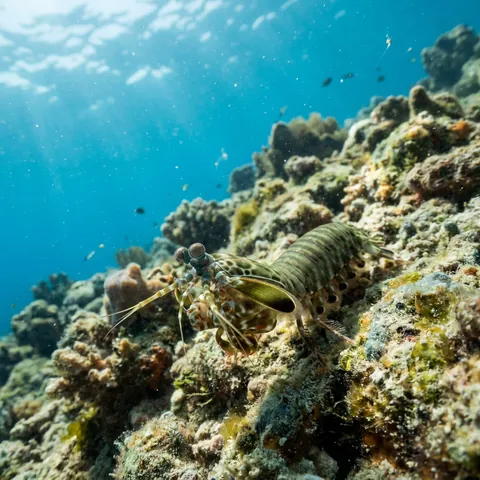
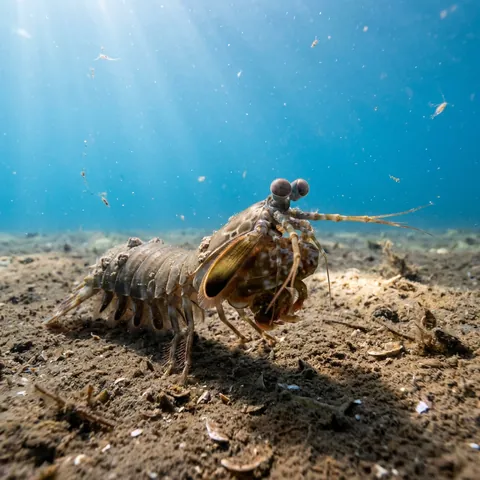
The peacock mantis shrimp is a large, brilliantly coloured stomatopod of Indo-Pacific reefs. It grows to about 17 cm and has been recorded down to 100 m. It is a smasher: its front limbs end in heavy clubs that it slams into hard prey such as sea snails, crabs and clams, hitting again and again until the shell breaks. It hunts during the day. Aquarium keepers both prize it for its colours and fear it, because it can break glass and eat tank mates. It has not been evaluated by the IUCN.
Also known as: coloured mantis shrimp, peacock mantis shrimp, harlequin mantis shrimp, painted mantis shrimp, odontodactylus scyllarus, odontodactylus scyllarus (linnaeus, 1758)
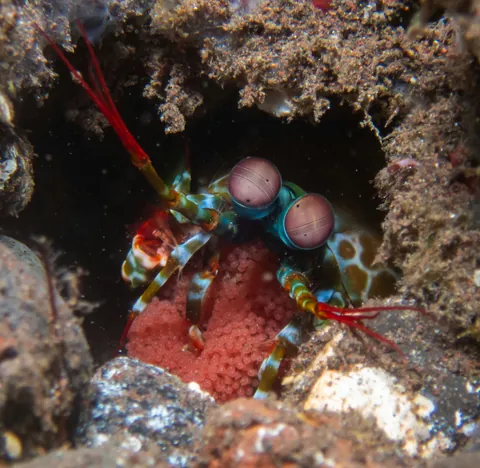
Look for a green, segmented animal with orange legs and dark leopard-like spots on the shield behind the head, usually sitting in the mouth of a hole in sand or rubble. The heavy club-shaped front limbs, folded under the head, separate it from a shrimp or a lobster at a glance. Search the rubble at the foot of the reef rather than the coral itself.
The body is mainly green, with orange legs and leopard-like spots on the front of the carapace, the shield covering the front of the body. The front limbs are folded under the head and end in a thickened club rather than a pincer.
This species digs U-shaped burrows in loose sand and rubble near the bases of coral reefs, and it also moves into burrows made by others. It likes shallow, rough bottoms on and around reefs, including reef flats. It occurs across the Indo-Pacific, from East Africa to the Marianas and south to the coast of South Africa.
Its strike is the fastest punch recorded from any living animal. The club moves so fast that the water beside it boils into tiny bubbles, and when those bubbles collapse they release heat and hit the prey a second time, helping to crack shells the shrimp has not even touched.
Describe what you saw and we name it, then keep every species you find in your Oceandex.