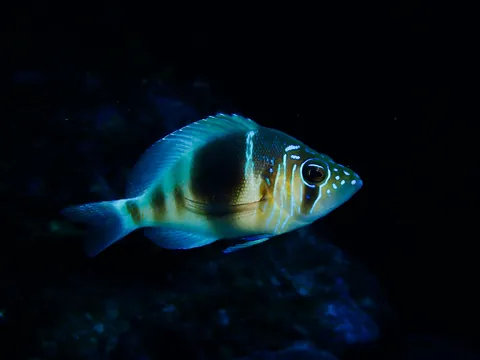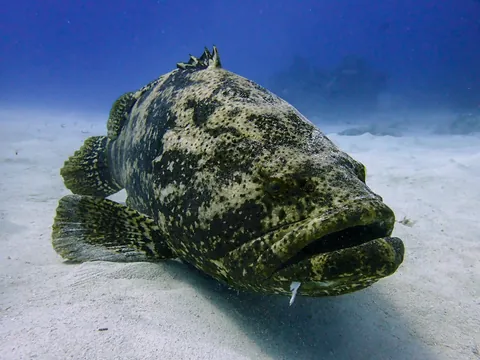
Atlantic goliath grouper
Epinephelus itajara
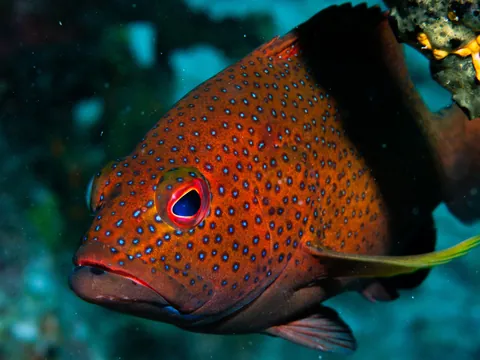
Cephalopholis argus
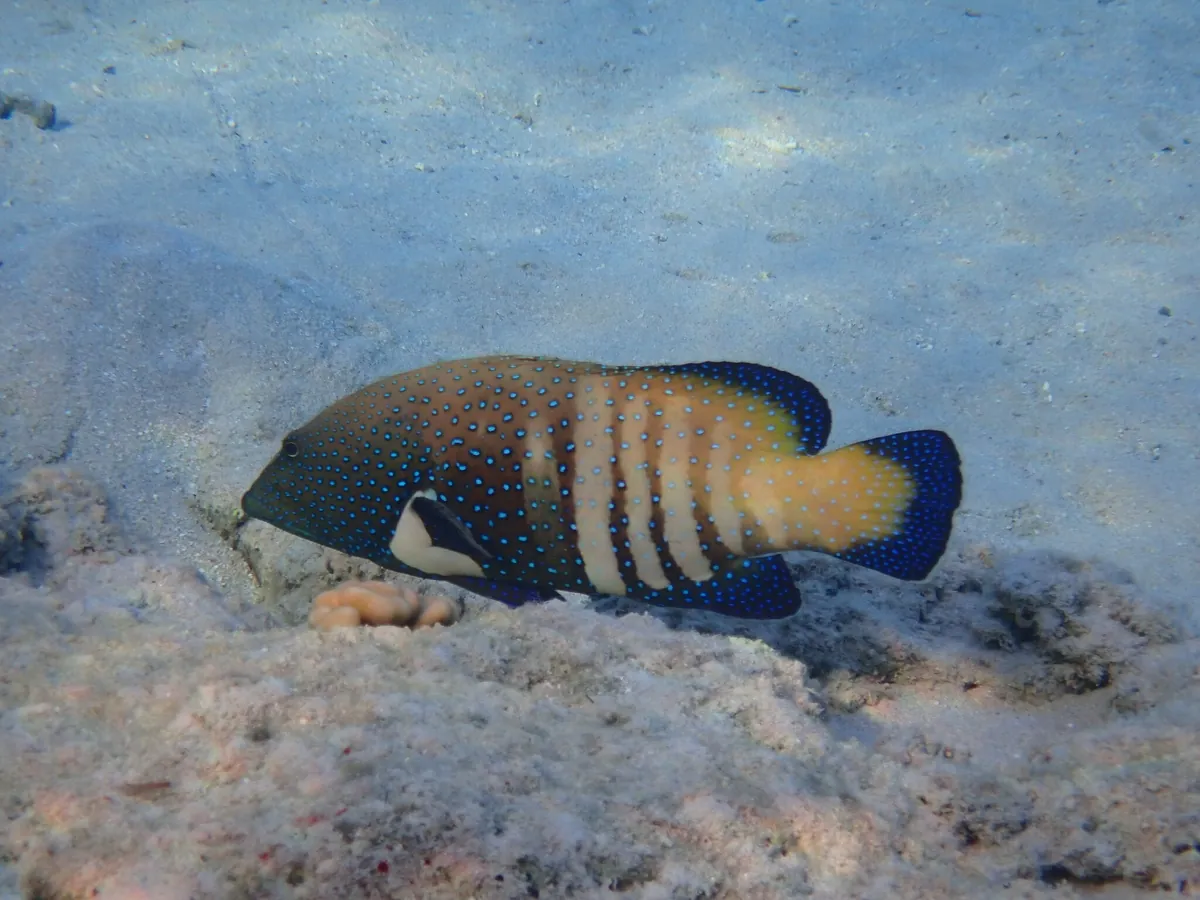
The peacock hind is a bold grouper that ambushes prey on warm Indo-Pacific reefs. Outside its home range, in Hawaii, it has become an unwanted top predator after people brought it there in the 1950s.
Also known as: blue-spotted grouper, blue-spotted grouper, peacock hind, bluespotted grouper, peacock rockcod, peacock grouper, peacock cod, peacock rockcod, peacock hind, blue spotted grouper, worldwide-peacock rockcod, seabass, black rock-cod, peacock rock cod, peacock coral cod, grouper, peacock rock-cod, blue-spotted grouper, peacock grouper, peacock cod, peacock rock-cod, peacock hind, geurapèe brinchék itam
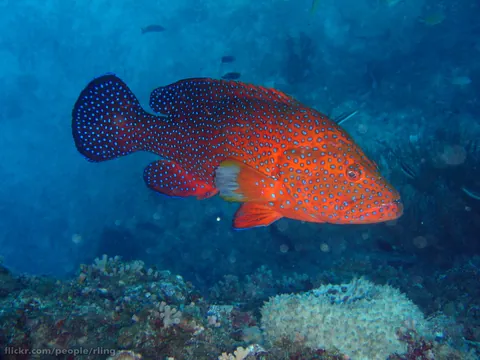
People can mix it up with the similarly spotted coral hind. Check the base colour: this fish is dark brown, not orange-red.
This medium-sized grouper grows up to 60 cm, usually around 40 cm. Its body is dark brown, covered in hundreds of small, shiny blue spots with dark edges. Bigger fish sometimes grow four to six paler bars across the back half of the body.
It likes the open front edges of reefs, from tide pools down to about 40 m, most often between 1 and 15 m, in water around 24 to 28 degrees C.
It usually sits on a coral head and swims off if startled. Males keep a group of females in a shared territory and visit each one every day. Rival males settle fights with bold colour-changing shows before one backs down or they fight.
It hunts mostly by lying still on the bottom and rushing at prey as it passes, or by staying still in the water before striking. Fish make up most of its diet, especially young surgeonfish, with crustaceans making up the rest. It sometimes works with an octopus or eel to flush out hidden prey.
In its home range this species is not at risk. But fish taken to Hawaii in the 1950s have grown far beyond normal numbers there and now outweigh all other reef predators combined, putting heavy pressure on native reef fish.
Its scientific name comes from Argus, the hundred-eyed watchman of Greek myth, a nod to the countless blue spots covering its body.
Describe what you saw and we name it, then keep every species you find in your Oceandex.