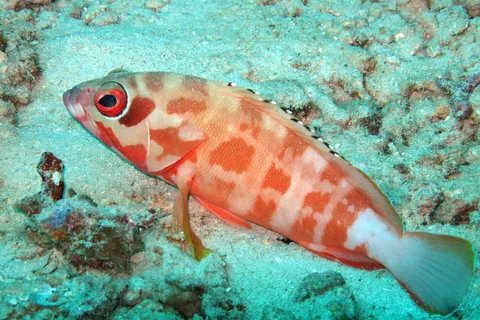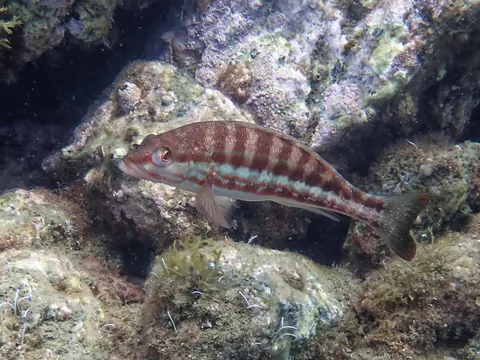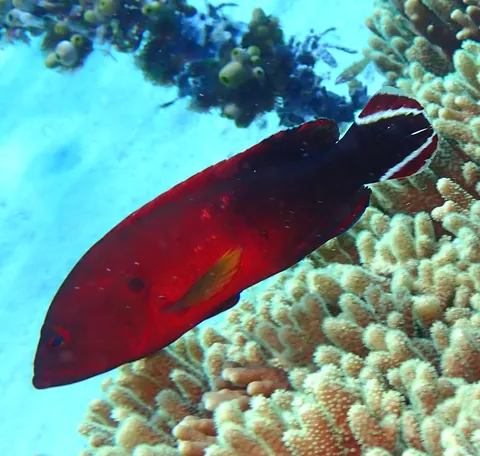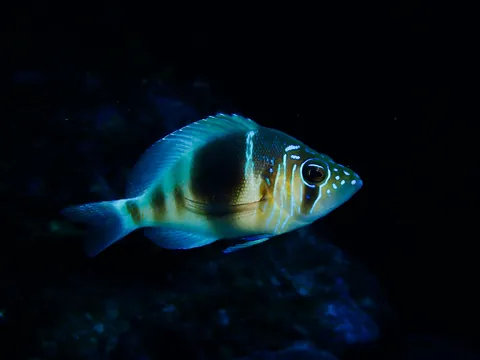
Barred Hamlet
Hypoplectrus puella
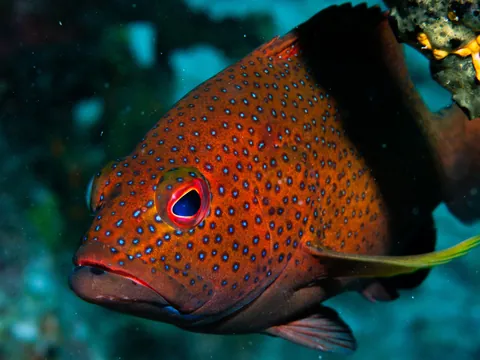
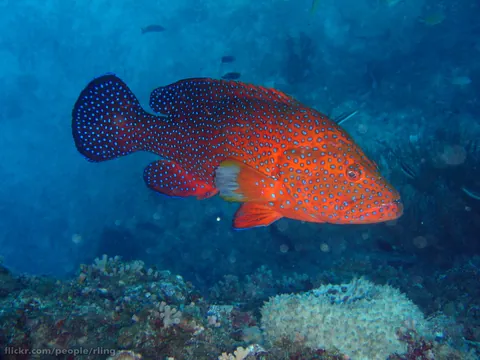
Epinephelus itajara
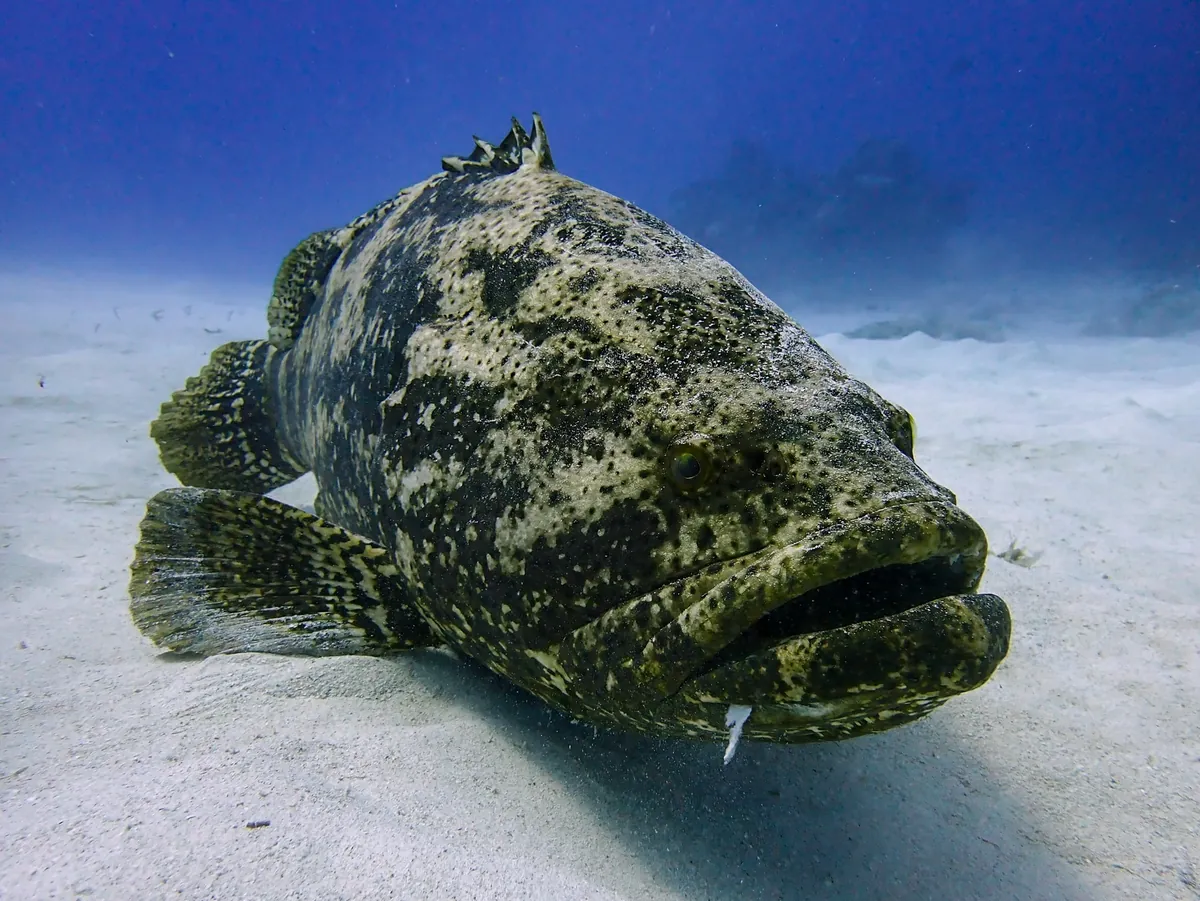
The Atlantic goliath grouper is one of the largest reef fish in the ocean, capable of reaching 250 cm and 455 kg. Despite its size, it is often surprisingly calm around divers, sometimes even curious.
Also known as: epinephelus itajara, black bass, coral cod, esonue grouper, giant grouper, giant seabass, goliath grouper, grouper, guasa, hamlet, itajara, jewfish, southern jewfish, spotted jewfish
It can be confused with other large brown groupers. Look for small black spots scattered across the head, body, and fins, a pattern other giant groupers do not share.
Its body is thick and elongate, with a broad, flat head and small eyes. Colour ranges from brownish yellow to grey or greenish, covered in small black spots on the head, body, and fins. Fish under about a metre long show three or four faint vertical bars on their sides. The pectoral fins are rounded and much larger than the pelvic fins, and the tail fin is also rounded.
Adults live around rocky reefs, shipwrecks, artificial reefs, and oil platforms, usually down to about 46 metres though they can reach 100 metres. Young fish grow up in mangrove creeks and estuaries, staying there for several years before moving out to deeper reef habitat as they grow.
This species is slow to mature and gathers in small spawning aggregations, with no sign of spawning happening outside these groups. It has been suggested that individuals may change sex from female to male over their lives, though this has not been confirmed.
traumatogenic
This species is currently listed as vulnerable, having been considered critically endangered as recently as 2011. Overfishing, especially at spawning aggregations, has driven steep declines, and mercury buildup in older males may harm their health and reduce egg viability. Loss of mangrove nursery habitat is a major threat to young fish. Fishing has been banned in continental U.S. waters since 1990 and in U.S. Caribbean waters since 1993.
When defending its den, it can perform a threat display, opening its huge mouth wide and quivering its whole body at the intruder.
Describe what you saw and we name it, then keep every species you find in your Oceandex.