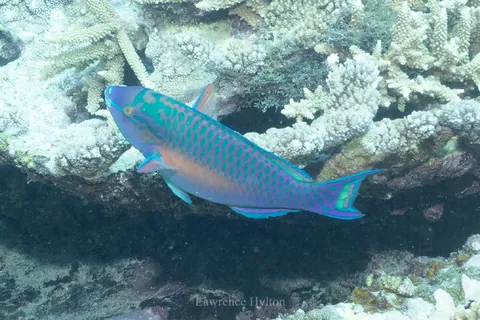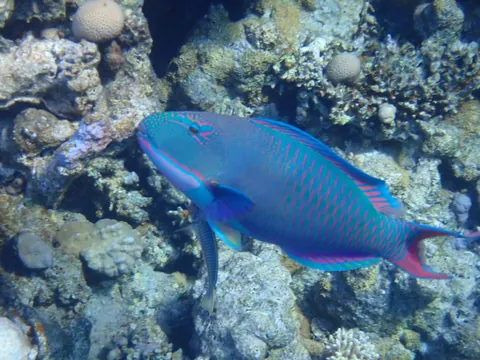
Bicolour parrotfish
Cetoscarus bicolor
Chlorurus japanensis
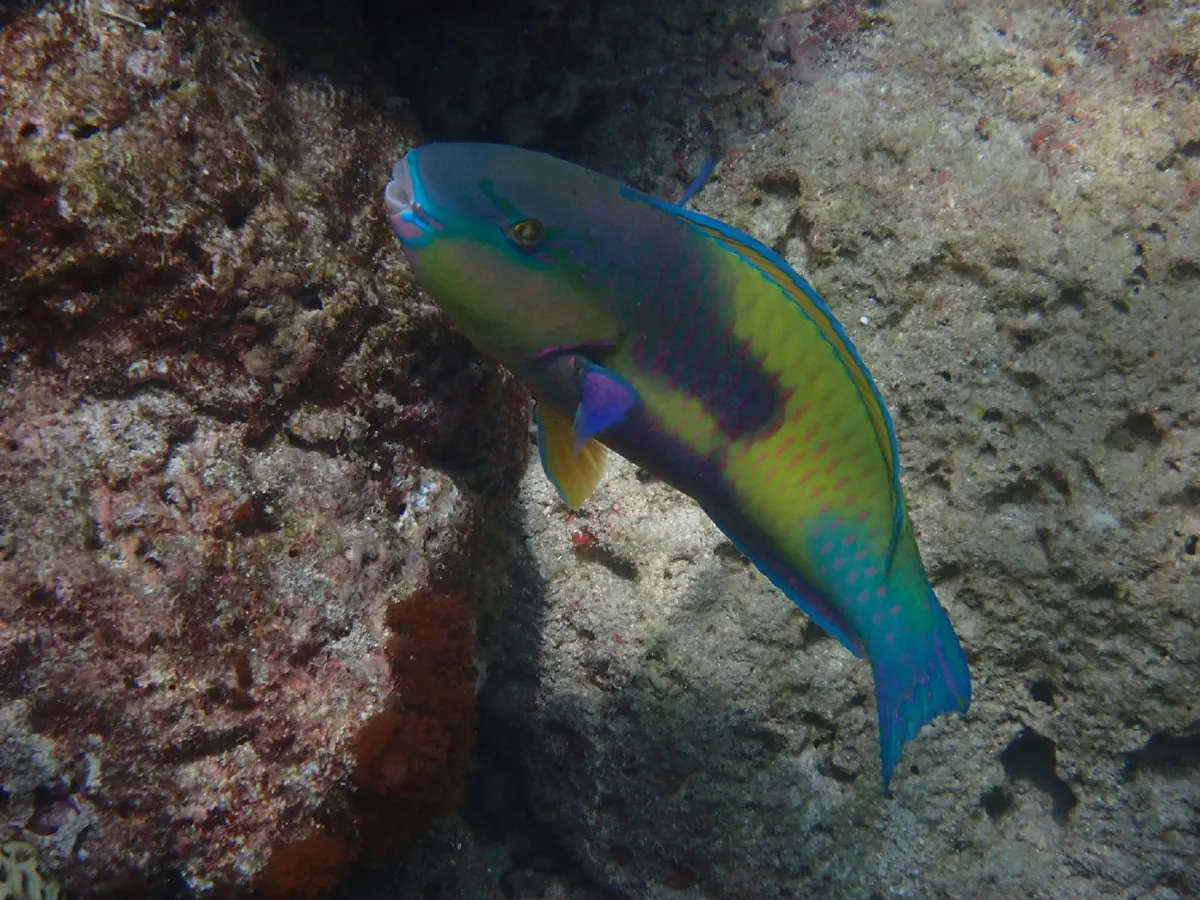
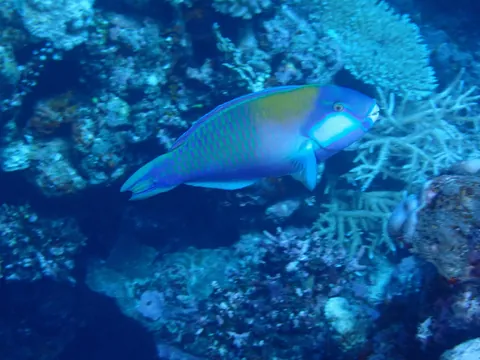
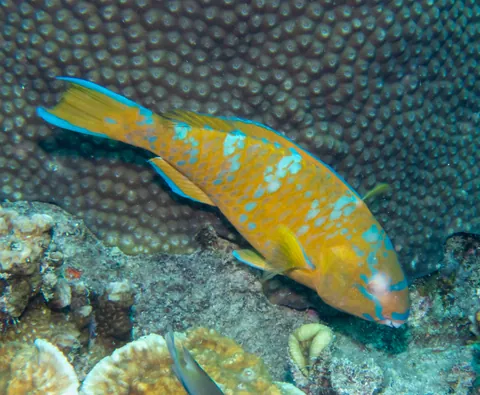
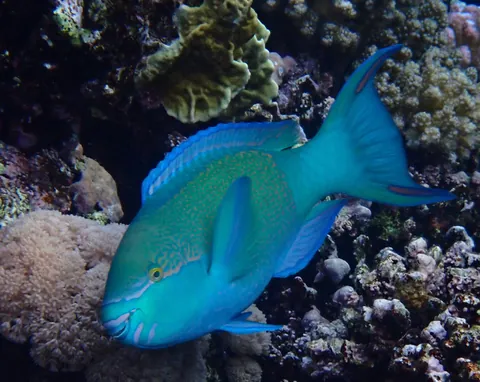
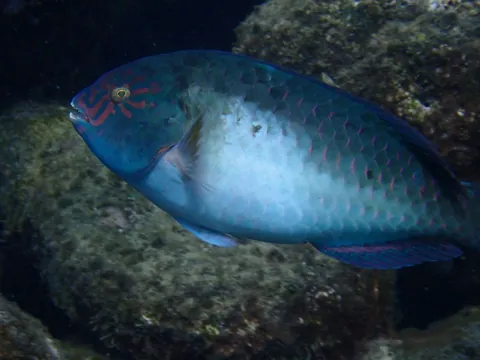
Parrotfish are the reef's grazers, and this one wears its sex on its skin. A male palecheek parrotfish is split into two colours front and back, while a female is plain dark brown with a burning red-orange tail. It grows to about 31 cm and works the coral-rich reefs of the Pacific.
Also known as: japanese parrotfish, pale bullethead parrotfish, red-tailed parrotfish, yellow-blotched parrotfish, pale bullethead parrotfish, japanese parrotfish, yellow-blotched parrotfish, redtail parrotfish, red-tailed parrotfish, parrotfish, redtail parrotfish
Reefs hold many parrotfish that look alike, and each one changes colour as it grows and changes sex. On a male, the giveaway is not the two colours themselves but the border between them: a clean slanted line across the middle of the body, not a slow fade. On a plain dark fish with no markings at all, check the tail - a red-orange tail on an otherwise drab brown body points to this species.
A normal parrotfish shape: a deep, smooth, torpedo-like body. The teeth are fused into hard plates, and the lips cover a little of them. The tail is slightly rounded to straight-edged in younger fish, and slightly notched in big males. Males are sharply two-toned, purple-brown at the front and pale yellow at the back. Females are dark brown all over, with a red-orange tail.
This parrotfish lives across the Pacific, most of all from the Ryukyu Islands south to Australia, and it has also turned up at Tonga. It likes seaward coral and rocky reefs, and inner reefs with plenty of live coral. It stays shallow, from about 1 to 20 m, so it is easy diving. It grazes on algae growing on the bottom. You will often see small groups of one large male with one to three smaller fish.
Describe what you saw and we name it, then keep every species you find in your Oceandex.