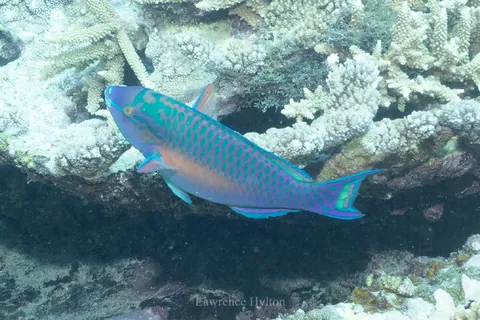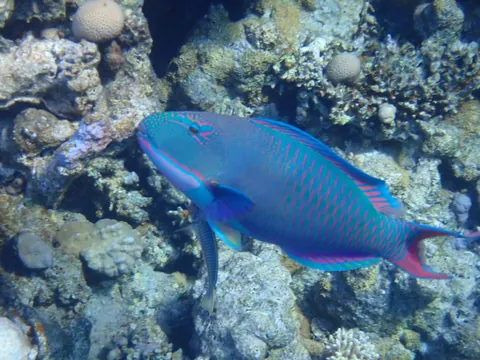
Bicolour parrotfish
Cetoscarus bicolor
Hipposcarus longiceps
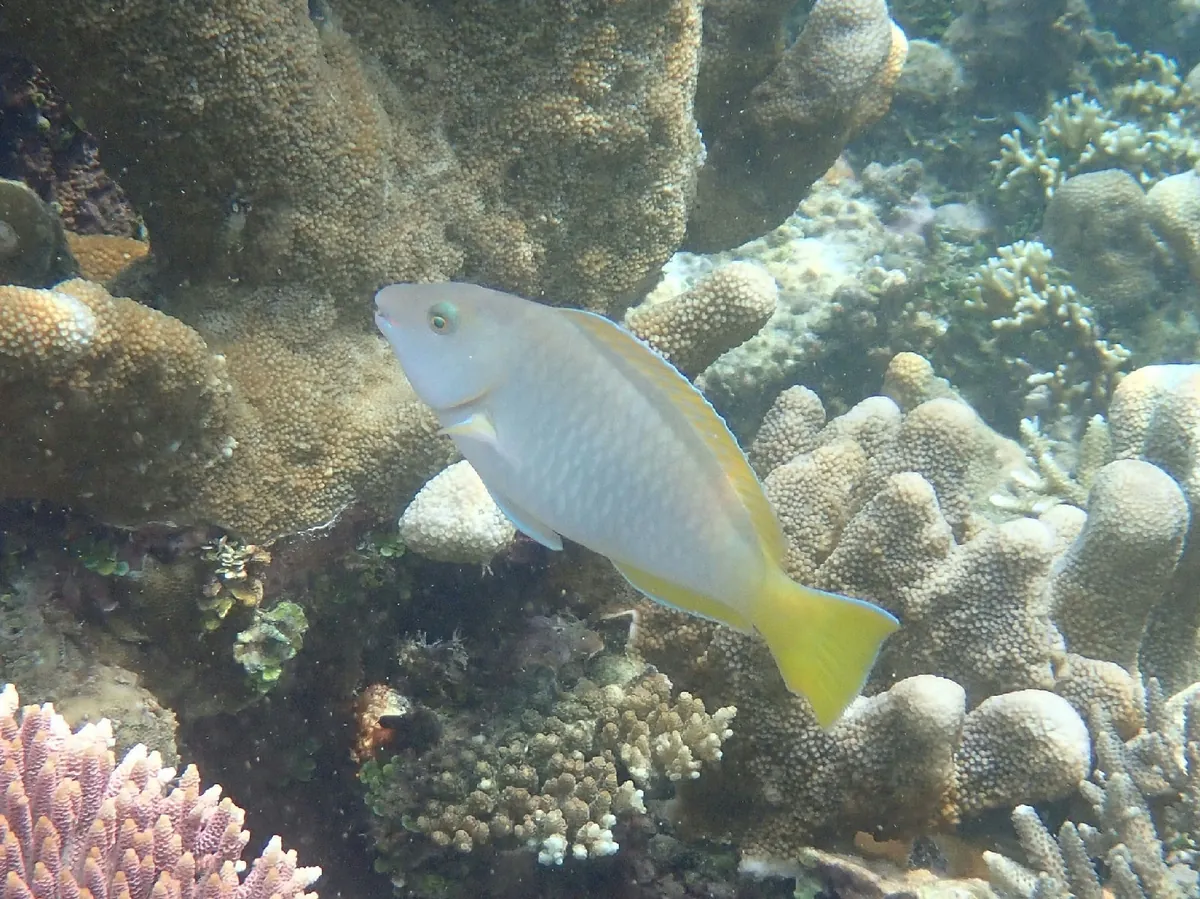
This is a big parrotfish, commonly around 48 cm and reaching 60 cm, and it is one you are more likely to meet in murky water than on a clear outer wall. It prefers cloudy lagoons, where it moves in loose gatherings, with females keeping to small groups of their own. It has been recorded from 2 m down to 40 m, with the largest fish going deepest.
Also known as: long-nosed parrotfish, longnose parrotfish, pacific longnose parrotfish, red-stripe parrotfish, long-nosed parrotfish, red-stripe parrotfish, pacific longnose, parrotfish, longnose parrotfish, longnose parrotfish
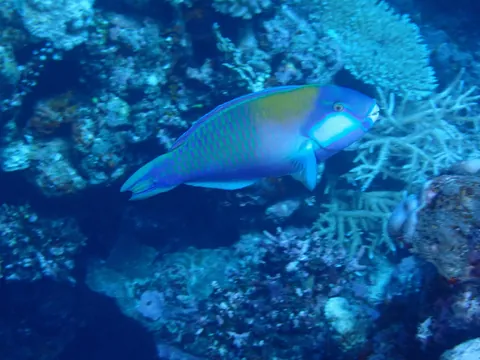
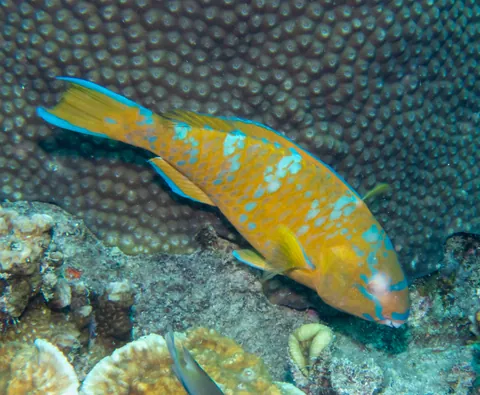
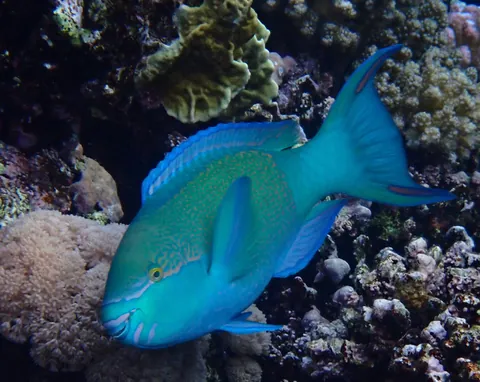
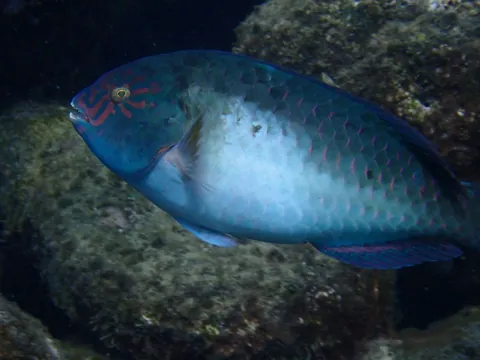
On a big parrotfish in a cloudy lagoon, colour is unreliable, since this one goes through three different looks and the water drains what is left. Use the outline of the head. It is long and drawn out, so the face stretches well forward of the eye instead of dropping away steeply as it does in most other large parrotfish. That long-faced profile is what the common name points at, and it holds at any age.
The colours change completely as the fish grows. Small young fish are light brown with a broad orange stripe running the length of the body. Next comes a plain stage, whitish brown to light grey with a yellowish tail. Full-grown terminal fish turn light blue and green, the brightest they ever get. In every stage the teeth are fused into the hard beak all parrotfish share.
Describe what you saw and we name it, then keep every species you find in your Oceandex.